
Short Answer
Overview
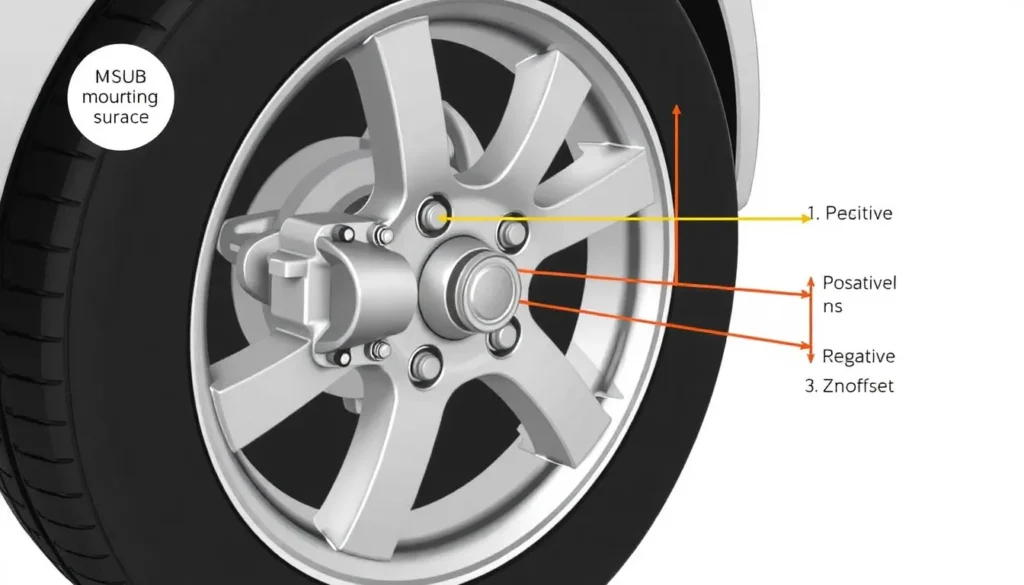
Wheel offset refers to the distance from a wheel’s hub mounting surface to the wheel’s centerline. This measurement is typically expressed in millimeters and is essential in determining how a wheel fits relative to the vehicle’s suspension and bodywork. Wheel offset influences various aspects of a vehicle’s handling, appearance, and safety.
Detailed Explanation
The centerline of a wheel is the midpoint between the inner and outer edges of the wheel rim. The wheel offset is the distance between this centerline and the plane where the wheel mounts to the hub. Depending on the direction of this distance, offsets are classified as positive, negative, or zero.
A positive offset means the mounting surface is located toward the outside (road side) of the wheel centerline. This causes the wheel to sit further inward, closer to the suspension components. A negative offset occurs when the mounting surface is toward the inside (vehicle side) of the centerline, pushing the wheel outward. A zero offset means the mounting surface coincides exactly with the wheel’s centerline.
How It Works
The offset value directly affects the wheel’s position in the wheel well. A higher positive offset generally places the wheel closer to the vehicle chassis, while a negative offset extends the wheel outward. This positioning impacts tire clearance, suspension geometry, and the vehicle’s track width.
Proper wheel offset ensures the wheel does not interfere with suspension parts, brake components, or the vehicle body. It also helps maintain steering and handling characteristics as designed by the manufacturer. Incorrect offset can lead to premature tire wear, altered handling dynamics, or damage to suspension components.
Examples
- A typical front-wheel-drive car might have a wheel offset of +40mm, meaning the mounting surface is 40mm toward the outside from the wheel’s centerline.
- An off-road vehicle might use wheels with a negative offset, such as -12mm, to provide a wider stance and better stability.
- Some custom or racing wheels have zero offset to achieve specific track width or aesthetic goals.
Why It Matters
Wheel offset is critical for ensuring wheels fit correctly without causing mechanical issues or compromising safety. It influences vehicle stability, steering feel, and suspension performance. When replacing or upgrading wheels, matching or appropriately adjusting offset helps maintain proper vehicle dynamics and prevents damage.
Common Misconceptions
Misconception: A higher wheel offset means the wheel is larger.
Correction: Offset is unrelated to wheel diameter or width; it only describes the mounting position relative to the wheel centerline.
Misconception: Any wheel with the correct bolt pattern will fit regardless of offset.
Correction: Even with the correct bolt pattern, incorrect offset can cause clearance problems or unsafe handling.
Pros and Cons
Pros: Ensures proper wheel fitment, maintains handling and safety, prevents interference with suspension and bodywork.
Cons: Incorrect offset can cause premature tire wear, poor handling, and mechanical damage. Finding the right offset may require careful measurement and consideration.
Comparison Table
| Aspect | Wheel Offset | Wheel Backspacing |
|---|---|---|
| Meaning | Distance from wheel mounting surface to centerline of the wheel | Distance from mounting surface to the back edge of the wheel |
| Measurement Unit | Millimeters | Inches or millimeters |
| Effect | Determines lateral position of the wheel relative to hub | Determines clearance between wheel and suspension |
Decision Checklist
What is the easiest way to understand Wheel Offset?
Think of wheel offset as how far the wheel sits inward or outward relative to its center. Positive offset moves the wheel closer to the car, negative offset pushes it outward. This simple distance affects how well the wheels fit and function on a vehicle.
FAQ
What does a positive wheel offset mean?
A positive wheel offset means the mounting surface is positioned closer to the outside (road side) of the wheel centerline, causing the wheel to sit more inward toward the vehicle.
Can I use wheels with a different offset than my original ones?
Using wheels with a different offset than originally specified can affect vehicle handling and clearance. Small variations may be acceptable, but significant differences should be avoided or evaluated by a professional.
How do I measure my wheel offset?
Wheel offset can be measured by determining the distance between the mounting surface and the wheel centerline, typically using calipers. It is often easier to consult manufacturer specifications or wheel markings.





Leave a Reply