
Short Answer
Overview
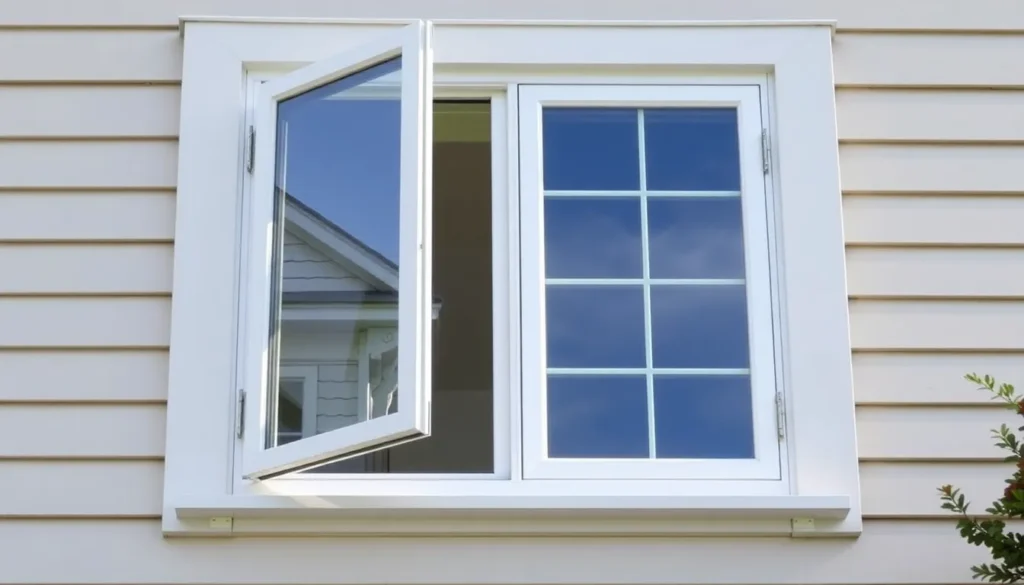
A single hung window is a window type characterized by having two sashes in a vertical frame, where only the bottom sash is operable and slides upward to open. The upper sash remains fixed in place, providing a stationary pane of glass. This style is widely used in residential buildings due to its simplicity, traditional appearance, and ease of installation.
Detailed Explanation
In a single hung window, the frame contains two sashes stacked vertically. The bottom sash is designed to move up and down within the frame, allowing the window to open and close for ventilation purposes. The top sash is fixed and does not move. This contrasts with double hung windows, where both sashes are operable. The design typically incorporates counterweights or spring balances to assist with the movement of the bottom sash.
How It Works
The mechanism of a single hung window involves a track system within the frame that guides the bottom sash vertically. When the window is opened, the bottom sash slides upward, creating an opening at the bottom of the window for air to enter. The fixed upper sash maintains an unobstructed view and structural rigidity. This configuration simplifies the hardware and reduces maintenance compared to fully operable window styles.
Examples
- Traditional colonial homes often feature single hung windows due to their classic look.
- Modern constructions may use single hung vinyl windows for cost-effectiveness and energy efficiency.
- Historic renovations sometimes retain single hung windows to preserve architectural integrity.
Pros and Cons
Pros:
- Simple design with fewer moving parts, leading to lower maintenance.
- Generally less expensive than double hung windows.
- Provides adequate ventilation through the operable bottom sash.
- Retains traditional aesthetic appeal.
Cons:
- Limited ventilation options because only the bottom sash opens.
- Cleaning the exterior of the upper sash can be difficult from inside the building.
- Less flexibility in airflow control compared to double hung windows.
Comparison Table
| Aspect | Single Hung Window | Double Hung Window |
|---|---|---|
| Meaning | Window with two sashes where only the bottom sash moves vertically. | Window with two sashes where both top and bottom sashes move vertically. |
| Ventilation | Only bottom sash opens, allowing air in from the bottom. | Both sashes open, allowing versatile airflow from top, bottom, or both. |
| Maintenance | Less hardware, simpler maintenance. | More moving parts, potentially higher maintenance. |
| Cost | Generally more affordable. | Typically more expensive. |
Decision Checklist
- Use this if you want a traditional, cost-effective window with simple operation and primarily bottom ventilation.
- Avoid this if you require flexible ventilation options or easier cleaning from inside.
- Check this first if the architectural style or building codes favor traditional window designs.
What is the easiest way to understand Single Hung Windows?
A single hung window is easiest to understand as a window with two stacked panes where only the lower pane slides up and down, while the upper pane remains fixed, providing a simple, classic window opening mechanism.
FAQ
Can a single hung window be converted to a double hung window?
Typically, single hung windows cannot be converted to double hung windows without replacing the entire window unit because the upper sash is fixed and not designed to move.
Are single hung windows energy efficient?
Energy efficiency depends on the materials and construction quality. Single hung windows can be energy efficient if properly sealed and constructed with insulated glass.
How do you clean the outside of a single hung window's upper sash?
Cleaning the exterior of the fixed upper sash usually requires accessing it from outside the building, as it does not tilt or open inward.
Leave a Reply