
Short Answer
Overview
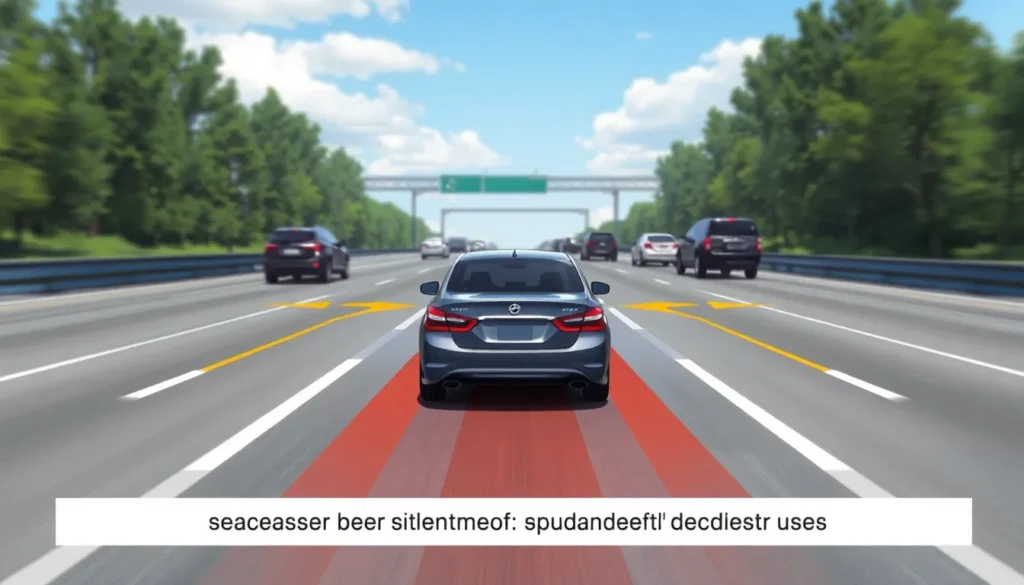
A space cushion refers to the safe distance a driver maintains between their vehicle and other vehicles, pedestrians, or obstacles on the road. This buffer zone is intended to provide sufficient time and space to react to sudden changes in traffic conditions, avoid collisions, and improve overall road safety. The concept of a space cushion is a fundamental part of defensive driving techniques and is emphasized in driver education programs globally.
Detailed Explanation
The space cushion is not a fixed measurement but varies depending on several factors such as vehicle speed, road conditions, weather, the size and type of the vehicle, and the driver’s experience. The principle is to maintain enough space around the vehicle so that if the vehicle ahead suddenly stops or an unexpected obstacle appears, the driver has the necessary time to brake or steer clear safely.
Typically, safe following distances are advised as a minimum of three seconds behind the vehicle in front under ideal driving conditions. This distance should be increased in adverse weather conditions like rain, fog, or snow, or when driving larger vehicles that require longer stopping distances.
How It Works
The space cushion works by providing a temporal and spatial buffer that allows a driver to perceive hazards and execute appropriate actions without immediate pressure. When a driver keeps a space cushion:
- They have more time to identify potential risks.
- They can slow down gradually rather than making sudden stops.
- They reduce the risk of rear-end collisions.
- They can maneuver safely if an obstacle or hazard appears.
- They contribute to smoother traffic flow by reducing abrupt braking and acceleration.
The effectiveness of the space cushion depends on the driver’s alertness, adherence to traffic rules, and environmental factors.
Examples
- Highway Driving: Maintaining a minimum three-second gap behind the vehicle ahead allows a driver to react safely to sudden stops or changes in traffic speed.
- Urban Driving: In heavy city traffic, keeping a space cushion can help prevent collisions with vehicles stopping unexpectedly at traffic signals or pedestrian crossings.
- Adverse Weather: Increasing the space cushion to six or more seconds in rain or fog allows for reduced visibility and longer braking distances.
Pros and Cons
Pros:
- Increases reaction time and reduces collision risk.
- Promotes safer driving habits.
- Enhances traffic flow by preventing sudden braking.
- Reduces driver stress by providing a safety buffer.
Cons:
- May be difficult to maintain in heavy or congested traffic.
- Some drivers may perceive maintaining larger gaps as inefficient or impolite.
- Inexperienced drivers might misjudge appropriate distances.
Comparison Table
| Aspect | Space Cushion | Tailgating |
|---|---|---|
| Meaning | A safe distance maintained around a vehicle to allow reaction time and space. | Following another vehicle too closely, reducing reaction time and increasing collision risk. |
| Safety | Enhances safety by reducing collision risk. | Decreases safety by increasing likelihood of accidents. |
| Driver Behavior | Reflects defensive and cautious driving. | Often reflects aggressive or inattentive driving. |
| Traffic Flow | Promotes smoother traffic movement. | Can cause abrupt braking and congestion. |
Decision Checklist
- Use this if: You want to drive defensively and reduce accident risk.
- Avoid this if: You are driving in extremely heavy traffic where maintaining distance is impossible (although caution is still advised).
- Check this first: Road and weather conditions, your vehicle’s braking capability, and traffic density before deciding the appropriate space cushion.
What is the easiest way to understand Space Cushion?
The easiest way to understand a space cushion is to think of it as the invisible safety bubble around your vehicle that gives you enough room and time to react safely to whatever happens on the road. Just as you wouldn’t walk closely behind someone to avoid bumping into them, maintaining a space cushion while driving helps prevent collisions by keeping a comfortable, safe distance.
FAQ
What is the recommended space cushion distance when driving?
A minimum of three seconds of following distance is recommended under ideal conditions; this distance should be increased in poor weather or road conditions.
Why is maintaining a space cushion important?
Maintaining a space cushion provides drivers with enough time and space to react safely to sudden stops, hazards, or changes in traffic, thereby reducing the risk of collisions.
How does weather affect space cushion requirements?
Adverse weather conditions such as rain, fog, snow, or ice increase stopping distances and reduce visibility, so drivers should increase their space cushion to maintain safety.





Leave a Reply