
Short Answer
Overview
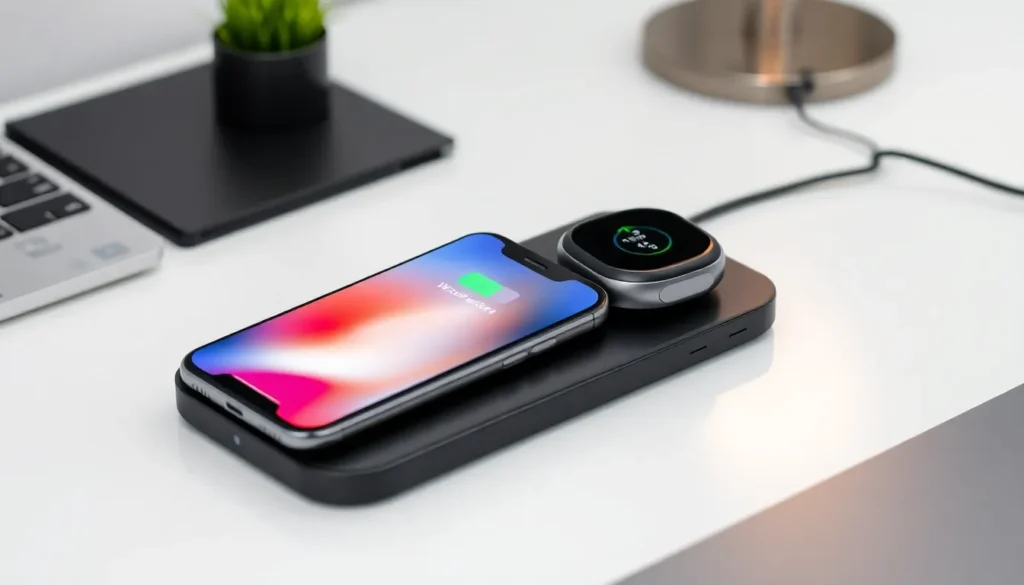
A table charger is a type of charging device intended for use on a flat surface such as a desk, table, or countertop. It serves as a stationary power source to recharge electronic devices, including smartphones, tablets, smartwatches, and other portable gadgets. Table chargers can come in various forms, including wired charging docks, wireless charging pads, or multi-device charging stations. Their design often emphasizes convenience, allowing users to place their devices on the charger without holding them, thereby facilitating easy access and use during charging.
Detailed Explanation
Table chargers are engineered to provide a stable and efficient means of charging one or multiple devices simultaneously. They can vary significantly in size, shape, and technology depending on the intended use and targeted devices. Wired table chargers typically include charging docks or cradles where devices connect via USB or proprietary connectors. Wireless table chargers, often based on Qi wireless charging standards, allow devices to be charged by simply placing them on the surface without the need for cables.
Many modern table chargers also incorporate additional features such as fast charging capabilities, integrated cable management, LED indicators, and compatibility with various device brands. Some advanced models function as multi-port hubs, offering USB outlets alongside wireless charging pads, thereby accommodating multiple devices at once.
How It Works
Wired table chargers operate by supplying electrical power through a physical connection, usually via a USB cable connected to the charger dock and the device’s charging port. The charger converts AC power from an outlet to the appropriate voltage and current required by the device.
Wireless table chargers use electromagnetic induction to transfer energy. Inside the charging pad is a coil that generates an alternating magnetic field when powered. Devices equipped with compatible receiver coils convert this magnetic field back into electrical current to charge their batteries. The efficiency of wireless charging depends on the alignment of coils and proximity between the device and charger.
Examples
- Smartphone Wireless Charging Pad: A flat surface that charges compatible smartphones using Qi wireless technology.
- Multi-Device Charging Station: A table charger that includes USB ports and wireless pads to charge phones, tablets, and smartwatches simultaneously.
- Charging Dock for Tablets: A cradle designed specifically to hold and charge tablets through a wired connection while keeping them upright for easy use.
Why It Matters
Table chargers offer a practical and organized solution for powering electronic devices, especially in personal and professional environments where multiple gadgets are used. They reduce cable clutter, facilitate convenient charging without needing to hold devices, and often enhance the user experience by integrating additional functionalities such as quick charging. As wireless charging technology becomes more prevalent, table chargers help drive adoption by making the process seamless and accessible.
Common Misconceptions
Misconception: Table chargers only work with wireless charging.
Correction: While many table chargers offer wireless charging, others use wired connections to charge devices.
Misconception: Wireless table chargers charge devices faster than wired chargers.
Correction: Wired chargers typically provide faster charging speeds; wireless charging is generally slower due to energy transfer limitations.
Pros and Cons
Comparison Table
| Aspect | Table Charger | Alternative/Related Topic (Portable Charger) |
|---|---|---|
| Meaning | A stationary device for charging electronics placed on a flat surface. | A compact, battery-powered device used to charge electronics on the go. |
| Power Source | Requires connection to an AC outlet or USB power source. | Contains an internal battery charged beforehand, does not require wall power during use. |
| Use Case | Designed for stationary use at home, office, or desk. | Designed for mobile use and charging devices away from fixed power sources. |
| Charging Method | Wired or wireless charging options available. | Primarily wired charging via USB; some models offer wireless charging. |
| Capacity | Dependent on power supply; generally unlimited as long as connected. | Limited by internal battery capacity. |
Decision Checklist
- Use this if you want a convenient, fixed place to charge multiple devices simultaneously.
- Avoid this if you require portable charging without access to a power outlet.
- Check this first if your devices support wireless charging or require specific connectors.
What is the easiest way to understand a Table Charger?
The simplest way to understand a table charger is to think of it as a dedicated charging spot on a desk or table where you can place your devices to recharge, either by plugging them in or by placing them on a wireless charging surface, eliminating the need to hold or connect cables directly to the device each time.
FAQ
Can all smartphones use a table charger?
Not all smartphones are compatible with table chargers, especially wireless ones. Compatibility depends on the charging technology supported by the device, such as Qi for wireless chargers or specific connectors for wired chargers.
Is wireless charging slower than wired charging?
Generally, wireless charging tends to be slower than wired charging due to energy transfer efficiencies and power limitations, although advances in technology are narrowing this gap.
Can table chargers charge multiple devices at once?
Many modern table chargers are designed to charge multiple devices simultaneously, either through multiple wired ports or combined wired and wireless charging areas.





Leave a Reply