
Short Answer
Overview
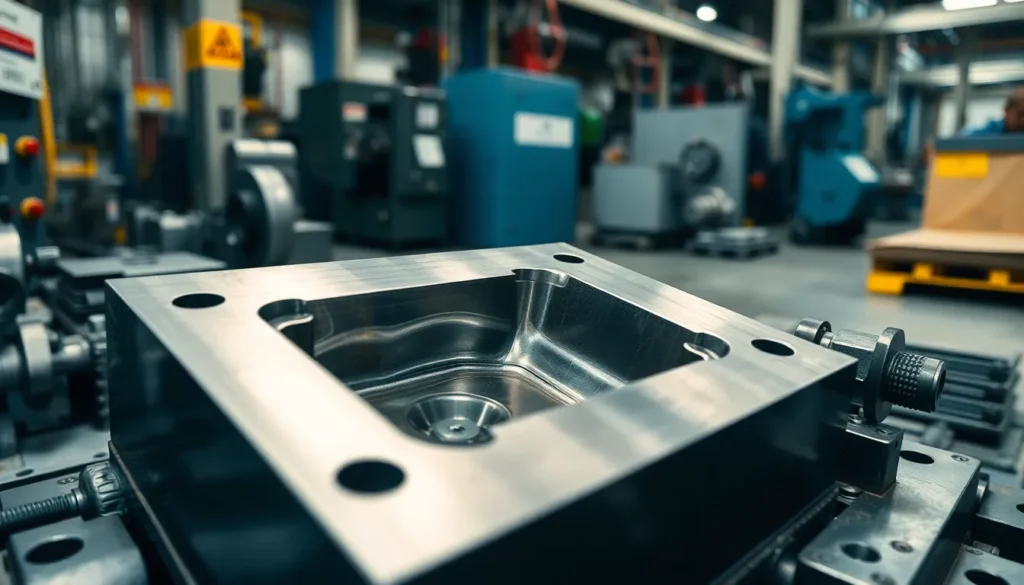
In manufacturing, a die is a specialized tool employed to cut, shape, or form material into specific shapes or designs. Dies are typically used in conjunction with a press or other machines to carry out processes such as stamping, forging, extrusion, or molding. The primary purpose of a die is to impart a precise shape or pattern to the material, often metal, by applying pressure or force. Dies are critical in mass production because they enable the consistent reproduction of parts with exact dimensions and tolerances.
Detailed Explanation
Dies are usually custom-made tools designed to meet the specific requirements of a manufacturing process. They can be composed of hardened steel, carbide, or other durable materials to withstand the stresses of repeated use. Different types of dies exist depending on the manufacturing technique, including stamping dies, forging dies, extrusion dies, and drawing dies. Each type serves a particular function, such as cutting sheet metal, shaping heated metal, or pulling material through a shaped opening.
Manufacturing dies often consist of multiple components, including punches, die blocks, and holders. These components work together to apply force to the workpiece, resulting in the desired shape or cut. The design and fabrication of dies require careful engineering to ensure durability, precision, and efficiency during production.
How It Works
The operation of a die involves placing the raw material between the die’s working surfaces, after which force is applied, usually by a mechanical or hydraulic press. This force causes the material to conform to the die’s shape or be cut according to the die’s profile. For example, in a stamping process, a punch presses the material into a die cavity, creating a specific shape. In forging, the die shapes heated metal under pressure, while in extrusion, material is forced through a die opening to form long objects with a fixed cross-section.
The precision of a die ensures that each manufactured part is uniform, which is crucial for assembling components in industries such as automotive, aerospace, and electronics. Due to the repetitive nature of production runs, dies must be designed for ease of maintenance and replacement of wear parts.
Examples
- Stamping Dies: Used to cut or shape sheet metal parts like automotive body panels or electronic enclosures.
- Forging Dies: Employed to shape heated metal billets into components such as crankshafts or gears.
- Extrusion Dies: Used to produce consistent cross-sectional shapes like pipes, rods, or window frames.
- Drawing Dies: Utilized in wire manufacturing to reduce diameter by pulling material through a tapered hole.
Pros and Cons
- Pros: High precision and repeatability; suitable for mass production; can produce complex shapes; enhances manufacturing efficiency.
- Cons: High initial cost for design and fabrication; wear and tear require maintenance; limited flexibility once made; design complexity can extend lead times.
Comparison Table
| Aspect | Die | Alternative/Related Tool: Mold |
|---|---|---|
| Meaning | A tool to cut or shape material via pressure or force. | A hollow cavity tool to shape molten or pliable material by casting or injection. |
| Material Processed | Typically metal or sheet metal. | Often plastics, glass, or molten metals. |
| Typical Use | Stamping, forging, extrusion, drawing. | Casting, injection molding, blow molding. |
| Force Application | Mechanical or hydraulic pressing. | Filling cavity with material under pressure or gravity. |
| Output | Solid parts with precise cuts or shapes. | Complex shapes formed by molding. |
Decision Checklist
- Use this if: You require high-volume production of metal parts with consistent shapes.
- Avoid this if: You need highly flexible tooling for frequent design changes or work with non-metal materials better suited to molding.
- Check this first: The feasibility of die design for the material type, production volume, and required precision.
What is the easiest way to understand a Die in Manufacturing?
Think of a die as a specialized cookie cutter for metal or other materials. Just as a cookie cutter shapes dough into consistent forms, a die shapes or cuts material into precise, repeatable parts using pressure and force in industrial processes.
FAQ
What materials can be shaped using a die?
Dies primarily shape metals, including steel, aluminum, copper, and various alloys. Some dies are also designed for plastics or other materials depending on the process.
How is a die different from a mold?
A die typically shapes or cuts solid materials using pressure, often metalworking processes, whereas a mold is a hollow cavity used to form molten or pliable materials through casting or injection.
Why do dies wear out and need maintenance?
Dies are subjected to high mechanical stresses and friction during use, which causes wear, deformation, or damage over time. Regular maintenance and sometimes replacement of parts are necessary to maintain precision and functionality.


Leave a Reply