
Short Answer
Overview
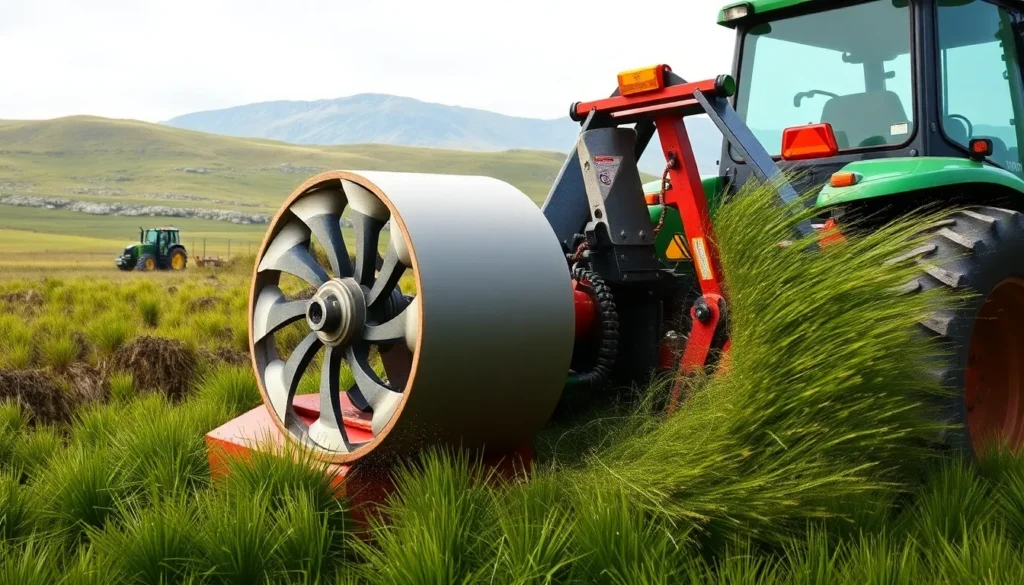
A flail mower is a mechanical device used primarily in agriculture, landscaping, and land maintenance to cut and shred vegetation. It is specifically designed to handle heavy grass, dense brush, and rough terrain that other mowing tools may struggle with. The mower consists of a rotating drum equipped with numerous small, free-swinging blades called flails, which effectively cut the vegetation by impact and shredding action. Flail mowers are commonly mounted on tractors, skid steers, or used as standalone units for clearing overgrown land.
Detailed Explanation
Unlike traditional rotary mowers that use a few large blades, flail mowers employ many smaller blades attached to a horizontal rotor. These blades, or flails, are free to swing on hinges or pins, allowing them to move independently and absorb impact when striking hard objects like stones or tree stumps. This design reduces damage to the blades and the mower itself, making flail mowers well-suited for uneven, rocky, or heavily vegetated areas.
Flail mowers are used for various applications including roadside maintenance, orchard and vineyard floor management, pasture mowing, and vegetation control in parks and recreational areas. They are particularly effective in shredding woody material and dense undergrowth, which helps in preventing the spread of invasive plant species and maintaining clear, manageable landscapes.
How It Works
The central component of the flail mower is the rotor drum, which spins horizontally at high speeds. Attached to this drum are numerous flails—small, often Y- or T-shaped blades—that hang freely. As the drum rotates, centrifugal force swings the flails outward, creating a cutting action as they strike vegetation. The free-swinging nature of the flails allows them to retract when they hit solid objects, which prevents blade breakage and equipment damage.
The mower is powered either by a tractor’s power take-off (PTO) shaft or an onboard engine in standalone models. The cutting height can typically be adjusted to suit different terrain and vegetation types. The mulched material is either left on the ground as natural mulch or collected depending on the equipment setup.
Examples
- Agricultural Use: Farmers use flail mowers to cut pasture grass and manage crop residues after harvest.
- Roadside Maintenance: Municipalities employ flail mowers mounted on tractors or boom arms to maintain clear and safe road shoulders.
- Vineyard and Orchard Floor Management: Flail mowers help control weeds and grass without damaging young trees or vines.
Why It Matters
Flail mowers provide an efficient and durable solution for managing challenging vegetation types. Their ability to handle rough terrain and dense brush reduces the need for manual clearing, improving safety and productivity. Additionally, the mulching action promotes soil health by returning organic matter to the ground, which can enhance nutrient cycling and erosion control.
Common Misconceptions
Misconception: Flail mowers are only suitable for light grass cutting.
Correction: Flail mowers are specifically designed for heavy-duty applications, including thick brush and woody vegetation.
Misconception: Flail mowers damage easily when hitting rocks.
Correction: The free-swinging flails reduce damage risk by retracting on impact, making them more durable in rocky environments.
Pros and Cons
Pros:
- Effective on rough, uneven terrain and dense vegetation
- Durable design reduces blade damage
- Mulches vegetation, promoting soil health
- Versatile for multiple land management tasks
Cons:
- Generally heavier and more complex than rotary mowers
- Higher initial cost and maintenance requirements
- Slower cutting speed compared to some mower types on flat terrain
Comparison Table
| Aspect | Flail Mower | Rotary Mower |
|---|---|---|
| Meaning | Uses multiple free-swinging blades attached to a rotating drum to shred vegetation | Uses one or more fixed blades rotating at high speed to cut grass and plants |
| Best Use | Rough terrain, dense brush, woody plants | Flat terrain, light to moderate grass cutting |
| Durability | High resistance to damage from rocks and debris | Blades prone to damage from obstacles |
| Maintenance | Requires regular inspection of flails and drum | Requires blade sharpening and balancing |
| Cut Quality | Mulched, shredded material left on ground | Cut grass typically left as clippings or bagged |
Decision Checklist
What is the easiest way to understand a Flail Mower?
Think of a flail mower as a robust gardening tool with many small swinging blades attached to a spinning drum that chop and mulch heavy vegetation by striking it repeatedly, allowing it to handle tough jobs where traditional mowers might fail.
FAQ
What is the main difference between a flail mower and a rotary mower?
The main difference lies in their cutting mechanisms: a flail mower uses multiple small blades attached to a rotating drum that swing freely to shred vegetation, whereas a rotary mower uses one or more fixed blades that rotate at high speed to cut plants.
Can a flail mower handle rocky terrain?
Yes, flail mowers are designed to handle rocky and uneven terrain because their free-swinging blades can retract upon impact, reducing damage to the mower and blades.
Is a flail mower suitable for light lawn mowing?
While a flail mower can be used for light lawn mowing, it is generally less efficient and slower than rotary mowers for this purpose. Flail mowers excel in cutting dense and rough vegetation rather than fine grass on flat surfaces.


Leave a Reply