
Short Answer
Overview
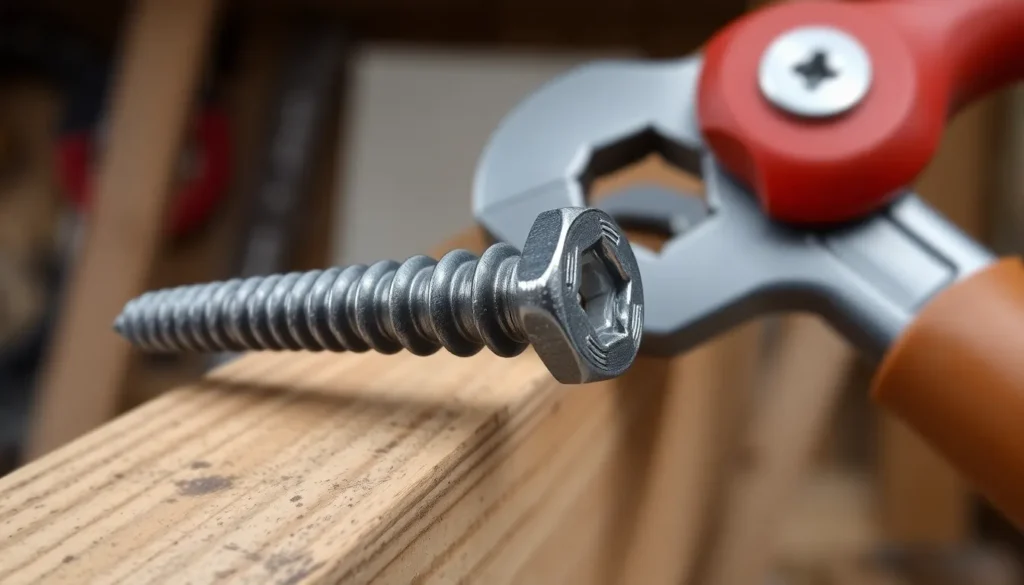
A lag screw, also known as a lag bolt, is a large, heavy-duty fastener primarily used to join wood or other materials where a strong, lasting connection is required. It is distinguished by its coarse threading and a hexagonal head designed for installation with a wrench or socket. Unlike typical screws, lag screws are not self-tapping and usually require a pilot hole to be drilled before insertion.
Detailed Explanation
Lag screws are constructed from steel or other metals, often coated or galvanized to resist corrosion. Their length and diameter vary depending on the application, with common sizes ranging from 1/4 inch to 1/2 inch in diameter and several inches in length. The coarse thread design allows for greater grip in wood fibers, providing enhanced holding power compared to machine screws or nails. Lag screws are typically used in structural woodworking, heavy-duty framing, and securing materials that bear significant load or stress.
How It Works
To install a lag screw, a pilot hole is drilled to reduce the risk of splitting the wood and to ease insertion. The screw is then driven into the hole using a wrench or socket driver that fits the hexagonal head. The coarse threading cuts into the material, creating a tight grip that resists pullout and shear forces. The design of the lag screw allows it to generate high clamping force, making it suitable for applications where durability and strength are critical.
Examples
- Securing heavy wooden beams in deck construction.
- Attaching large metal brackets to wooden framing.
- Mounting structural elements like posts or joists.
- Fastening heavy equipment to wooden surfaces.
Pros and Cons
Pros:
- High holding power and strength suitable for heavy-duty applications.
- Resistant to pullout and shear forces.
- Hexagonal head allows for strong torque application using common tools.
- Available in corrosion-resistant coatings for outdoor use.
Cons:
- Requires pilot holes, adding time and tools to the installation process.
- Not suitable for materials other than wood or wood composites.
- Larger size can be visually intrusive in finished work.
- More expensive than standard screws or nails.
Comparison Table
| Aspect | Lag Screw | Wood Screw |
|---|---|---|
| Meaning | Heavy-duty screw designed for strong wood connections with a hex head and coarse threads. | Screw with finer threads and smaller head used for general wood fastening. |
| Installation | Requires pilot hole; driven with wrench or socket. | Often self-tapping; driven with screwdriver. |
| Holding Strength | High; suitable for structural loads. | Moderate; for lighter fastening. |
| Typical Uses | Heavy framing, decks, structural joints. | Cabinetry, trim, light framing. |
| Head Type | Hexagonal (hex) head. | Phillips, slotted, or square heads. |
Decision Checklist
- Use this if you need a strong, durable fastener for heavy wood-to-wood connections or structural applications.
- Avoid this if you are working with thin or delicate materials that cannot accommodate pilot holes or heavy fasteners.
- Check this first by ensuring the material thickness and type are appropriate for lag screw installation and that you have the necessary tools for pilot drilling and driving.
What is the easiest way to understand a Lag Screw?
The easiest way to understand a lag screw is to think of it as a large, strong wood screw with a hexagonal head designed for use in heavy-duty wood construction. Unlike regular screws, it needs a pilot hole and is tightened with a wrench, providing a sturdy and secure fastening where strength is essential.
FAQ
What is the difference between a lag screw and a wood screw?
Lag screws are larger, have coarser threads, and require a pilot hole; they are used for heavy-duty fastening. Wood screws are smaller, often self-tapping, and used for lighter fastening tasks.
Can lag screws be used in metal?
Lag screws are primarily designed for wood and wood-based materials. For metal applications, machine screws and bolts are more appropriate.
Why do lag screws require a pilot hole?
Pilot holes prevent the wood from splitting and reduce the effort needed to drive the lag screw into the material, ensuring a secure and accurate installation.




Leave a Reply