
Short Answer
Overview
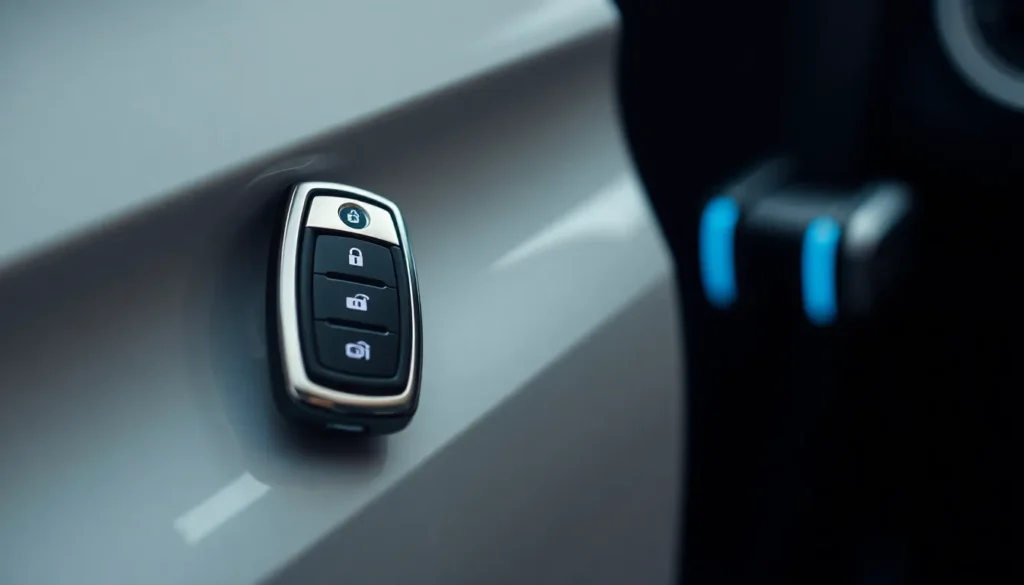
A smart key is an electronic key device designed to provide keyless access and ignition for vehicles, replacing traditional mechanical keys. It typically employs wireless communication technologies such as radio frequency identification (RFID) or near-field communication (NFC) to interact with a vehicle’s security system. The smart key allows users to unlock, lock, and start their vehicles without physically inserting a key, enhancing convenience and security.
Detailed Explanation
Smart keys are part of a broader category of keyless entry systems that have evolved over several decades. Unlike traditional keys that require insertion into a lock cylinder, smart keys use encrypted radio signals to communicate with the vehicle. When the smart key is within a predefined proximity, the vehicle’s sensors detect its presence and authenticate the key to permit access or engine start. This system typically involves multiple security layers, including rolling codes and encryption, to prevent unauthorized access or relay attacks.
How It Works
The operation of a smart key involves several components: the key fob, the vehicle’s receiver, and an onboard computer system. The key fob contains a transponder that emits a unique encrypted signal. When the user approaches the vehicle, antennas located around the car detect the key’s signal. Upon successful authentication, the vehicle permits door unlocking either automatically or via a button press and enables the ignition system to start the engine with a push-button mechanism.
Smart keys often include additional features such as remote start, panic alarms, and trunk release. The communication between the smart key and the vehicle occurs over short-range radio frequencies, typically in the 315 MHz or 433 MHz bands, depending on regional regulations.
Examples
- Toyota Smart Key System: Utilizes proximity sensors to unlock doors and enable push-button start without removing the key fob from a pocket or bag.
- BMW Comfort Access: Allows drivers to unlock and start their vehicles seamlessly through smart key detection, also supporting remote engine start in some models.
- Honda Smart Entry System: Features keyless entry and engine start, with enhanced security protocols to prevent unauthorized access.
Pros and Cons
Pros:
- Increased convenience by eliminating the need for manual key insertion.
- Enhanced security through encrypted communication and rolling codes.
- Additional features such as remote start, panic alarms, and vehicle location assistance.
Cons:
- Potential vulnerability to relay attacks if security measures are insufficient.
- Higher cost of replacement or repair compared to traditional keys.
- Dependency on battery power in the key fob, which requires periodic replacement.
Comparison Table
| Aspect | Smart Key | Traditional Mechanical Key |
|---|---|---|
| Meaning | Electronic device allowing keyless vehicle access and ignition. | Physical key requiring manual insertion to operate locks and ignition. |
| Security | Uses encrypted wireless communication, rolling codes. | Relies on physical lock and key matching. |
| Convenience | Keyless entry, push-button start, remote functions. | Manual unlocking and key turning required. |
| Cost | Higher initial and replacement cost. | Lower cost and simpler to replace. |
| Vulnerabilities | Susceptible to relay attacks if not properly secured. | Vulnerable to physical theft or lock picking. |
Decision Checklist
- Use this if… you want enhanced convenience and additional security features in vehicle access.
- Avoid this if… you prefer a simple, low-cost key system or are concerned about electronic vulnerabilities.
- Check this first… the compatibility of the smart key system with your vehicle and its security protocols.
What is the easiest way to understand a Smart Key?
The easiest way to understand a smart key is to think of it as a remote control for your vehicle that not only unlocks the doors but also starts the engine without any physical contact, using encrypted wireless signals to ensure only authorized access.
FAQ
Can a smart key be duplicated?
Smart keys use encrypted wireless signals and rolling codes, making duplication difficult without specialized equipment and knowledge. However, vulnerabilities exist that can be exploited by sophisticated attackers.
What happens if the smart key battery dies?
If the smart key battery is depleted, some vehicles allow manual entry using a hidden mechanical key within the fob, or the vehicle may still detect the key if close enough to the receiver. Replacing the battery is generally straightforward.
Are smart keys more secure than traditional keys?
Smart keys provide enhanced security features such as encrypted communication and anti-theft immobilizers, but they can be susceptible to electronic attacks like relay theft. Proper security measures are necessary to mitigate risks.


Leave a Reply