
Short Answer
Overview
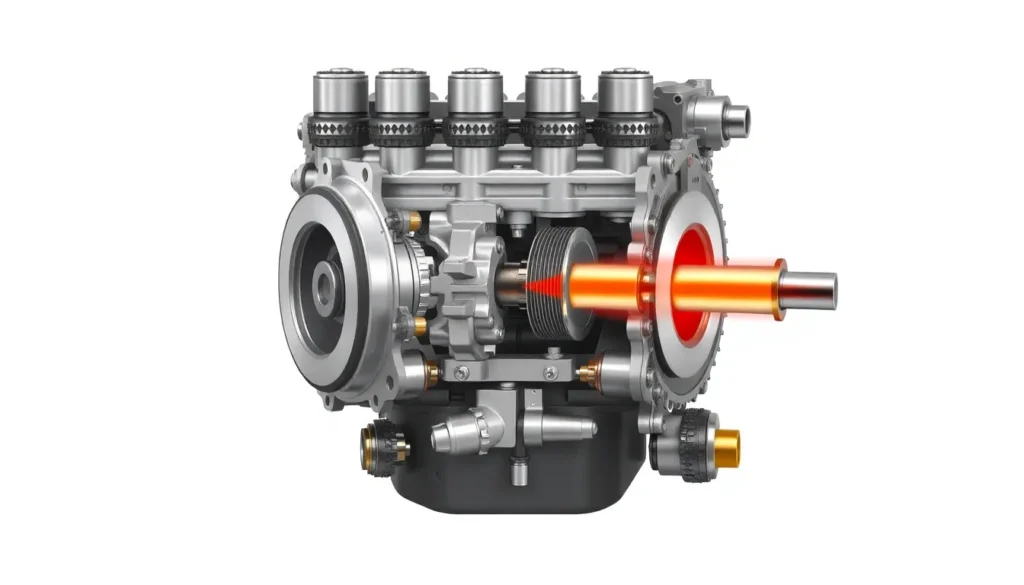
A stroker motor refers to an internal combustion engine that has been modified to increase its stroke length. The stroke is the distance the piston travels inside the cylinder from top dead center (TDC) to bottom dead center (BDC). By increasing this distance, the engine’s displacement—the total volume swept by all the pistons—also increases. This enhancement typically results in more torque and potentially more power output, depending on other supporting modifications.
Detailed Explanation
Standard engines are designed with a fixed bore (cylinder diameter) and stroke. A stroker motor modifies the stroke, usually by installing a crankshaft with a longer throw. This means the crankshaft’s crankpins are offset further from the centerline, resulting in a longer piston travel. The increased piston travel increases the swept volume of each cylinder, which in turn increases the engine’s total displacement.
To accommodate the longer stroke, other components often require modification or replacement. These include connecting rods (which may be shorter to prevent piston interference), pistons (often with altered compression heights), and sometimes cylinder block modifications to prevent piston-to-cylinder head or crankshaft-to-block contact.
How It Works
The fundamental principle behind a stroker motor is increasing the mechanical leverage and volume displacement of the engine. By increasing the stroke, the piston travels a longer distance within the cylinder. This results in a larger volume of air-fuel mixture being drawn in during the intake stroke and expelled during the exhaust stroke.
The increased displacement generally produces higher torque at lower RPMs because the longer stroke improves leverage on the crankshaft. However, the increased piston speed can limit the maximum RPM of the engine due to increased mechanical stress and friction.
Examples
- Chevrolet Small Block Stroker: Popular in performance modifications, the Chevrolet small-block V8 engine is often stroked from its original 3.48-inch stroke to 3.75 or 4.00 inches, increasing displacement from 350 cubic inches to over 400 cubic inches.
- Ford 351 Windsor Stroker: This engine is commonly stroked to increase displacement beyond its standard 351 cubic inches, often reaching 400 cubic inches or more for enhanced torque and power in muscle cars.
- Honda B-Series Stroker: Although less common, some Honda enthusiasts increase stroke length by using custom crankshafts and connecting rods to boost displacement in smaller four-cylinder engines.
Why It Matters
Stroker motors are significant in automotive performance because they provide a relatively straightforward way to increase engine displacement and torque without necessarily increasing engine size or adding forced induction like turbocharging or supercharging. This makes them popular among enthusiasts seeking improved acceleration, towing capacity, or engine responsiveness.
Common Misconceptions
Misconception: A stroker motor always produces more horsepower.
Correction: While stroker motors generally produce more torque due to increased displacement, horsepower gains depend on various factors including airflow, fuel delivery, and engine tuning.
Misconception: Stroker motors can be installed without changing any other engine components.
Correction: Increasing stroke often requires additional modifications to pistons, rods, and sometimes the engine block to avoid mechanical interference.
Pros and Cons
Comparison Table
| Aspect | Stroker Motor | Standard Engine |
|---|---|---|
| Meaning | Engine modified with increased stroke length to raise displacement | Engine with original factory stroke length and displacement |
| Displacement | Increased by longer piston travel | Fixed as designed |
| Torque Output | Generally higher, especially at low RPM | Standard for given displacement |
| Maximum RPM | Potentially lower due to increased piston speed | Higher possible RPM limits |
| Complexity | Requires machining and component changes | Factory configuration |
Decision Checklist
- Use this if you want to increase engine displacement and low-end torque without forced induction.
- Avoid this if you need high RPM performance or wish to maintain factory engine specifications.
- Check this first your engine block and components can accommodate the longer stroke without mechanical interference.
What is the easiest way to understand a stroker motor?
Think of a stroker motor as an engine where the piston moves farther up and down in the cylinder, increasing the volume inside the cylinder, which allows the engine to burn more fuel and air, resulting in more torque and power.
FAQ
What is the main advantage of a stroker motor?
The main advantage is increased engine displacement, which typically results in higher torque output and improved low-end power.
Can any engine be converted into a stroker motor?
Not all engines are suitable for stroker modifications; compatibility depends on the engine block design, availability of parts, and clearance for the increased stroke.
Does a stroker motor affect fuel efficiency?
A stroker motor may reduce fuel efficiency due to increased displacement and internal friction, but this varies based on engine tuning and driving conditions.



Leave a Reply