
Short Answer
Overview
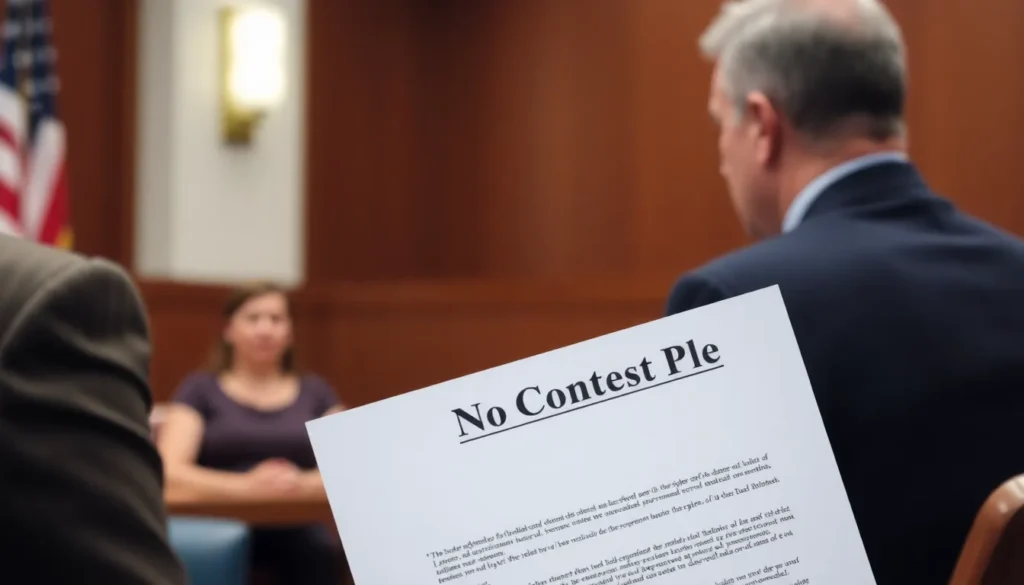
A no contest plea, also known by its Latin term nolo contendere, is a type of plea entered by a defendant in a criminal case. By pleading no contest, the defendant neither admits guilt nor disputes the charges brought by the prosecution. Instead, the plea results in a conviction similar to a guilty plea, but it typically limits the ability of the plea to be used as evidence of wrongdoing in subsequent civil lawsuits. This plea is recognized in many jurisdictions but is governed by specific procedural rules that can vary by state or country.
Detailed Explanation
The no contest plea serves as an alternative to pleading guilty or not guilty. When a defendant pleads guilty, they admit to committing the crime, and the court proceeds to sentencing. When pleading not guilty, the case goes to trial, where the prosecution must prove guilt beyond a reasonable doubt. In contrast, a no contest plea avoids an explicit admission of guilt while allowing the case to conclude without trial.
Legally, a no contest plea results in a conviction and sentencing as if the defendant had pleaded guilty. However, its primary legal advantage is that it generally cannot be introduced as evidence of liability in related civil cases. This means that if a civil lawsuit arises from the same facts as the criminal charge, the no contest plea cannot be used to establish fault, unlike a guilty plea.
Despite these benefits, courts may limit or reject no contest pleas in certain serious offenses or when the plea would not serve justice. Additionally, the acceptance of a no contest plea often requires the court’s approval and sometimes the prosecutor’s consent.
How It Works
When a defendant is charged with a criminal offense, they have several plea options. If the defendant chooses to plead no contest, the following general process occurs:
- Filing the Plea: The defendant formally submits a no contest plea to the court, often through their attorney.
- Court Approval: The judge evaluates whether to accept the plea. The judge may consider the nature of the offense, the circumstances of the case, and the defendant’s record.
- Sentencing: Upon acceptance, the defendant is convicted and sentenced as if they had pleaded guilty.
- Civil Implications: The plea typically cannot be used as evidence of guilt in civil proceedings, although this can vary by jurisdiction.
The no contest plea is often used in cases where the defendant wishes to avoid the time, expense, and publicity of a trial but does not want to admit guilt formally. It can also be strategic in cases where civil liability might be a concern.
Examples
- Example 1: A defendant charged with a misdemeanor assault pleads no contest. The court sentences them to probation. Later, a civil lawsuit for damages cannot use the no contest plea as proof of guilt.
- Example 2: In a DUI case, the defendant pleads no contest to avoid admitting guilt but accepts the penalties. The plea is entered and accepted by the court, resulting in a conviction without trial.
- Example 3: A defendant accused of a minor theft pleads no contest to expedite case resolution. The judge accepts the plea, and the defendant is sentenced accordingly.
Pros and Cons
Pros:
- Allows the case to be resolved without admitting guilt.
- Can prevent the plea from being used as evidence in civil litigation.
- May expedite case resolution and reduce trial costs.
- Allows defendants to avoid the uncertainty and publicity of a trial.
Cons:
- Results in a conviction and sentencing similar to a guilty plea.
- May not be accepted by the court or prosecutor in all cases.
- Does not provide a chance to contest the charges at trial.
- May still carry collateral consequences such as loss of certain rights or professional licenses.
Comparison Table
| Aspect | No Contest Plea | Guilty Plea |
|---|---|---|
| Meaning | Defendant neither admits nor disputes the charges but accepts conviction. | Defendant admits to the charges and accepts conviction. |
| Effect in Criminal Case | Results in conviction and sentencing like a guilty plea. | Results in conviction and sentencing. |
| Effect in Civil Case | Generally cannot be used as evidence of guilt or liability. | Can be used as evidence of liability. |
| Requires Court Approval | Usually required. | Not required, but court must accept plea. |
| Use | Used to avoid trial and admission of guilt. | Used to admit guilt and avoid trial. |
Decision Checklist
- Use this if: You want to resolve a criminal case without admitting guilt and are concerned about potential civil lawsuits.
- Avoid this if: You want to challenge the charges or maintain a not guilty plea to go to trial.
- Check this first: Whether your jurisdiction allows no contest pleas and if the court and prosecutor will accept it in your case.
What is the easiest way to understand a No Contest Plea?
Think of a no contest plea as a way for a defendant to say, “I won’t fight these charges, but I’m not admitting I did anything wrong.” The court treats it like a guilty plea for sentencing, but the plea cannot usually be used against the defendant in a related civil lawsuit where someone might seek damages.
FAQ
Can a no contest plea be used against me in a civil lawsuit?
Generally, a no contest plea cannot be used as an admission of guilt or liability in a civil lawsuit arising from the same facts. However, laws vary by jurisdiction, so this is not universally guaranteed.
Is a no contest plea the same as a guilty plea?
While both result in a criminal conviction and sentencing, a no contest plea does not include an explicit admission of guilt, unlike a guilty plea.
Can I plead no contest to any criminal charge?
Not always. Some jurisdictions or courts may restrict the use of no contest pleas for certain serious offenses, and acceptance often requires court and prosecutor approval.





Leave a Reply