
Short Answer
Overview
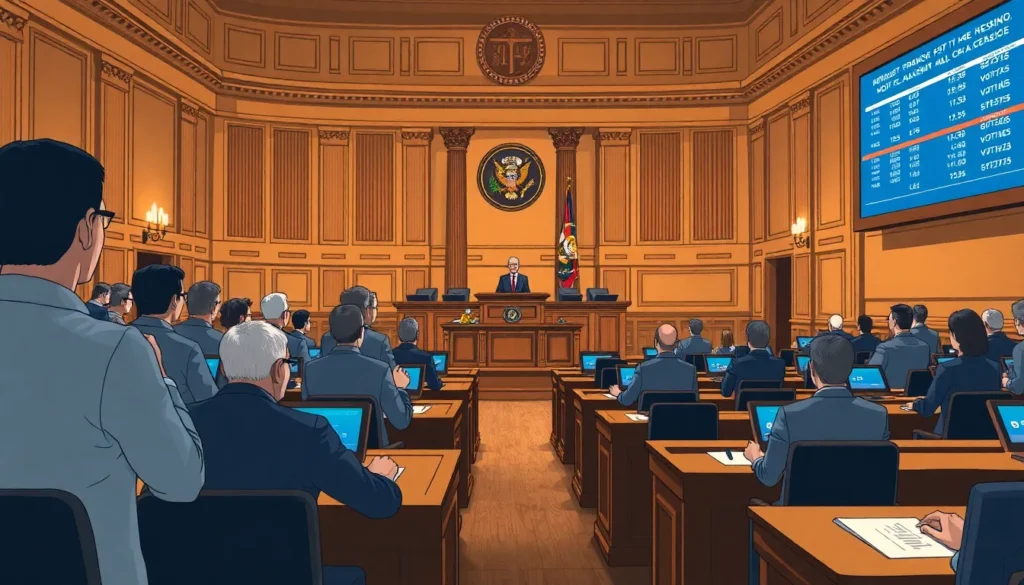
A roll call vote is a method of voting used primarily in legislative bodies and other decision-making assemblies where each participant’s vote is recorded individually by name. This process contrasts with less formal voting methods such as voice votes or show-of-hands, where individual votes are not documented. Roll call votes ensure transparency and accountability by providing a detailed record of how each member voted on a specific issue.
Detailed Explanation
Roll call votes are employed to document the opinions of members on motions, bills, or resolutions. Typically, they occur when a formal, recorded vote is required by the rules of the assembly or when members request it to ensure that individual positions are made public. This procedure enhances the democratic process by allowing constituents and observers to track how representatives vote, thus promoting responsibility and openness.
In many legislative systems, roll call votes are mandatory for significant decisions such as budget approvals, amendments, or controversial legislation. The process helps prevent ambiguity in decision-making outcomes and serves as an official record for historical and legal reference.
How It Works
During a roll call vote, the presiding officer calls out the names of members, or an automated system does so, and each member responds with their vote—commonly “yea,” “nay,” or “present” (abstention). The votes are recorded individually and tallied to determine the final outcome.
The exact procedure may vary depending on the assembly’s rules and technology used. In some bodies, members physically respond when their name is called; in others, electronic voting systems allow members to register their votes remotely but still individually. Once all votes are recorded, the presiding officer announces the results along with the vote count.
Examples
- United States Congress: In both the House of Representatives and the Senate, roll call votes are frequently used for important legislation. These votes are publicly available, allowing constituents to see how their elected officials voted.
- Local Government Councils: Many city and county councils use roll call votes for ordinances and resolutions, especially those that are contentious or require a clear record.
- International Organizations: Bodies like the United Nations General Assembly may use roll call votes to record member states’ positions on various resolutions, ensuring transparency in international decision-making.
Why It Matters
Roll call votes are significant for ensuring transparency and accountability in governance and decision-making processes. By recording individual votes, they allow citizens, journalists, and other stakeholders to monitor representatives’ actions. This transparency helps maintain trust in democratic institutions and provides a mechanism for holding officials accountable for their decisions.
Common Misconceptions
Misconception: Roll call votes always take a long time.
Correction: While roll call votes are generally more time-consuming than voice votes, modern electronic systems have significantly reduced the time required to complete them.
Misconception: Roll call votes are used for every decision.
Correction: Many legislative bodies reserve roll call votes for significant or controversial matters; routine decisions often use quicker voting methods such as voice votes.
Pros and Cons
Comparison Table
| Aspect | Roll Call Vote | Voice Vote |
|---|---|---|
| Meaning | Individual votes are recorded and publicly documented. | Members vote verbally without individual recording. |
| Transparency | High, with detailed records of each member’s vote. | Low, as individual votes are not recorded. |
| Time Required | Longer due to individual recording. | Shorter; immediate group response. |
| Use Cases | Important or controversial decisions. | Routine or non-controversial matters. |
Decision Checklist
- Use this if: A formal, recorded vote is required by rules or for accountability.
- Avoid this if: Speed is critical and individual vote records are not necessary.
- Check this first: Assembly rules and the significance of the motion to determine if a roll call vote is appropriate.
What is the easiest way to understand a Roll Call Vote?
Think of a roll call vote as a classroom attendance check combined with a vote: each member’s name is called, and they respond with their choice, which is then recorded. This method ensures everyone’s vote is counted and made public, unlike a simple show of hands where individual votes are not tracked.
FAQ
What is the main difference between a roll call vote and a voice vote?
The main difference is that a roll call vote records each member's individual vote by name, while a voice vote collects a collective verbal response without recording individual positions.
Are roll call votes always required in legislative bodies?
No, roll call votes are typically required for significant or controversial matters, but many routine decisions use quicker methods such as voice votes or show-of-hands.
Can roll call votes be conducted electronically?
Yes, many modern legislative bodies use electronic voting systems to conduct roll call votes efficiently while still recording individual votes.




Leave a Reply