
Short Answer
Overview
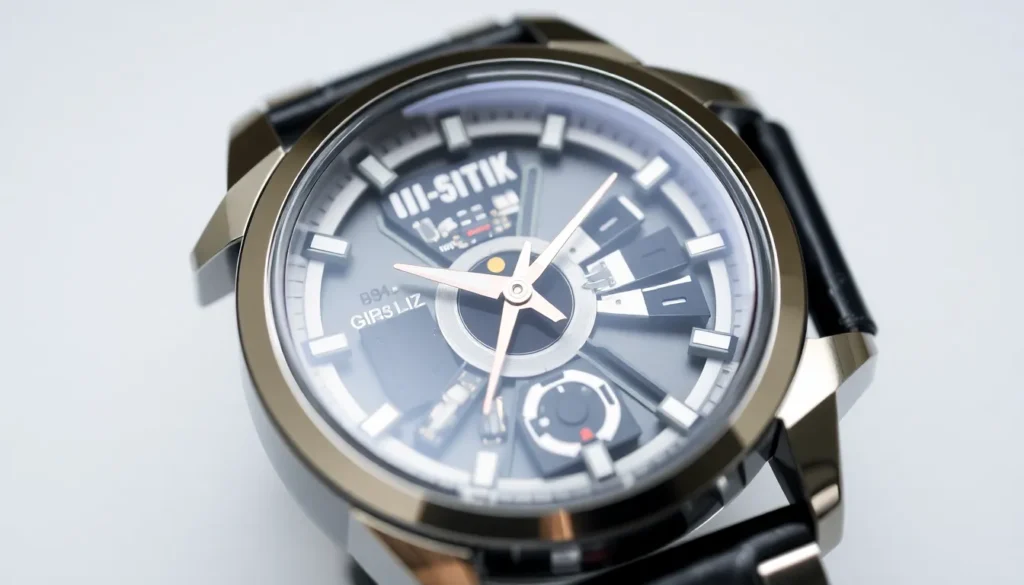
A quartz watch is a wristwatch or pocket watch that uses an electronic oscillator regulated by a quartz crystal to keep time. This technology allows for highly accurate timekeeping compared to traditional mechanical watches. Introduced in the late 1960s, quartz watches quickly became popular due to their precision, lower cost, and ease of maintenance.
Detailed Explanation
Quartz watches operate by converting the mechanical vibrations of a quartz crystal into an electronic signal. The quartz crystal oscillates at a consistent frequency when an electrical current is applied, typically 32,768 times per second. This consistent oscillation creates a signal that the watch’s circuitry counts to accurately measure seconds, minutes, and hours. Unlike mechanical watches that rely on springs and gears, quartz watches use electronic components and a battery as their power source.
How It Works
The core component of a quartz watch is the quartz crystal, shaped and cut to vibrate at a specific frequency when stimulated by an electric current. A small battery sends electricity to the quartz crystal, causing it to vibrate. These vibrations generate an electrical signal with a precise frequency. The watch’s integrated circuit counts these vibrations and converts them into regular pulses, usually one per second, which drive a small stepping motor. This motor moves the watch hands or updates the digital display, thereby indicating the time.

Examples
- Analog quartz watches, which use traditional hour, minute, and second hands driven by the quartz-controlled motor.
- Digital quartz watches, which display the time numerically on an LCD or LED screen.
- Hybrid models that combine analog hands with digital features, such as alarms or chronographs.
Pros and Cons
- Pros: Quartz watches are highly accurate, usually losing or gaining only a few seconds per month. They are generally affordable, require less maintenance than mechanical watches, and have longer battery life.
- Cons: Quartz watches rely on batteries that require periodic replacement. Some users prefer the craftsmanship and tradition of mechanical watches. Additionally, quartz watches may have less aesthetic and mechanical complexity, which can be a drawback for collectors.
Comparison Table
| Aspect | Quartz Watch | Mechanical Watch |
|---|---|---|
| Meaning | Timepiece regulated by a quartz crystal oscillator and powered by a battery. | Timepiece regulated by mechanical components such as springs and gears, powered by a wound mainspring. |
| Accuracy | Typically ±15 seconds per month. | Typically ±5 to 15 seconds per day. |
| Power Source | Battery. | Manual winding or automatic (self-winding) via wrist movement. |
| Maintenance | Battery replacement every few years; minimal servicing. | Regular servicing required every 3-5 years. |
Decision Checklist
- Use this if you want accurate, low-maintenance, and affordable timekeeping.
- Avoid this if you prefer traditional craftsmanship or mechanical complexity in watches.
- Check this first if battery replacement and electronic components suit your lifestyle.
What is the easiest way to understand Quartz Watches?
The easiest way to understand a quartz watch is to think of it as a watch that uses a tiny electronic crystal to keep time very precisely, powered by a small battery, rather than relying on mechanical parts moving inside the watch.
FAQ
How accurate are quartz watches?
Quartz watches are typically accurate to within ±15 seconds per month, which is significantly more precise than most mechanical watches.
Do quartz watches require maintenance?
Quartz watches require minimal maintenance apart from periodic battery replacement, usually every 1 to 3 years depending on the model.
What powers a quartz watch?
A quartz watch is powered by a small battery that provides electrical energy to the quartz crystal oscillator and the watch's electronic circuit.



Leave a Reply