
Short Answer
Overview
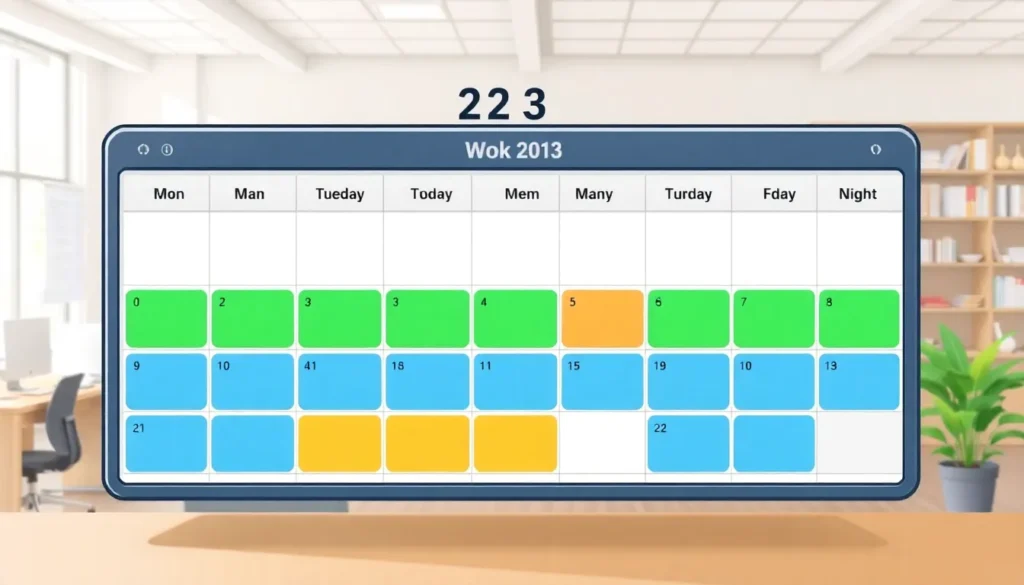
The 2 2 3 work schedule, also known as the Panama schedule, is a shift work pattern designed to provide continuous staffing coverage while balancing employee work and rest periods. It is commonly used in industries such as healthcare, manufacturing, and emergency services, where operations run 24/7. The schedule divides the workweek into a repeating cycle where employees work two days, then have two days off, followed by three days of work, and then the cycle repeats with three days off, two days on, and two days off.
Detailed Explanation
This scheduling method is structured around a 14-day (two-week) cycle that ensures each employee works 7 days and has 7 days off within that period. The cycle consists of a mix of consecutive workdays and rest days to maintain operational coverage and reduce employee burnout. Typically, the schedule includes three shifts per day—morning, evening, and night—allowing continuous operations without gaps.
How It Works
In the 2 2 3 schedule, employees are divided into teams or shifts that rotate following this pattern:
- Work 2 consecutive days
- Off 2 consecutive days
- Work 3 consecutive days
- Off 3 consecutive days
- Work 2 consecutive days
- Off 2 consecutive days
This rotation repeats every two weeks. The schedule allows for every day of the week to be covered by at least one shift, providing continuous staffing. Employees benefit from a predictable pattern of work and rest days, often resulting in every other weekend off.
Examples
Example 1: An employee starts their cycle on Monday:
- Monday-Tuesday: Work
- Wednesday-Thursday: Off
- Friday-Sunday: Work
- Next Monday-Wednesday: Off
- Thursday-Friday: Work
- Saturday-Sunday: Off
Example 2: The next two-week cycle might start with the employee off on Monday-Tuesday, then work Wednesday-Thursday, off Friday-Sunday, and so on, creating a rotating pattern.
Why It Matters
The 2 2 3 work schedule is significant because it offers a balance between operational needs and employee well-being. It allows employers to maintain 24/7 coverage without requiring excessive overtime or complicated shift swaps. Employees gain regular, predictable days off, which can improve work-life balance and reduce fatigue compared to more erratic shift patterns.
Common Misconceptions
Misconception: The 2 2 3 schedule means employees work only two days a week.
Correction: Employees work a total of 7 days within a 14-day cycle, alternating between blocks of 2 and 3 consecutive workdays.
Misconception: This schedule is the same for all industries.
Correction: While the 2 2 3 pattern is widely used, its implementation varies depending on operational requirements and the number of shifts per day.
Pros and Cons
Pros:
- Predictable and balanced work-rest cycle
- Ensures continuous coverage for 24/7 operations
- Reduces employee fatigue with regular days off
- Facilitates fair distribution of weekend work
Cons:
- May require working on weekends or holidays
- Adjusting to rotating shifts can disrupt circadian rhythms
- Complex scheduling and coordination needed among teams
- Not suitable for all job types or employee preferences
Comparison Table
| Aspect | 2 2 3 Work Schedule | Traditional 5-Day Workweek |
|---|---|---|
| Meaning | Shift pattern alternating 2 days on, 2 off, then 3 days on | Fixed 5 consecutive workdays, typically Monday to Friday |
| Work Days Per 2 Weeks | 7 days | 10 days |
| Coverage | 24/7 continuous coverage | Typically business hours only |
| Employee Rest | Regular blocks of days off, including some weekends | Weekends off mostly |
| Shift Rotation | Rotating shifts possible | Usually fixed daytime hours |
Decision Checklist
What is the easiest way to understand the 2 2 3 work schedule?
The simplest way to understand the 2 2 3 schedule is to think of a two-week cycle where an employee works seven days split into segments of two days, then two days off, then three days, followed by three days off, and so on. This pattern repeats continuously, ensuring both coverage and rest periods.
FAQ
How many days do employees work in a 2 2 3 schedule?
Employees work 7 days within a 14-day cycle, split into blocks of 2 and 3 consecutive workdays.
Is the 2 2 3 schedule suitable for all industries?
It is primarily used in industries requiring continuous coverage such as healthcare and manufacturing, but it may not suit all job types or employee preferences.
Do employees have regular weekends off in a 2 2 3 schedule?
Employees often have every other weekend off, but specific weekends off can vary depending on shift rotation and staffing needs.






Leave a Reply