
Short Answer
Overview
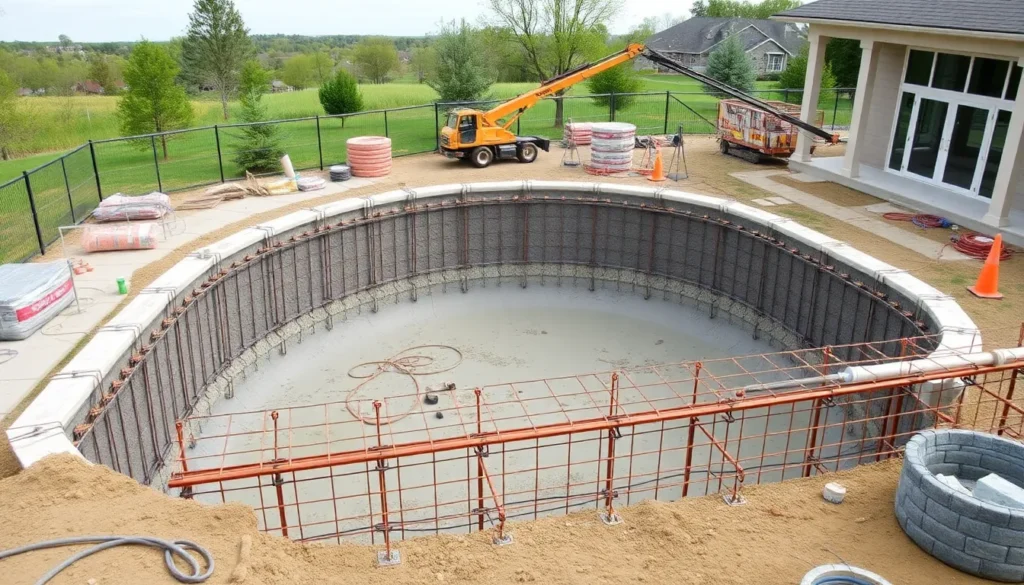
A gunite pool is a swimming pool made from a sprayed concrete mixture called gunite, which consists of cement, sand, and water. This material is applied pneumatically through a high-pressure hose onto a steel reinforcement framework (rebar) to form the pool’s shell. Gunite pools are known for their strength, longevity, and adaptability in shape and size, making them a common choice for custom-designed pools.
Detailed Explanation
The term “gunite” refers specifically to the dry-mix method of spraying concrete, where the dry ingredients are combined and then mixed with water at the nozzle during application. This differs from the “shotcrete” wet-mix process, though the terms are often used interchangeably in the industry. The gunite mixture is pneumatically projected onto the rebar frame, creating a dense and durable shell. After curing, the surface is typically finished with a plaster or aggregate coating to ensure water tightness and aesthetic appeal.
How It Works
The construction of a gunite pool involves several key steps:

- Excavation: The pool site is excavated to the desired shape and depth.
- Rebar Installation: A steel reinforcement cage is built to provide structural integrity.
- Gunite Application: The gunite mixture is sprayed at high velocity onto the rebar framework, forming a solid shell.
- Curing: The concrete is allowed to cure, gaining strength over several days to weeks.
- Finishing: The interior surface is finished with plaster, tile, or aggregate for waterproofing and aesthetics.
This process allows for a high degree of customization in pool shape, depth, and features such as steps, benches, and spas.
Examples
- A residential backyard pool designed with custom curves and integrated spa features.
- A commercial hotel pool with a large freeform shape and durable surface finish.
- A public aquatic center pool constructed to meet specific depth and size requirements with reinforced gunite shell for longevity.
Pros and Cons
- Pros: Extremely durable and long-lasting; highly customizable shapes and sizes; resistant to cracking when properly constructed; suitable for complex designs.
- Cons: Construction can be time-consuming; requires skilled labor; higher initial cost compared to some other pool types; surface maintenance needed to prevent staining or etching.
Comparison Table
| Aspect | Gunite Pool | Fiberglass Pool |
|---|---|---|
| Meaning | Concrete pool constructed by spraying a dry mix onto rebar framework. | Pre-molded pool shell made from fiberglass installed as a single piece. |
| Customization | Highly customizable shapes and sizes. | Limited to factory designs and sizes. |
| Durability | Very durable and resistant to cracking if well maintained. | Durable but can be prone to stress cracks and gel coat damage. |
| Installation Time | Longer due to curing and construction phases. | Shorter, typically installed in days. |
Decision Checklist
- Use this if: You want a custom-shaped pool with complex features and long-term durability.
- Avoid this if: You need a quick installation or have a limited budget.
- Check this first: Ensure access for construction equipment and availability of skilled gunite applicators in your area.
What is the easiest way to understand a Gunite Pool?
The simplest way to understand a gunite pool is to think of it as a custom-built concrete swimming pool, where a special dry concrete mix is sprayed onto a steel framework to create a highly durable and flexible shell. This method allows builders to design pools in virtually any shape or size, making gunite pools a versatile option for many applications.
FAQ
What is the difference between gunite and shotcrete?
Gunite is a dry-mix concrete sprayed through a hose where water is added at the nozzle, while shotcrete is a wet-mix concrete where water is mixed with the concrete before spraying. Both methods are used for pool construction but have slight procedural differences.
How long does it take to build a gunite pool?
The construction of a gunite pool typically takes several weeks to a few months, factoring in excavation, rebar installation, gunite application, curing time, and finishing.
Are gunite pools durable?
Yes, gunite pools are very durable and can last several decades when properly constructed and maintained, including regular surface care and water chemistry balance.
Leave a Reply