
Short Answer
Overview
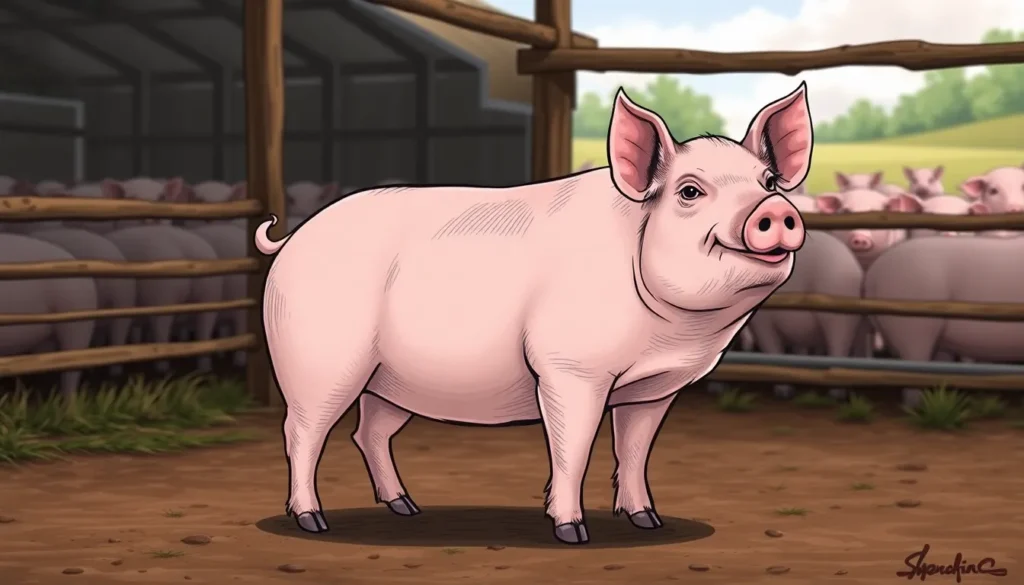
A barrow pig is a male pig that has been castrated before reaching sexual maturity. This practice is commonly employed in commercial pig farming to improve meat quality and manage animal behavior. Barrows are distinct from boars, which are intact males, and gilts or sows, which are female pigs. The castration process typically occurs at a young age and influences the growth rate, fat distribution, and temperament of the pig.
Detailed Explanation
Castration of male pigs results in barrows, which are usually preferred for pork production over intact males due to reduced aggression and more uniform meat quality. Barrows tend to deposit more fat and have a milder flavor compared to boars. The procedure is performed to prevent the development of boar taint, an unpleasant odor and taste in pork from intact males. Barrows also exhibit calmer behavior, making them easier to manage in group housing.
How It Works
The castration of piglets is typically done surgically within the first few weeks after birth. The removal of the testicles eliminates the production of male hormones such as testosterone, which are responsible for boar taint and aggressive behavior. Following castration, barrows experience physiological changes that lead to different growth patterns and fat deposition compared to intact males. Farmers raise barrows under controlled conditions to optimize weight gain and meat quality for commercial markets.

Examples
- In commercial pork production, barrows are raised alongside gilts (young females) to produce consistent, high-quality pork.
- Barrows are often favored in large-scale operations because their behavior is more manageable compared to boars, reducing injury risks among pigs.
- Some regional pork markets specifically demand barrow pork due to its tenderness and flavor profile.
Pros and Cons
Pros:
- Reduced aggressive behavior, enhancing animal welfare and handling safety.
- Improved meat quality by eliminating boar taint.
- More consistent fat distribution, which is desirable in many pork products.
Cons:
- Castration is a surgical procedure that can cause pain and stress if not properly managed.
- Barrows typically have slower growth rates and less lean meat compared to intact males.
- Animal welfare concerns have led to debates about the ethics of castration without anesthesia.
Comparison Table
| Aspect | Barrow Pig | Boar (Intact Male Pig) |
|---|---|---|
| Meaning | Castrated male pig raised for meat | Intact (uncastrated) male pig |
| Behavior | Calmer and less aggressive | More aggressive and territorial |
| Meat Quality | Less likely to have boar taint, more fat | Risk of boar taint, leaner meat |
| Growth Rate | Generally slower than boars | Faster growth and better feed efficiency |
Decision Checklist
- Use this if you prioritize meat quality and animal manageability over maximum growth rate.
- Avoid this if you want faster growth and leaner meat, and can manage intact males safely.
- Check this first if animal welfare regulations or consumer preferences affect castration practices in your region.
What is the easiest way to understand Barrow Pig?
The simplest way to understand a barrow pig is to think of it as a male pig that has been castrated to improve the quality of pork and make the animal easier to handle. This is a common practice in pig farming to avoid undesirable meat flavors and reduce aggressive behaviors.
FAQ
Why are male pigs castrated to become barrows?
Male pigs are castrated to reduce aggressive behavior and prevent boar taint, an unpleasant odor and taste in pork from intact males. Castration improves meat quality and makes pigs easier to manage.
At what age are pigs typically castrated?
Pigs are usually castrated within the first few weeks of life, often between one and two weeks of age, to minimize stress and complications.
Do barrows grow slower than intact male pigs?
Yes, barrows typically have a slower growth rate and deposit more fat compared to intact males, which grow faster and leaner but carry risks associated with boar taint and behavior.






Leave a Reply