
Short Answer
Overview
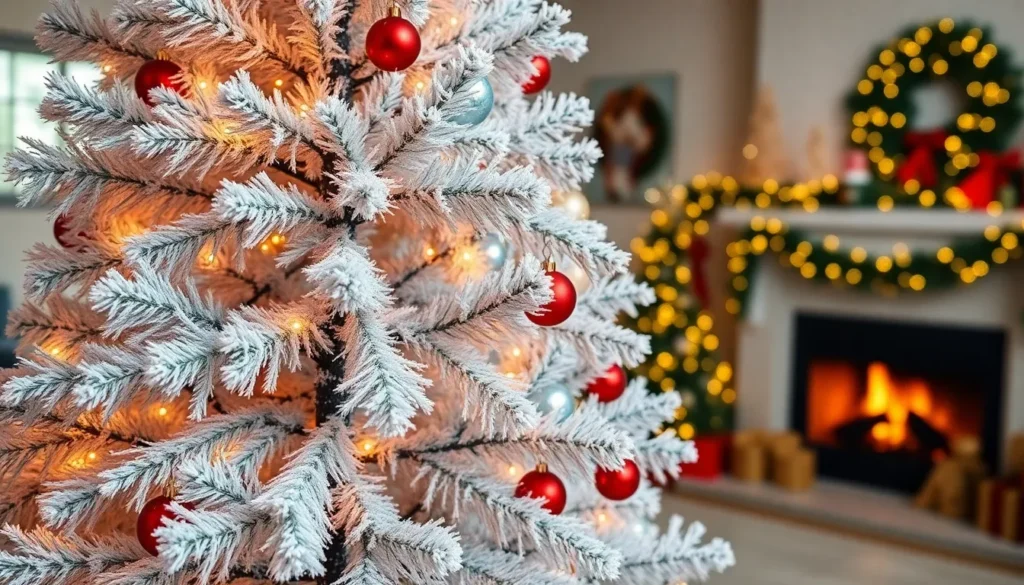
A flocked Christmas tree is a tree—either natural or artificial—that has been treated with a substance called flocking to give it the appearance of being covered in snow. Flocking involves applying a white, powdery or fibrous material to the branches and needles of the tree, simulating the look of freshly fallen snow. This decorative technique is used to enhance the festive ambiance of Christmas decorations by evoking a wintry atmosphere, regardless of the actual climate where the tree is displayed.
Detailed Explanation
Flocking is a process that originated in the textile industry and later found application in holiday decorations. The flocking material typically consists of cellulose fibers, adhesive binders, and sometimes added coloring agents to imitate snow’s texture and appearance. When applied to Christmas trees, the flocking not only alters the tree’s color but also adds a tactile dimension, creating a soft, snow-like surface on the branches.
There are two main types of flocked Christmas trees: natural and artificial. Natural trees are sprayed or dusted with flocking material after being cut. Artificial trees are manufactured with flocked branches already attached or are flocked after assembly. Each type offers distinct aesthetics and maintenance considerations.
How It Works
The flocking process generally involves spraying or dusting a mixture of adhesive and fibers onto the tree’s branches. For natural trees, this must be done soon after cutting to ensure the flocking adheres well. The adhesive binds the fibers to the needles and branches, creating a textured, snow-like coating. In some cases, compressed air or electrostatic methods are used to achieve a more even and realistic coverage.
Once flocked, the tree is left to dry and cure, ensuring the flocking material remains in place. The result is an appearance reminiscent of freshly fallen snow, with a matte white finish that contrasts with the green or artificial foliage beneath. Flocked trees can be decorated similarly to traditional trees, with lights and ornaments complementing the snowy effect.
Examples
- Natural Flocked Trees: Real pine or fir trees sprayed with white flocking at tree farms or retail stores before sale. These are popular in regions without natural snowfall for achieving a wintery look.
- Artificial Flocked Trees: Pre-lit or non-lit artificial trees produced with flocked branches. These trees come in various sizes and styles, often marketed for their maintenance ease and long-lasting appearance.
- DIY Flocking: Some consumers flock their own trees at home using commercially available flocking kits, which include adhesive sprays and flock fibers. This allows customization of the snow coverage intensity.
Why It Matters
Flocked Christmas trees provide a distinctive aesthetic that enhances holiday décor by creating the illusion of a snowy environment indoors. This can be particularly meaningful in regions where snow is uncommon during the holiday season, allowing people to simulate a traditional winter holiday atmosphere. Additionally, flocked trees offer a visual contrast that can highlight ornaments and lights more effectively than plain green trees.
Common Misconceptions
Misconception: Flocked trees are always artificial.
Correction: Both natural and artificial trees can be flocked. Flocking is a treatment applied to the tree, not a type of tree itself.
Misconception: Flocking is permanent and cannot be removed.
Correction: Flocking can degrade, fall off, or be removed, especially from natural trees. It is not always a permanent treatment and requires careful handling.
Pros and Cons
Pros:
- Creates a visually appealing, snow-covered effect indoors.
- Enhances the festive atmosphere with a wintery aesthetic.
- Can complement a wide range of Christmas decorations and lighting styles.
- Available for both natural and artificial trees.
Cons:
- Flocking material can be messy and may shed onto floors and furniture.
- May be flammable if not treated with fire-resistant chemicals.
- Natural flocked trees require careful storage and disposal.
- Can be more expensive than non-flocked trees.
Comparison Table
| Aspect | Flocked Christmas Tree | Traditional Christmas Tree |
|---|---|---|
| Meaning | Tree coated with artificial snow to simulate a wintery look. | Tree in natural or artificial green state, without snow-like treatment. |
| Appearance | White, snow-like coating on branches. | Green foliage, sometimes with natural color variations. |
| Maintenance | Requires careful handling to avoid flock shedding. | Generally easier to clean, especially artificial versions. |
| Cost | Usually higher due to flocking process. | Varies, often less expensive without flocking. |
| Suitability | Ideal for creating a snowy effect indoors. | Suitable for traditional or natural holiday decor. |
Decision Checklist
What is the easiest way to understand a Flocked Christmas Tree?
The easiest way to understand a flocked Christmas tree is to think of a traditional Christmas tree that has been dusted or sprayed with white material designed to look like snow, creating a festive, wintry decoration indoors regardless of the actual weather outside.
FAQ
Can flocking be applied to any type of Christmas tree?
Flocking can be applied to both natural and artificial Christmas trees, although the method and effectiveness may vary depending on the tree's material and condition.
Is flocking safe to use indoors?
Most commercially available flocking materials are designed for indoor use; however, it is important to ensure they are fire-retardant and to follow safety instructions to minimize risks.
Does flocking affect the longevity of a natural Christmas tree?
Flocking does not significantly affect the tree's longevity but may complicate disposal and requires careful handling to prevent shedding.






Leave a Reply