
Short Answer
Overview
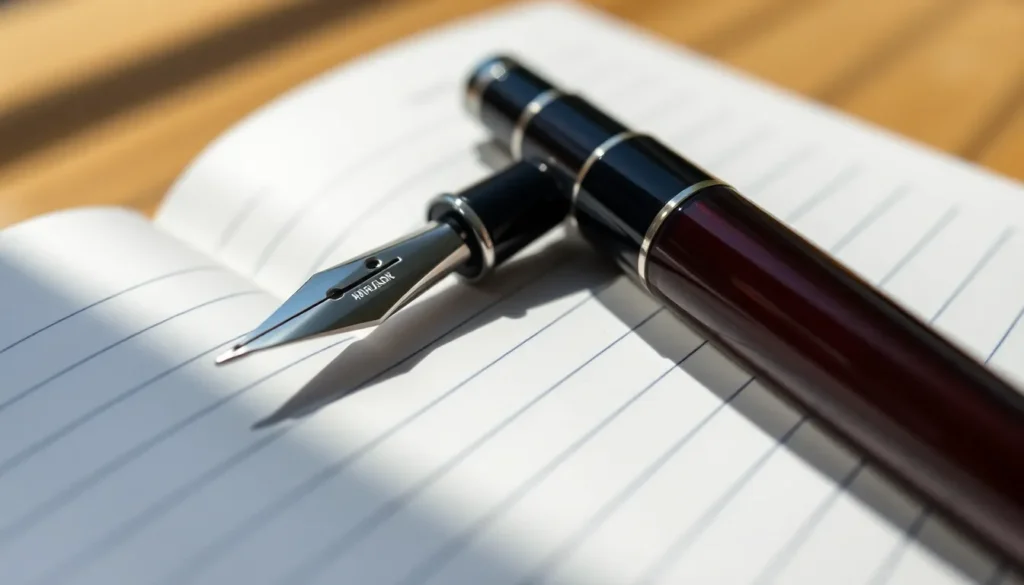
A fountain pen is a writing tool that dispenses ink onto paper via a nib connected to an internal reservoir. Unlike disposable ballpoint or rollerball pens, fountain pens are designed to be refillable and provide a smooth, consistent writing experience. They have been used for centuries and remain popular among enthusiasts, calligraphers, and collectors.
Detailed Explanation
Fountain pens consist of several key components: the nib, feed, ink reservoir, and body or barrel. The nib, typically made of metal, is the pointed tip that contacts the writing surface. Its design controls the flow and thickness of ink lines. The feed, located beneath the nib, regulates ink delivery from the reservoir to the nib using capillary action and gravity. The reservoir stores the ink and can be a cartridge, converter, or built-in filling mechanism. The pen body houses these parts and provides a comfortable grip.
How It Works
Ink is drawn from the reservoir through the feed to the nib by capillary action, which pulls the liquid along narrow channels. Gravity assists ink flow when the pen is oriented downward during writing. The nib’s slit allows ink to flow evenly onto paper as pressure is applied. This system allows for varied line widths and smooth strokes depending on nib flexibility and writing style. Fountain pens require periodic refilling and cleaning to maintain optimal performance.

Examples
- Cartridge Fountain Pens: Use pre-filled ink cartridges that can be replaced easily.
- Converter Fountain Pens: Use an internal mechanism to draw ink from bottled sources while retaining cartridge compatibility.
- Piston-Fill Fountain Pens: Have a built-in piston mechanism to fill the reservoir directly from ink bottles.
- Demonstrator Fountain Pens: Feature transparent bodies to show the ink level and internal workings.
Pros and Cons
Pros:
- Provides a smooth, customizable writing experience.
- Refillable and environmentally friendly compared to disposable pens.
- Available in a variety of nib sizes and styles for different writing needs.
- Often considered aesthetically pleasing and collectible.
Cons:
- Requires maintenance such as cleaning and refilling.
- More expensive upfront than disposable pens.
- Ink can smudge or bleed on some papers.
- Not as convenient for quick, casual writing or travel.
Comparison Table
| Aspect | Fountain Pen | Ballpoint Pen |
|---|---|---|
| Meaning | Writing instrument with nib and liquid ink reservoir | Pen with a rotating ball tip that dispenses oil-based ink |
| Ink Delivery | Capillary action and gravity | Pressurized ball mechanism |
| Refill Method | Cartridge, converter, piston fill | Replaceable ink cartridge |
| Writing Experience | Smoother, variable line width | Consistent, less smooth |
| Maintenance | Regular cleaning required | Minimal maintenance |
Decision Checklist
- Use this if you value handwriting quality, enjoy traditional writing tools, or seek customization.
- Avoid this if you prefer low-maintenance, quick, and portable writing instruments.
- Check this first your preferred nib size, ink type, and maintenance willingness.
What is the easiest way to understand a Fountain Pen?
The easiest way to understand a fountain pen is to think of it as a pen that uses liquid ink flowing through a metal tip controlled by gravity and capillary action, providing a smooth and expressive writing experience that differs from the thicker, oil-based ink of ballpoint pens.
FAQ
How do fountain pens differ from ballpoint pens?
Fountain pens use liquid ink delivered through a nib by capillary action and gravity, enabling smoother and more expressive writing. Ballpoint pens use a small rotating ball that dispenses thicker, oil-based ink, resulting in a different writing feel and less maintenance.
Do fountain pens require special ink?
Yes, fountain pens use water-based inks formulated specifically to flow smoothly through the nib and feed without clogging or damaging the pen. Using other types of ink, such as India ink or calligraphy ink, can harm the pen.
How often should a fountain pen be cleaned?
It is recommended to clean a fountain pen every few weeks or whenever changing ink colors. Regular cleaning prevents clogging, maintains smooth ink flow, and prolongs the pen’s lifespan.





Leave a Reply