
Short Answer
Overview
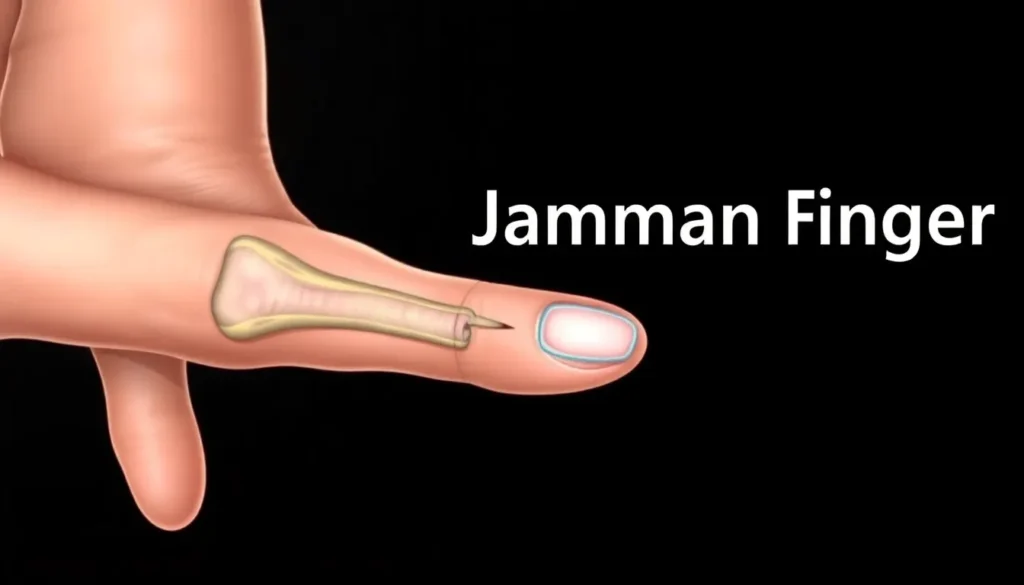
A jammed finger is an injury that occurs when the finger is forcefully compressed or jammed, typically affecting the joints, ligaments, or bones. This type of trauma commonly results from direct impact or sudden force, such as catching a ball incorrectly, slamming a finger in a door, or falling on an outstretched hand. The injury can cause pain, swelling, stiffness, and a reduced range of motion in the affected finger.
Detailed Explanation
The term “jammed finger” is a general description of an injury that primarily involves the compression of the finger’s bones and soft tissues. It can include sprains (damage to ligaments), strains (damage to muscles or tendons), and sometimes fractures. The most frequently affected joint is the distal interphalangeal joint or the proximal interphalangeal joint, depending on the mechanism of injury.
When the finger is jammed, the force drives the fingertip toward the hand, compressing the joint surfaces and stretching or tearing the ligaments. Swelling results from inflammation caused by tissue damage. In more severe cases, the injury may involve dislocation or ligament rupture, which require medical intervention.
How It Works
The injury mechanism involves an axial load applied to the fingertip, which drives the bones of the finger toward each other, compressing the joint. Ligaments that stabilize the joint are stretched or torn due to this sudden force. The body’s inflammatory response leads to swelling and pain. The resulting stiffness in the joint is often due to swelling, pain, or minor internal bleeding in the joint space (hemarthrosis).
Healing depends on the severity of the injury. Mild sprains may heal with rest and immobilization, while fractures or severe ligament injuries might require splinting, physical therapy, or surgery.
Examples
- Sports injury: A basketball player jamming a finger while catching or blocking a ball.
- Door impact: Accidentally slamming a finger in a car door causing immediate pain and swelling.
- Falls: Falling on an outstretched hand with fingers extended, causing a jammed finger due to impact.
Pros and Cons
Pros:
- Usually a minor injury that heals with conservative care.
- Early treatment can prevent long-term stiffness and dysfunction.
Cons:
- If untreated, may lead to chronic pain or reduced finger mobility.
- Severe cases may necessitate surgery or prolonged rehabilitation.
Comparison Table
| Aspect | Jammed Finger | Finger Fracture |
|---|---|---|
| Meaning | Compression injury to finger joints, ligaments, or soft tissue | Breakage or crack in one or more finger bones |
| Symptoms | Swelling, pain, stiffness, limited movement | Swelling, intense pain, bruising, deformity |
| Treatment | Rest, ice, splinting, physical therapy | Immobilization, possible surgery, longer healing time |
| Recovery Time | Days to weeks | Weeks to months |
Decision Checklist
- Use this if: You experience pain and swelling after a direct impact to the finger with no obvious deformity.
- Avoid this if: There is severe deformity, numbness, or inability to move the finger, indicating possible fracture or dislocation.
- Check this first: Assess for bruising, swelling, range of motion, and pain severity to determine if medical evaluation is needed.
What is the easiest way to understand a Jammed Finger?
A jammed finger is simply a finger that has been hit or compressed forcefully, causing pain and swelling around the joint due to injury to the ligaments, tendons, or bones. It is similar to a sprain in other joints and often feels sore and stiff but rarely involves serious bone damage.
FAQ
How can I tell if my finger is jammed or broken?
A jammed finger often presents with pain, swelling, and stiffness but typically no severe deformity. A broken finger may show bruising, severe pain, deformity, or inability to move the finger. Medical imaging such as X-rays is necessary to confirm a fracture.
What is the best immediate treatment for a jammed finger?
The recommended immediate treatment includes rest, applying ice to reduce swelling, compressing the finger with a bandage, and elevating it above heart level. Avoid moving the finger excessively to prevent further injury.
When should I see a doctor for a jammed finger?
Seek medical attention if there is intense pain, significant swelling, deformity, numbness, or inability to bend or straighten the finger, as these may indicate a more serious injury such as a fracture or dislocation.





Leave a Reply