
Short Answer
Overview
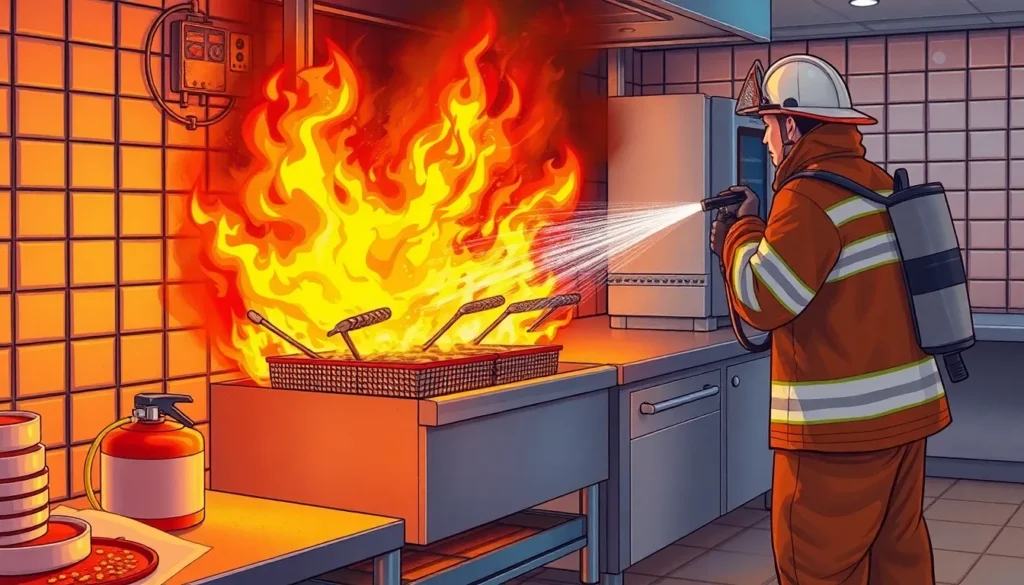
A Class K fire refers to a specific category of fire that involves cooking oils and fats. These fires typically occur in commercial kitchens or food preparation areas where vegetable oils, animal fats, and other cooking media are heated to high temperatures. Due to the unique properties of these substances, Class K fires require specialized extinguishing techniques and agents that differ from those used for other types of fires such as Class A (ordinary combustibles) or Class B (flammable liquids).
Detailed Explanation
Class K fires are caused by the ignition of combustible cooking media including vegetable oils, animal fats, and other grease-based substances. These materials have a high flash point and can burn intensely once ignited. The heat generated during cooking, combined with the presence of flammable fats, creates a risk of rapid fire spread, especially in commercial kitchen environments with deep fryers, grills, and grease traps.
Unlike other classes of fires, the extinguishing process must address both the high temperature and the chemical nature of burning oils. Standard water-based fire extinguishers are not only ineffective but can exacerbate the fire by causing splattering and spreading burning oil. Therefore, Class K fire extinguishers use wet chemical agents designed to cool the fire and create a soapy layer that smothers the flames.
How It Works
Class K fire extinguishing agents operate primarily through a process called saponification. When the wet chemical agent is applied to burning oils or fats, it reacts with the fatty acids to form a soapy foam on the surface. This foam acts as a barrier, preventing oxygen from reaching the fuel and thereby suppressing the fire. Additionally, the agent cools the burning oil to prevent re-ignition.
The extinguishing agents are typically delivered via portable fire extinguishers or fixed suppression systems installed in commercial kitchens. These systems are often integrated with kitchen ventilation hoods to automatically detect and suppress fires. The combination of chemical reaction and cooling effect makes Class K suppression highly effective for cooking oil fires.
Examples
- Deep fryer fire in a restaurant caused by overheated vegetable oil.
- Grease fire on a commercial grill where animal fats ignite during cooking.
- Fire in a commercial kitchen’s exhaust hood due to accumulated cooking oils.
Common Misconceptions
Misconception: Water is effective for extinguishing Class K fires.
Correction: Water should never be used on Class K fires as it can cause burning oil to splatter and spread, increasing the fire hazard.
Misconception: Class B fire extinguishers are suitable for cooking oil fires.
Correction: While Class B extinguishers handle flammable liquids, they are generally not designed for the high-temperature oils involved in Class K fires and may not prevent re-ignition.
Pros and Cons
Pros: Specialized wet chemical agents effectively cool and smother cooking oil fires, prevent re-ignition, and are safe for use in kitchen environments.
Cons: Class K extinguishers and suppression systems can be more expensive than standard extinguishers and require proper maintenance and training for effective use.
Comparison Table
| Aspect | Class K Fire | Class B Fire |
|---|---|---|
| Meaning | Fire involving cooking oils and fats | Fire involving flammable liquids like gasoline or solvents |
| Extinguishing Agent | Wet chemical agents causing saponification | Foam, dry chemical, or CO2 extinguishers |
| Typical Location | Commercial kitchens and food preparation areas | Industrial sites, garages, or areas with flammable liquids |
| Water Usage | Not recommended; can spread fire | Generally not recommended; depends on liquid |
Decision Checklist
What is the easiest way to understand Class K Fire?
A Class K fire is essentially a grease or oil fire that occurs during cooking, especially in commercial kitchens. The key to understanding it is recognizing that burning cooking oils behave differently from other flammable materials and require special extinguishing agents that cool the fire and create a barrier to prevent oxygen from fueling the flames.
FAQ
What materials cause a Class K fire?
Class K fires are caused by combustible cooking media such as vegetable oils, animal fats, and other cooking greases that ignite at high temperatures.
Why can't water be used on Class K fires?
Water can cause burning cooking oils to splatter and spread the fire, making it more dangerous. Instead, wet chemical agents are used to safely extinguish these fires.
Are Class K fire extinguishers required in all kitchens?
Many commercial kitchens are required by fire safety codes to have Class K fire extinguishers or suppression systems due to the high risk of cooking oil fires, though requirements may vary by jurisdiction.

Leave a Reply