
Short Answer
Overview
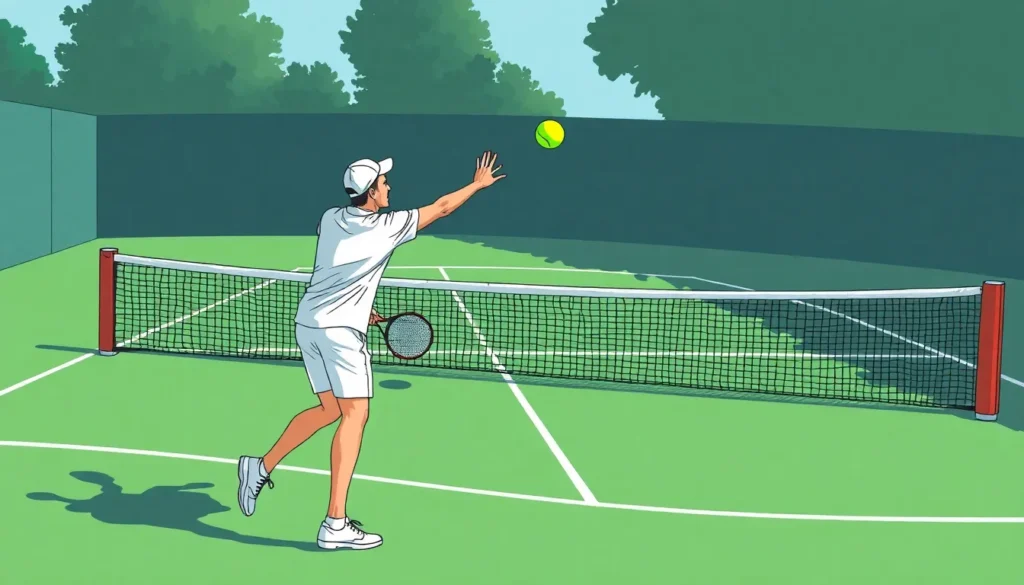
In tennis, a double fault is a specific serving error that results in the immediate loss of a point. It occurs when a player fails to deliver a valid serve on two consecutive attempts during their service turn. The serve is a critical aspect of tennis, and adherence to the serving rules is essential for maintaining fair play. Understanding what constitutes a double fault is important for players, officials, and spectators alike.
Detailed Explanation
During a player’s service game, they are required to serve the ball into the diagonally opposite service box. The server is allowed two attempts, known as the first serve and the second serve, to make a valid serve. A serve is considered valid if it lands within the correct service box without touching the net or the boundaries of the service area in an illegal manner. If the first serve is unsuccessful—meaning it does not land in the correct service box or violates other serving rules—the player is given a second serve.
A double fault occurs when the second serve also fails to meet the criteria for a valid serve. This means the player has made two consecutive serving errors, causing them to lose the point immediately. Unlike a single fault, which simply leads to the second serve opportunity, a double fault results in a point awarded to the opponent.
How It Works
The serving sequence in tennis is structured to give the server two attempts to start the point appropriately. Here’s how a double fault is identified and applied:
- First Serve: The server attempts to hit the ball into the proper service box. If the serve is valid, play continues.
- First Fault: If the first serve is invalid, it is called a fault, and the server is allowed a second serve.
- Second Serve: The server attempts a second serve. If this serve is valid, play continues.
- Double Fault: If the second serve is also invalid, a double fault is called, and the server loses the point.
Common reasons for a fault include the ball landing outside the service box, hitting the net and not landing in the correct area, or foot faults (stepping on or over the baseline before hitting the serve). A double fault can be particularly disadvantageous because it awards a free point to the opponent without any rally taking place.
Examples
- A player serves the ball wide on their first attempt, missing the service box. On the second serve, the ball hits the net and falls short, failing to reach the service box. This results in a double fault and the opponent gains a point.
- During a match, a player commits a foot fault on their first serve attempt and then serves the ball into the net on the second serve. This constitutes a double fault, awarding the point to the opponent.
- In a high-pressure situation such as a tiebreak, a player double faults twice in a row, leading to a shift in momentum and potentially affecting the match outcome.
Pros and Cons
Pros:
- Encourages players to balance power with accuracy in serving.
- Introduces an element of risk and strategy to the serve.
- Helps maintain fairness by penalizing serving errors.
Cons:
- Can lead to quick loss of points, affecting player confidence.
- May disproportionately affect players with aggressive serving styles.
- Sometimes causes controversy over foot faults and line calls related to double faults.
Comparison Table
| Aspect | Double Fault | Single Fault |
|---|---|---|
| Meaning | Two consecutive invalid serves resulting in loss of point | First serve is invalid, but second serve still available |
| Result | Point awarded to opponent | Second serve attempt granted |
| Frequency | Less common than single faults | Relatively common |
| Impact | Immediate loss of point | No immediate penalty beyond loss of first serve |
Decision Checklist
- Use this if… you want to understand the consequences of serving errors in tennis.
- Avoid this if… you are looking for general tennis rules unrelated to serving.
- Check this first… the specific circumstances of the serve, including service box placement and foot faults.
What is the easiest way to understand a double fault?
The simplest way to understand a double fault is to think of it as a player missing two serves in a row, which immediately gives the point to the opponent. Each player gets two chances to serve correctly; failing both results in a double fault.
FAQ
What happens after a double fault in tennis?
After a double fault, the serving player immediately loses the point, and the opponent is awarded that point.
Can a double fault occur on a second serve?
Yes. A double fault occurs when both the first and second serve attempts are invalid.
Is a foot fault considered part of a double fault?
Yes, if a foot fault occurs on either the first or second serve and causes the serve to be invalid, it can contribute to a double fault if both serves are faults.





Leave a Reply