
Short Answer
Overview
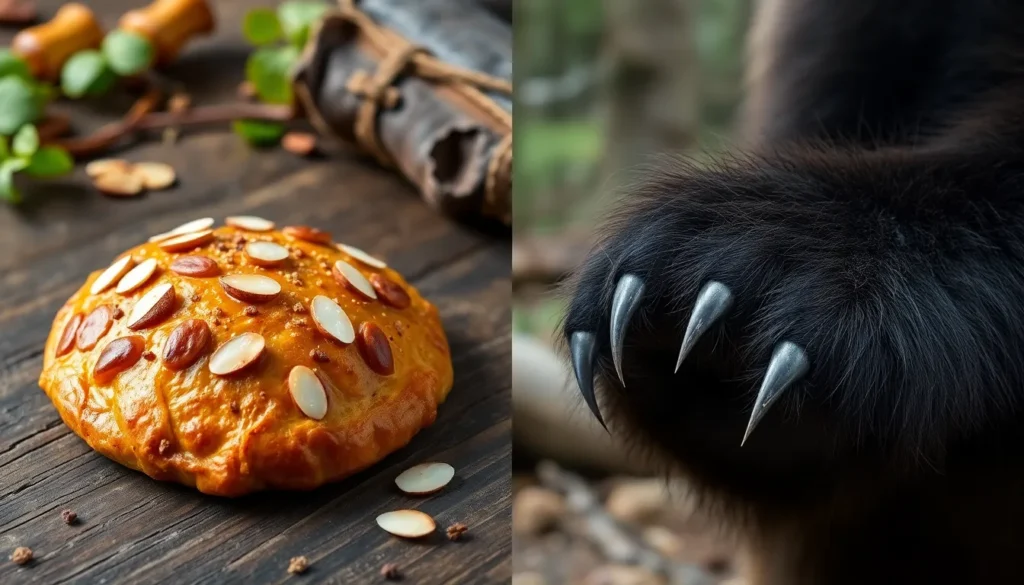
A bear claw is primarily recognized as a type of sweet, yeast-raised pastry shaped to resemble the claw of a bear, characterized by its curved form and distinctive ‘clawed’ cuts along one side. Originating in North America, this pastry is traditionally filled with almond paste or other sweet fillings and often topped with sliced almonds or icing. In a different context, a bear claw refers to the actual claw of a bear, notable for its size and strength, used by the animal for digging, climbing, and defense.
Detailed Explanation
In the culinary context, a bear claw is a popular bakery item found in many American and Canadian bakeries, particularly as part of breakfast or snack offerings. The dough is typically enriched with butter, sugar, and eggs, allowing for a flaky, tender texture once baked. The filling often includes almond paste, though variations exist, such as cinnamon, raisins, or apple filling. The signature appearance is created by making several slits on one side of the dough before baking, which expand to form the ‘claw’ shape.
In zoology, the term ‘bear claw’ refers to the large, curved claws that bears possess on their paws. These claws are essential tools for their survival, enabling them to hunt, forage, climb trees, dig dens, and defend themselves from predators or rivals.
How It Works
For the pastry, the process begins with preparing a yeast-leavened dough, which is rolled out and spread with the desired filling. The dough is then folded or shaped, and several cuts are made along one edge. During baking, these cuts spread apart and curl slightly, creating a shape that resembles the sharp, curved claws of a bear. The pastry is often finished with a glaze or sprinkled with sliced almonds to enhance both flavor and appearance.
Regarding actual bear claws, their structure is composed of keratin, the same protein that makes up human fingernails. The claws grow continuously and are kept sharp through natural wear and activities like digging. Their curved shape and strong musculature provide bears with the ability to grip and manipulate objects effectively.
Examples
- A classic bear claw pastry filled with almond paste and topped with sliced almonds, commonly sold in American bakeries.
- A variant bear claw pastry containing cinnamon sugar and raisins, offering a different flavor profile.
- The large front claws of the grizzly bear, used to dig for roots and insects in the wild.
Pros and Cons
Pros: The bear claw pastry offers a flavorful, rich treat that combines flaky dough with sweet fillings, making it a popular choice for breakfast or snack. In nature, bear claws provide essential survival functions, including foraging and defense.
Cons: Pastries like bear claws are typically high in sugar and fat, which may not be suitable for all diets. From a wildlife perspective, bear claws can be dangerous to humans if bears feel threatened, underscoring the need for caution in bear habitats.
Comparison Table
| Aspect | Bear Claw (Pastry) | Bear Claw (Zoology) |
|---|---|---|
| Meaning | A sweet, yeast-raised pastry shaped like a bear’s claw. | The sharp, curved keratinous claw of a bear’s paw used for various survival activities. |
| Function | Food item enjoyed for taste and texture. | Tool for digging, climbing, hunting, and defense. |
| Origin | North American bakery tradition. | Biological adaptation of bears. |
| Material | Dough, filling (often almond paste), and toppings. | Keratin and living tissue. |
| Appearance | Flaky, curved pastry with cut slits resembling claws. | Strong, curved, sharp claw attached to bear’s paw. |
Decision Checklist
- Use this if you want a sweet, almond-flavored pastry or are studying bear anatomy.
- Avoid this if you have dietary restrictions limiting sugar or fat intake or if you are in bear territory and unprepared for wildlife risks.
- Check this first to distinguish whether the term refers to the food item or the animal’s anatomy in context.
What is the easiest way to understand a Bear Claw?
The easiest way to understand a bear claw is to first identify the context: in a culinary setting, it is a distinctive, almond-filled pastry with a claw-like shape; in a wildlife context, it is the strong, curved claw of a bear used for survival. Visualizing either the pastry or the animal’s paw can help clarify the term quickly.
FAQ
What is a bear claw pastry?
A bear claw pastry is a sweet, yeast-leavened pastry shaped to resemble a bear's claw, often filled with almond paste and topped with sliced almonds.
Why is it called a bear claw?
The pastry is named for its appearance; the cuts on one side of the dough expand during baking to resemble the curved, sharp claws of a bear.
Are bear claws healthy to eat?
Bear claw pastries are typically high in sugar and fat, so while delicious, they should be consumed in moderation as part of a balanced diet.




Leave a Reply