
Short Answer
Overview
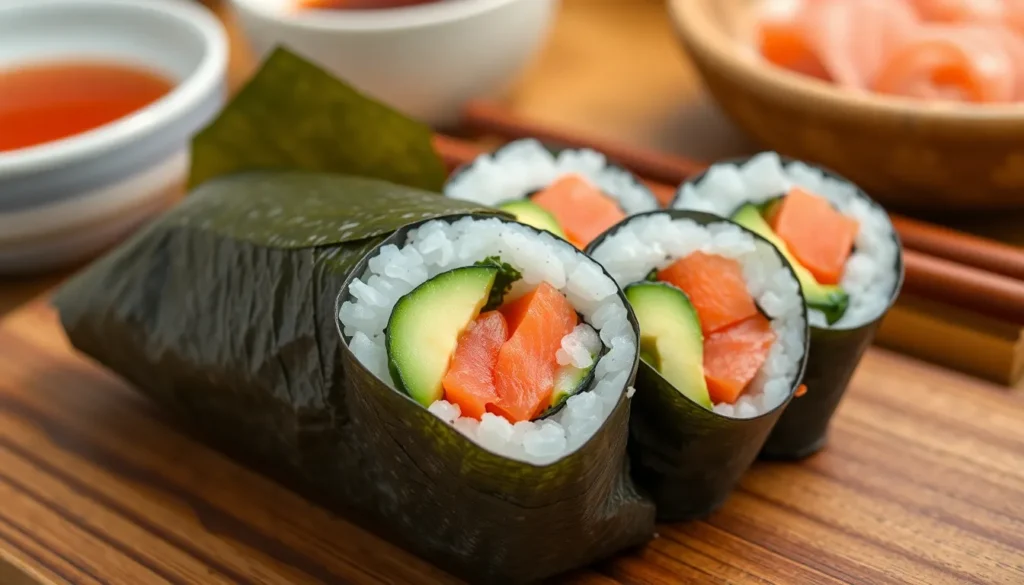
Hand roll sushi, known in Japanese as temaki, is a type of sushi characterized by its cone-shaped form. It consists of a sheet of dried seaweed (nori) wrapped around sushi rice and various fillings such as fish, vegetables, and other ingredients. Unlike traditional sushi rolls that are sliced into bite-sized pieces, hand rolls are typically larger, served whole, and eaten with the hands. This style of sushi is popular for its casual presentation and ease of consumption.
Detailed Explanation
Hand roll sushi is considered a more informal and approachable variation of sushi. The nori sheet is usually placed flat, then a small amount of sushi rice is spread on one corner. Fillings such as raw fish (e.g., tuna, salmon), cooked seafood (e.g., crab, shrimp), cucumber, avocado, and sometimes spicy sauces are added on top of the rice. The nori is then rolled into a cone shape, enclosing the ingredients.
Traditionally, hand rolls are made fresh and served immediately to maintain the crispness of the seaweed. They are larger than typical sushi rolls, often measuring around 4 to 6 inches in length, making them a convenient handheld snack or meal option.
How It Works
The construction of a hand roll involves several steps. First, a square sheet of nori is laid flat. A small portion of vinegared sushi rice is spread near one corner of the nori. Next, the desired fillings are arranged on top of the rice. The nori is then carefully rolled from the corner with the rice and fillings into a cone shape. This process creates a portable sushi item that can be eaten without chopsticks.
Because hand rolls are assembled individually, they allow for customization in terms of ingredients and quantity. This flexibility makes them popular in both traditional sushi restaurants and casual dining settings.
Examples
- Spicy Tuna Hand Roll: Filled with spicy tuna mixed with mayonnaise and chili sauce, cucumber, and sushi rice wrapped in nori.
- California Hand Roll: Typically contains imitation crab meat, avocado, cucumber, and sushi rice.
- Salmon Avocado Hand Roll: Combines fresh salmon slices, avocado, and sushi rice.
Why It Matters
Hand roll sushi offers a distinct experience within Japanese cuisine by providing a casual, easy-to-eat sushi option. Its portability and customizable nature make it accessible to a wide audience, including those new to sushi. Moreover, hand rolls preserve the integrity of the seaweed’s texture better than sliced rolls, as they are served fresh and consumed immediately.
Common Misconceptions
Misconception: Hand roll sushi is just a smaller version of traditional sushi rolls.
Correction: Hand rolls are usually larger and cone-shaped, intended to be eaten whole by hand, differing significantly from the cylindrical, sliced sushi rolls (maki).
Misconception: Hand rolls are always made with raw fish.
Correction: While often including raw fish, hand rolls can contain a variety of cooked or vegetarian fillings.
Pros and Cons
Comparison Table
| Aspect | Hand Roll Sushi | Traditional Sushi Roll (Maki) |
|---|---|---|
| Meaning | Cone-shaped sushi wrapped in nori, eaten by hand. | Cylindrical sushi rolled in nori, sliced into pieces. |
| Form | Large cone shape. | Small cylindrical slices. |
| Consumption | Handheld, eaten whole. | Usually eaten with chopsticks, one piece at a time. |
| Texture | Seaweed stays crisp longer. | Seaweed can become soggy due to rice exposure. |
| Serving Style | Casual, quick preparation. | More formal, often more precise presentation. |
Decision Checklist
- Use this if … you want a quick, handheld sushi option with customizable fillings.
- Avoid this if … you prefer neat, bite-sized pieces or a more formal sushi presentation.
- Check this first … the freshness of the nori, as it should be crisp to ensure the best texture and flavor.
What is the easiest way to understand Hand Roll Sushi?
Think of hand roll sushi as a sushi cone, similar to an ice cream cone but filled with rice and sushi ingredients. It is designed for convenient, casual eating without utensils, combining the flavors and textures of sushi in a portable form.
FAQ
What is the difference between a hand roll and a regular sushi roll?
A hand roll (temaki) is a cone-shaped sushi wrapped in seaweed and eaten whole by hand, while a regular sushi roll (maki) is cylindrical, sliced into bite-sized pieces, and often eaten with chopsticks.
Can hand rolls be made with cooked ingredients?
Yes, hand rolls can include cooked seafood, vegetables, or even vegetarian ingredients, making them versatile and accessible to different dietary preferences.
Why is hand roll sushi usually eaten immediately?
Hand roll sushi is best consumed immediately to maintain the crisp texture of the seaweed, as it tends to become soggy quickly when in contact with moist ingredients like rice.


Leave a Reply