
Short Answer
Overview
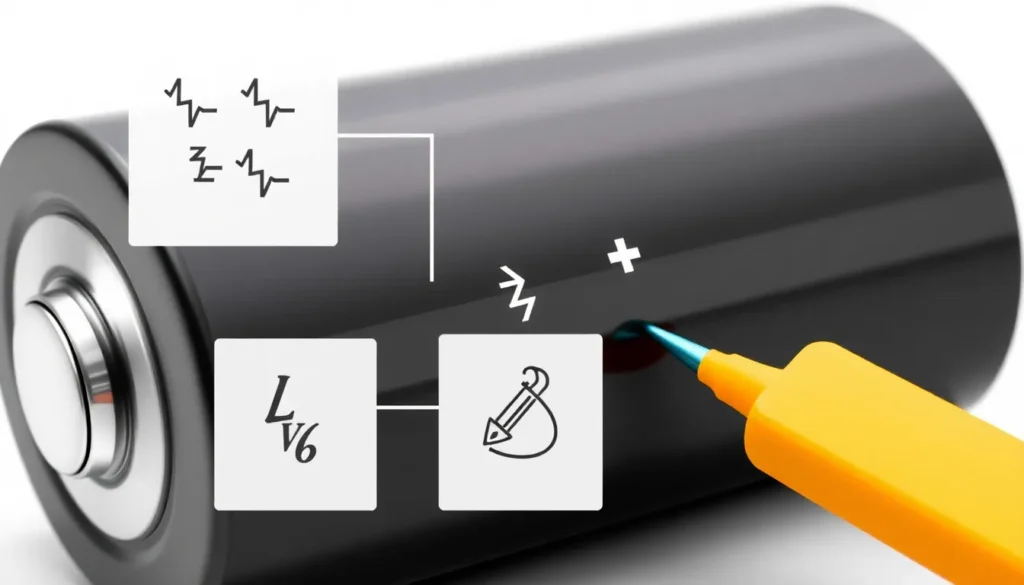
Internal resistance in a battery refers to the opposition within the battery to the flow of current. Testing internal resistance is a standard method to evaluate battery condition, performance, and remaining capacity. A “good” internal resistance value is typically low, signifying minimal energy loss and efficient operation. However, the acceptable range depends on the battery type, age, and application.
Detailed Explanation
Every battery has some level of internal resistance, which arises from the chemical composition, electrode materials, electrolyte, and physical construction. This resistance causes voltage drops under load, reducing the battery’s effective output. Over time, internal resistance tends to increase due to aging, sulfation, corrosion, or other degradation mechanisms. Monitoring internal resistance is a crucial diagnostic tool to predict battery performance and end-of-life.
How It Works
Measuring internal resistance typically involves applying a small load or pulse current to the battery and measuring the resulting voltage drop. Instruments such as battery testers, impedance meters, or conductance testers perform this function. The internal resistance is calculated by dividing the voltage drop by the current applied. Lower values indicate a healthier battery capable of delivering power efficiently, while higher values suggest deterioration.
Examples
- Lead-Acid Car Battery: A healthy 12V lead-acid battery might have an internal resistance below 5 milliohms (mΩ). Values above 10-15 mΩ could indicate a failing battery.
- Lithium-Ion Battery: Internal resistance varies widely based on design but typically ranges from 20 to 100 mΩ for consumer cells. Values rising significantly above the norm can signal capacity loss or safety risks.
- Nickel-Cadmium (NiCd) Battery: These batteries may have internal resistance values of a few tens of milliohms when new, increasing with age and use.
Why It Matters
Understanding and testing internal resistance is essential for battery maintenance, safety, and efficiency. High internal resistance reduces battery performance by causing heat generation and voltage drops, which can lead to device malfunction or premature battery failure. Accurate measurement allows users to identify weak or failing batteries early and make informed decisions about replacement or service.
Common Misconceptions
Misconception: A battery with a high voltage always has good performance.
Correction: High internal resistance can cause significant voltage drops under load, meaning a battery may show normal voltage at rest but perform poorly under use.
Misconception: Internal resistance is constant throughout the battery’s life.
Correction: Internal resistance typically increases as the battery ages or deteriorates, reflecting reduced capacity and efficiency.
Pros and Cons
Pros:
- Provides a quick and non-destructive method to assess battery health.
- Helps prevent unexpected battery failures by early detection of issues.
- Improves safety by identifying batteries at risk of overheating or leakage.
Cons:
- Measurement can vary depending on temperature, battery state of charge, and test equipment.
- Interpretation of values requires knowledge of battery type and specifications.
- Not a definitive metric alone; internal resistance should be considered along with other parameters like capacity and voltage.
Comparison Table
| Aspect | Internal Resistance Testing | Voltage Testing |
|---|---|---|
| Meaning | Measures the opposition to current flow inside the battery. | Measures the electric potential difference across battery terminals. |
| Indicates | Battery health, age, and efficiency. | Battery charge level at rest. |
| Influenced by | Chemistry, temperature, age, and load conditions. | State of charge and load. |
| Usefulness | Predicts performance and failure. | Basic charge status check. |
Decision Checklist
What is the easiest way to understand Test Internal Resistance Battery?
The simplest way to grasp the concept is to think of internal resistance as the battery’s internal “friction” that slows down the flow of electricity. Just like a clogged pipe restricts water flow, higher internal resistance restricts electrical current, causing power loss and heat. A good battery has low internal resistance, meaning electricity flows smoothly and efficiently.
FAQ
What is internal resistance in a battery?
Internal resistance is the inherent opposition within a battery to the flow of electric current, caused by its chemical and physical structure.
How do you measure the internal resistance of a battery?
By applying a small load or pulse current to the battery and measuring the voltage drop, then dividing the voltage drop by the current applied.
What internal resistance value indicates a good battery?
A good internal resistance value varies by battery type but is generally low; for example, under 5 milliohms for lead-acid car batteries. Higher values suggest aging or degradation.



Leave a Reply