
Short Answer
Overview
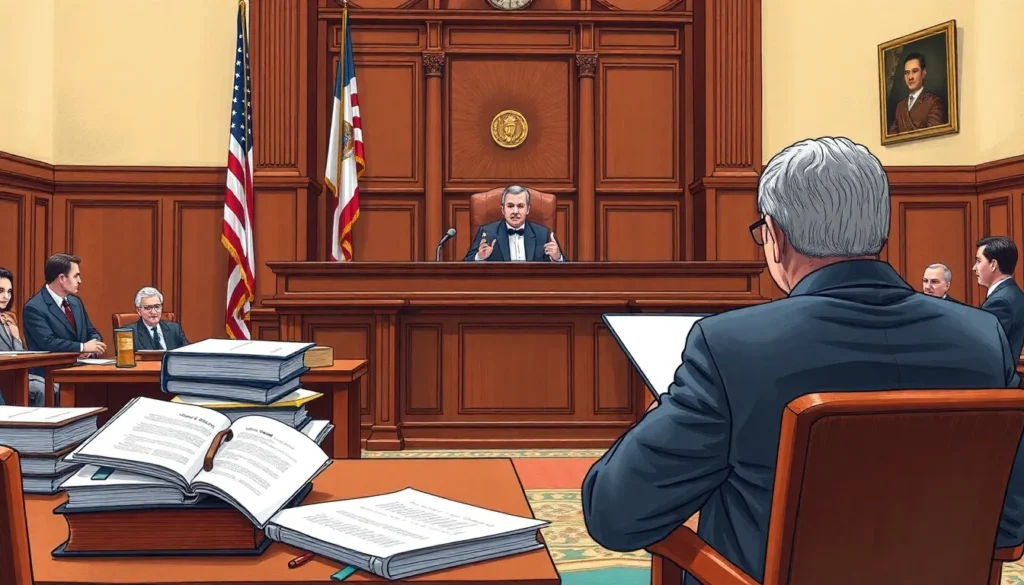
A bench trial is a type of legal trial in which the judge serves as the fact-finder and decides the outcome of the case without the involvement of a jury. In contrast to jury trials, where a group of citizens deliberates and renders a verdict, bench trials rely solely on the judge’s assessment of evidence, testimony, and legal arguments. Bench trials can occur in both criminal and civil cases depending on jurisdictional rules and the preferences of the parties involved.
Detailed Explanation
In a bench trial, the judge assumes a dual role: evaluating both the factual and legal issues presented. This contrasts with jury trials, where the judge typically oversees legal matters and the jury determines facts. Bench trials are often quicker and more streamlined, as the judge is legally trained to understand complex legal issues and can focus directly on the evidence without needing to explain legal concepts to laypersons.
Bench trials are common in cases where the issues are primarily legal rather than factual, or where the parties believe a judge’s expertise will lead to a more precise interpretation of the law. They may also be preferred when the subject matter is technical or when the parties want to avoid the unpredictability of a jury’s decision.
How It Works
The process of a bench trial involves the presentation of evidence, examination and cross-examination of witnesses, and legal arguments made directly to the judge. After reviewing the information, the judge deliberates privately and issues a judgment or verdict. This decision can include findings of fact and conclusions of law, effectively resolving the dispute without a jury’s input.
Both parties typically have the right to waive a jury trial and opt for a bench trial, but this decision must be approved by the court. Some jurisdictions require that both parties agree to waive a jury trial, while others allow the defendant alone to make this choice in criminal cases.
Examples
- In a civil contract dispute where the legal issues are complex and the facts are straightforward, the parties might agree to a bench trial to expedite the resolution.
- In a criminal case involving a defendant charged with a minor offense, the defendant may choose a bench trial to avoid potential jury bias or community prejudice.
- Family law cases, such as custody or divorce proceedings, often utilize bench trials since judges are experienced in handling sensitive factual and legal matters in these contexts.
Pros and Cons
| Pros | Cons |
|---|---|
| Generally faster and less costly than jury trials. | Lack of jury can lead to perceptions of less impartiality. |
| Judge’s legal expertise may lead to more precise rulings. | Potential for judge’s personal biases to have greater impact. |
| Reduces influence of jury emotions or misunderstandings. | Limited opportunity for community participation in justice. |
Comparison Table
| Aspect | Bench Trial | Jury Trial |
|---|---|---|
| Meaning | Judge decides case without jury involvement. | Group of citizens decides facts and verdict. |
| Decision Maker | Judge | Jury |
| Duration | Typically shorter | Often longer due to jury selection and deliberation |
| Cost | Generally lower | Usually higher |
| Use | Civil and criminal cases; often legal or technical issues | Common in serious criminal and some civil cases |
Decision Checklist
- Use this if you want a faster trial and trust the judge’s expertise to decide facts and law.
- Avoid this if you want community input or believe a jury might be more sympathetic to your case.
- Check this first by consulting legal counsel about whether a bench trial is appropriate or allowed in your jurisdiction and for your case type.
What is the easiest way to understand a Bench Trial?
The simplest way to understand a bench trial is to think of it as a trial where the judge acts as the sole decision-maker on both the facts and the law, without involving a jury. It’s like having one expert decide the case instead of a group of laypeople.
FAQ
Can a defendant in a criminal case choose a bench trial?
Yes, in many jurisdictions a defendant can waive their right to a jury trial and opt for a bench trial, but this often requires court approval.
Are bench trials faster than jury trials?
Generally, yes. Bench trials tend to be shorter because they do not require jury selection or jury deliberation.
Is the judge's decision in a bench trial final?
The judge’s decision can typically be appealed to a higher court, where legal errors can be reviewed.





Leave a Reply