
Short Answer
Overview
Catholic Confirmation is one of the seven sacraments recognized by the Catholic Church. It is considered a sacrament of initiation, following Baptism, and often preceding the Eucharist in the sequence of Christian initiation rites. Through Confirmation, the faithful receive the gifts of the Holy Spirit, which strengthens and deepens their baptismal grace. This sacrament is understood as a personal Pentecost, empowering the confirmed to live out their Christian vocation with greater commitment and courage.
Detailed Explanation
In Catholic theology, Confirmation is a sacrament that completes and perfects baptismal grace. While Baptism welcomes a person into the Church and cleanses original sin, Confirmation imparts the Holy Spirit in a special way. This sacrament is associated with the biblical account of Pentecost, when the apostles were filled with the Holy Spirit and began to proclaim the Gospel boldly.
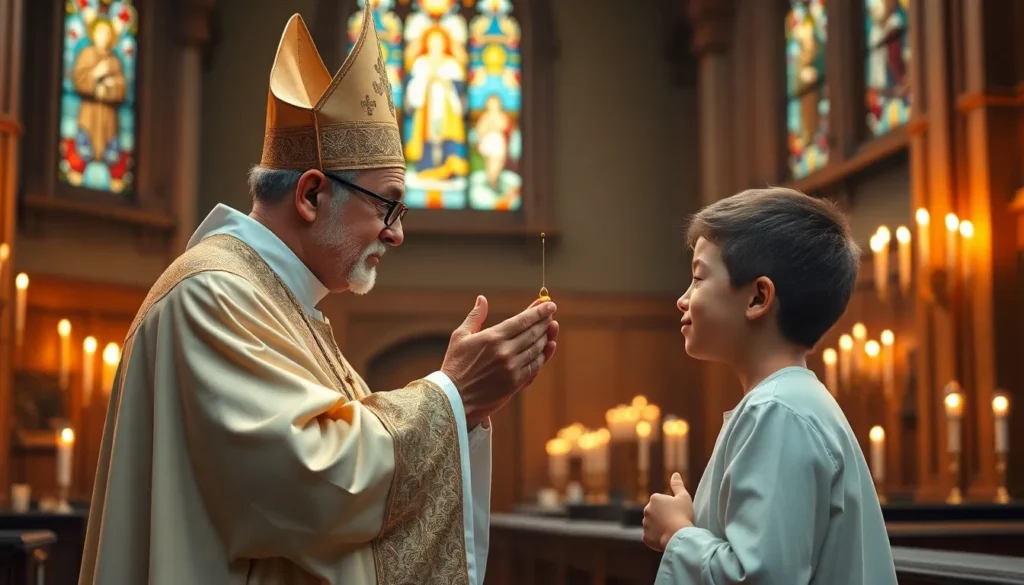
The sacrament involves an anointing with chrism (holy oil) and the laying on of hands by a bishop or a delegated priest. The anointing symbolizes the sealing of the Holy Spirit, marking the person as belonging fully to Christ and the Church. Confirmation confers seven traditional gifts of the Holy Spirit: wisdom, understanding, counsel, fortitude, knowledge, piety, and fear of the Lord.
Typically, Confirmation is administered to baptized Catholics who have reached the age of reason, often in adolescence, though the age can vary depending on local ecclesial norms. The candidate is prepared through catechesis to understand the significance of the sacrament and to profess their faith publicly during the rite.
How It Works
The process of receiving Confirmation usually involves several stages:
- Preparation: Candidates receive instruction regarding the faith, the role of the Holy Spirit, and the responsibilities of Christian life.
- Rite of Confirmation: During a liturgical celebration, the bishop (or an authorized priest) lays hands on the candidate, anoints the forehead with chrism oil, and says the words, “Be sealed with the Gift of the Holy Spirit.”
- Profession of Faith: Candidates often renew their baptismal promises publicly, declaring their commitment to Christ and the Church.
- Reception of the Holy Eucharist: Confirmation is closely linked to receiving the Eucharist, completing the initiation into full communion with the Catholic Church.
After Confirmation, the individual is regarded as a mature member of the Church, empowered to witness to their faith in daily life and participate fully in the Church’s mission.
Examples
- Catechism Classes: Many parishes offer confirmation preparation classes for teenagers that cover scripture, Church teachings, and the meaning of the sacraments.
- Bishop’s Visit: Confirmation ceremonies often take place during a bishop’s pastoral visit to a diocese, emphasizing the connection between the confirmed and the wider Church hierarchy.
- Adult Confirmation: Adults who convert to Catholicism or who were baptized but not confirmed as children may receive the sacrament during the Easter Vigil or other special liturgies.
Pros and Cons
- Pros: Confirmation strengthens the spiritual life of the individual, deepens their commitment to the Church, and encourages active participation in the Christian community.
- Cons: The timing and preparation can sometimes be seen as burdensome or overly formal, and in some cases, the sacrament may be misunderstood as merely a cultural or social milestone rather than a spiritual renewal.
Comparison Table
| Aspect | Catholic Confirmation | Baptism |
|---|---|---|
| Meaning | Strengthening by the Holy Spirit; completes initiation | Entry into the Christian community; cleanses original sin |
| Age | Usually adolescence or adulthood | Any age, often infancy |
| Minister | Bishop or delegated priest | Priest, deacon, or bishop |
| Ritual Elements | Laying on of hands, anointing with chrism | Water baptism |
| Effect | Gifts of the Holy Spirit; strengthens faith | Forgiveness of sins; rebirth |
Decision Checklist
- Use this if you are a baptized Catholic seeking to deepen your faith and complete the sacraments of initiation.
- Avoid this if you have not yet been baptized; Baptism precedes Confirmation.
- Check this first with your local parish or diocese about preparation requirements and the age at which Confirmation is typically administered.
What is the easiest way to understand Catholic Confirmation?
The simplest way to understand Confirmation is as a special sacrament that strengthens the spiritual gifts received at Baptism. It is like a spiritual empowerment by the Holy Spirit, enabling Catholics to live their faith more fully and participate actively in the Church community.
FAQ
What is the purpose of Catholic Confirmation?
The purpose of Confirmation is to strengthen the grace of Baptism by bestowing the gifts of the Holy Spirit, enabling the individual to live a mature Christian life and witness to the faith.
Who can receive Confirmation?
Typically, baptized Catholics who have reached the age of reason and have undergone appropriate preparation may receive Confirmation. Adults converting to Catholicism who have not been confirmed also receive the sacrament.
Why is a bishop usually required to administer Confirmation?
The bishop is the ordinary minister of Confirmation because the sacrament emphasizes the connection between the confirmed and the wider Church, represented by the bishop as a successor of the apostles. However, priests may be delegated to confirm in certain circumstances.






Leave a Reply