
Short Answer
Overview
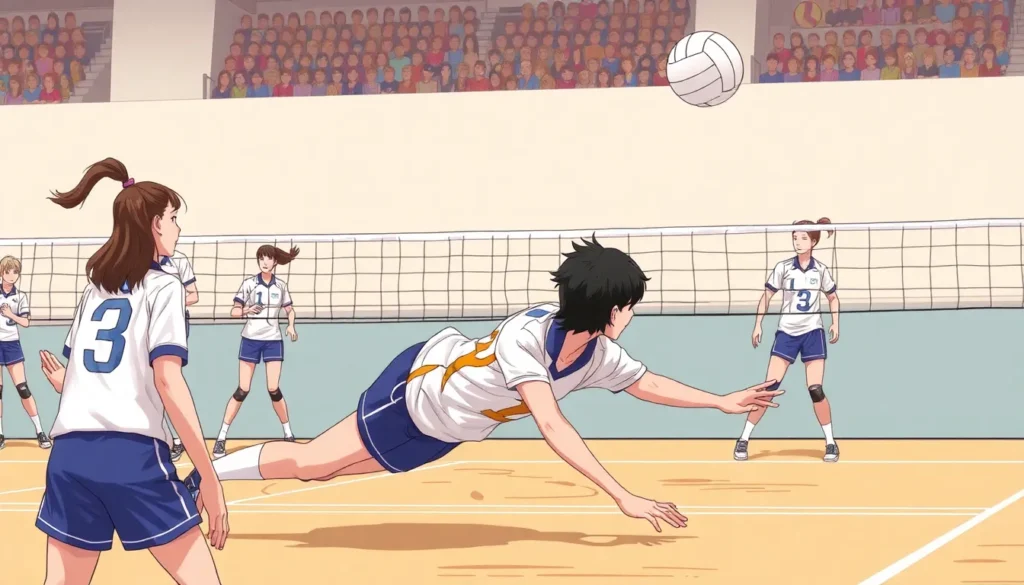
A DS in volleyball stands for Defensive Specialist. This is a specialized player role focused primarily on defense, particularly in serve reception and digging opponent attacks. The DS position is distinct from other roles such as libero or outside hitter, with specific strategic responsibilities to strengthen a team’s defense and ball control.
Detailed Explanation
The Defensive Specialist is a player substituted into the game to improve the team’s defensive performance, especially in back-row play. Unlike the libero, who is restricted by specific rules such as uniform color and rotational limitations, a DS does not have those restrictions but is often used similarly to enhance defense. The DS is usually proficient in serve receive, digging, and passing, contributing to maintaining ball control and facilitating offensive transitions.
How It Works
Teams often substitute a DS for front-row players who are weaker defensively, allowing stronger defensive players to remain on the court during back-row rotations. The DS enters the game through substitution, enhancing the team’s ability to receive serves and defend attacks. This strategic use of a DS helps maintain consistent defensive pressure and improve overall team ball control. The DS typically replaces a middle blocker or other front-row player when they rotate to the back row.
Examples
- A collegiate team uses a DS to replace a middle blocker when the latter rotates to the back row, allowing the DS to focus on passing and digging.
- In a high school volleyball match, a DS enters the game specifically for serve reception, improving the accuracy of passes to the setter.
- During a professional game, a DS might be subbed in during critical defensive plays to stabilize the team’s back-row defense.
Pros and Cons
- Pros: Improves team defense and serve reception; allows specialization; flexible substituting without libero restrictions.
- Cons: Uses substitution opportunities; does not have the libero’s unrestricted back-row movement; may reduce front-row offensive options.
Comparison Table
| Aspect | Defensive Specialist (DS) | Libero |
|---|---|---|
| Meaning | Player specialized in defense and serve reception, substituted for back-row defense. | Specialized defensive player with unique uniform and substitution rules. |
| Uniform | Regular team uniform. | Distinctive uniform color to differentiate from teammates. |
| Substitution Rules | Standard substitutions count towards team limits. | Unlimited substitutions without counting against limits. |
| Restrictions | No special restrictions on front-row play. | Cannot attack above net height and restricted from front-row rotations. |
Decision Checklist
- Use this if: Your team needs to improve back-row defense without relying solely on the libero.
- Avoid this if: You want a player with unlimited substitutions and specific defensive restrictions.
- Check this first: Your available substitutions and team strategy for defensive specialization.
What is the easiest way to understand a DS in volleyball?
Think of the Defensive Specialist as a player brought in to strengthen the team’s defense when front-row players rotate to the back. Unlike the libero, the DS plays under regular substitution rules but focuses on receiving serves and defending attacks to keep the ball in play and help transition to offense.
FAQ
What does DS stand for in volleyball?
DS stands for Defensive Specialist, a player primarily focused on defense and serve reception in volleyball.
How is a Defensive Specialist different from a libero?
A Defensive Specialist wears the regular team uniform and follows normal substitution rules, while a libero wears a different color jersey and can substitute unlimited times without counting against substitution limits.
Can a DS play in the front row?
Yes, a Defensive Specialist can play in the front row, unlike the libero who is restricted to back-row play only.





Leave a Reply