
Short Answer
Overview
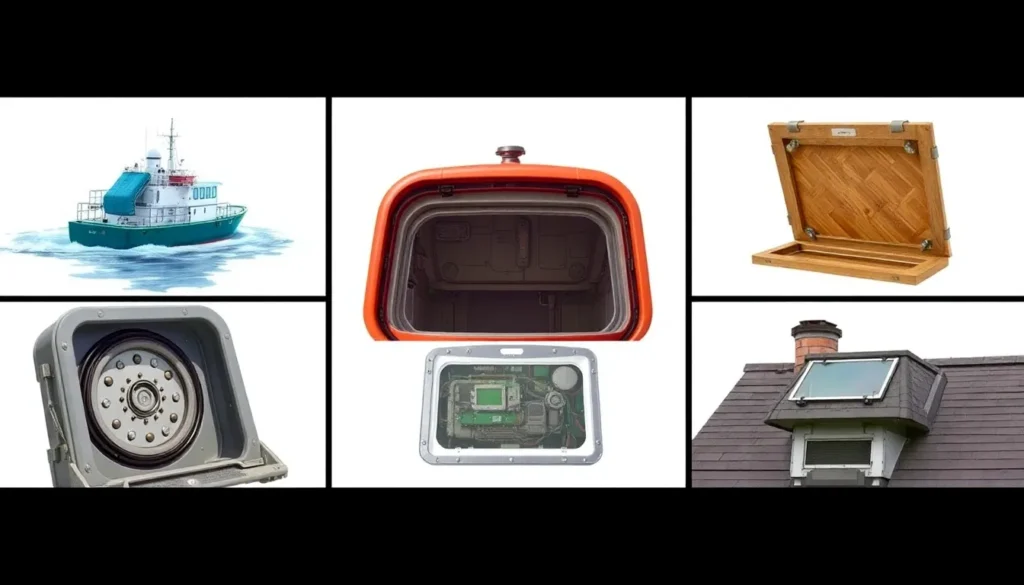
A hatch door is a specialized type of door that typically covers an opening in a floor, ceiling, or wall, allowing access between different compartments, levels, or enclosed spaces. Unlike conventional vertical doors, hatch doors are often designed to open in a horizontal or inclined plane, and they serve both functional and safety purposes. They are widely used in various fields such as maritime vessels, aircraft, vehicles, and buildings to provide secure, weatherproof, or pressure-resistant access points.
Detailed Explanation
Hatch doors are engineered to meet specific requirements depending on their application environment. In maritime settings, hatch doors are crucial for maintaining the watertight integrity of a ship’s compartments, preventing flooding and ensuring safety at sea. In aviation, hatch doors provide access to cargo holds or maintenance areas while maintaining cabin pressure and aerodynamic efficiency. Architecturally, hatch doors may be used for attic access, basement entry, or emergency exits, where space constraints or security considerations dictate their design.
Materials used in hatch doors vary widely, from metals such as steel and aluminum for strength and durability, to composites for weight reduction. Design elements often include sealing gaskets, locking mechanisms, hinges or sliding tracks, and sometimes insulation or fireproofing, depending on the intended use.
How It Works
Hatch doors operate by covering an opening and providing a secure barrier that can be opened or closed as needed. The mechanism of operation can differ: some hatch doors swing open on hinges, others slide or lift vertically, and certain designs may combine multiple movements for ease of access.
In maritime and aerospace applications, hatch doors are frequently equipped with locking systems that ensure a tight seal, often using compression to maintain watertight or airtight conditions. This sealing is critical for safety, environmental protection, and operational efficiency. The doors may also incorporate pressure relief systems or emergency release features to facilitate safe use under various conditions.
Examples
- Ship Hatch Doors: These are large, watertight doors used to cover cargo holds on ships. They prevent water ingress and are designed to withstand heavy loads and harsh marine environments.
- Aircraft Hatch Doors: Used for crew access, cargo loading, or emergency exits. They must maintain cabin pressure and are aerodynamically contoured.
- Vehicle Hatch Doors: Commonly found on SUVs and hatchback cars, these doors provide access to the rear cargo area, often opening upwards or sideways for convenience.
- Building Hatch Doors: These include attic hatches or basement access panels, typically smaller and designed for occasional use, focusing on insulation and security.
Why It Matters
Hatch doors are essential components in many systems where controlled access, environmental protection, and safety are priorities. They enable efficient use of space and contribute to the structural integrity and operational functionality of vehicles, vessels, and buildings. Proper design and maintenance of hatch doors can prevent accidents, environmental hazards, and operational failures.
Common Misconceptions
Misconception: Hatch doors are just simple doors with no special features.
Correction: Hatch doors are specifically designed for secure sealing, environmental resistance, and structural integrity, often incorporating complex mechanisms and materials.
Misconception: All hatch doors open the same way.
Correction: Hatch doors can open in various ways including swinging, sliding, or lifting, depending on their design and application requirements.
Pros and Cons
Pros: Hatch doors offer secure sealing against water, air, and contaminants; efficient use of space; and adaptability to various environments and uses.
Cons: They can be complex to manufacture and maintain; may require specialized hardware; and improper sealing or operation can compromise safety and functionality.
Comparison Table
| Aspect | Hatch Door | Conventional Door |
|---|---|---|
| Meaning | A door covering a horizontal or inclined opening, designed for secure, often sealed access. | A standard door typically hinged vertically, used for entry or exit in buildings or rooms. |
| Typical Use | Marine vessels, aircraft, vehicles, and buildings requiring sealed or specialized access. | Residential, commercial, and interior spaces for general access. |
| Sealing | Often watertight or airtight with specialized gaskets. | Generally not designed to be airtight or watertight. |
| Operation | Varies: swinging, sliding, lifting. | Primarily swinging on hinges. |
Decision Checklist
What is the easiest way to understand Hatch Door?
A hatch door is best understood as a specialized door designed to cover an opening that is not vertical, offering secure and often sealed access to compartments or spaces in ships, aircraft, vehicles, or buildings. Its defining features include its orientation, sealing capability, and purpose-driven design.
FAQ
What distinguishes a hatch door from a regular door?
A hatch door typically covers a horizontal or inclined opening and is designed to provide secure, sealed access, often in environments requiring protection against water, air, or pressure, unlike conventional vertical doors.
Are hatch doors always watertight or airtight?
Not always, but many hatch doors, especially in maritime and aerospace contexts, are designed to be watertight or airtight to maintain safety and environmental control.
Can hatch doors be used in residential buildings?
Yes, hatch doors are used in residential settings mainly for attic or basement access, often designed for insulation and security rather than environmental sealing.



Leave a Reply