
Short Answer
Overview
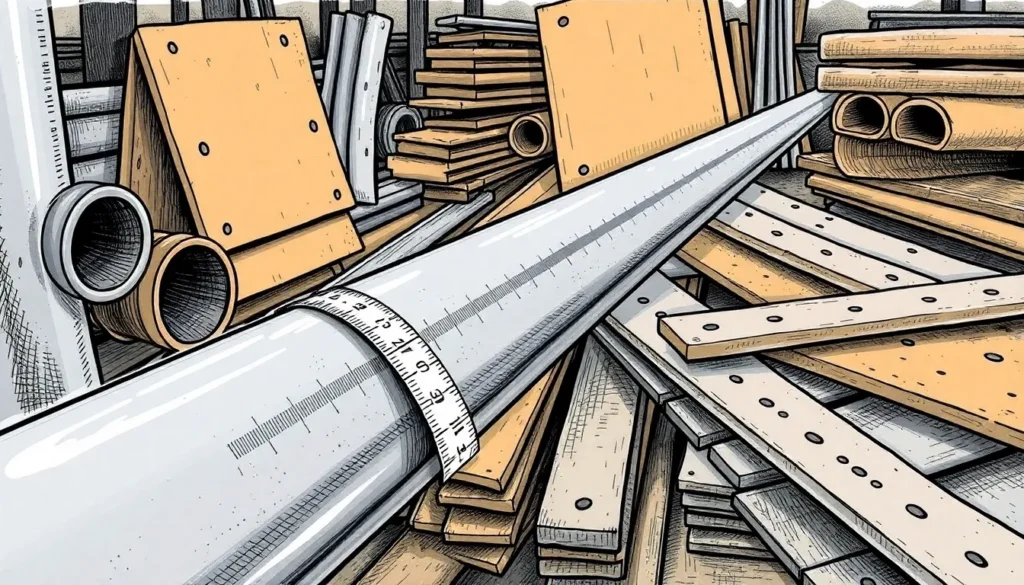
In the context of buying metal, a linear foot is a unit of measurement representing the length of a metal piece, measured in feet. It is a standard way to quantify metal products when the length is the primary dimension of interest, regardless of the width or thickness. This measurement is commonly used in industries such as construction, manufacturing, and metal fabrication to standardize pricing and ordering processes.
Detailed Explanation
A linear foot measures only the length of a metal item along one dimension. Unlike square footage or cubic measurements, it does not account for width, height, or volume. When purchasing metal by the linear foot, the buyer typically specifies the length of the metal required, and the price is calculated based on this length multiplied by the metal’s unit cost per linear foot.
Metal suppliers often use linear feet for products such as metal rods, bars, pipes, tubes, and sheets that are sold in standard widths and thicknesses but can be cut to custom lengths. This method facilitates straightforward pricing and ordering since customers pay primarily for the length of the metal they require.
How It Works
When buying metal measured in linear feet, the process usually involves the following steps:
- Specification: The buyer specifies the length of the metal required in feet.
- Calculation: The supplier calculates the total price by multiplying the length by the price per linear foot, which may vary depending on metal type, grade, and market conditions.
- Cutting and Delivery: The supplier cuts the metal to the ordered length and delivers or prepares it for pickup.
The linear foot measurement simplifies transactions by focusing on a single dimension, streamlining communication between buyers and suppliers.
Examples
- A customer orders 10 linear feet of aluminum tubing. The tubing has a standard diameter and wall thickness, so the price is based solely on the 10-foot length.
- A construction company needs 50 linear feet of steel angle iron. The supplier quotes a price per linear foot, and the total cost is calculated accordingly.
- For copper wire sold by the linear foot, the buyer specifies the required length, and the price is calculated without needing to consider the wire’s cross-sectional area or weight at this stage.
Pros and Cons
Pros:
- Simplifies pricing and ordering by focusing on length.
- Useful for metals sold in standard widths and thicknesses.
- Facilitates custom cuts and flexible lengths.
Cons:
- Does not account for width, thickness, or weight variations.
- May be less precise for pricing when metal dimensions vary significantly.
- Requires additional measurements for understanding total material volume or weight.
Comparison Table
| Aspect | Linear Foot | Square Foot |
|---|---|---|
| Meaning | Measurement of length in feet | Measurement of area in feet squared |
| Use Case | Metal rods, pipes, bars sold by length | Sheets or plates sold by surface area |
| Dimensions Considered | Length only | Length and width |
| Pricing Basis | Price per foot length | Price per square foot area |
Decision Checklist
- Use this if: You are purchasing metal products where length is the primary factor, such as rods, tubes, or bars.
- Avoid this if: You need to account for surface area or volume, such as when buying metal sheets or plates.
- Check this first: Confirm the metal’s width and thickness are standard or irrelevant to your pricing needs when using linear feet.
What is the easiest way to understand a linear foot in buying metal?
The easiest way to understand a linear foot is to think of it as measuring how long a piece of metal is, regardless of how wide or thick it is. If you imagine a metal rod or pipe, the linear foot is simply the length of that rod measured in feet.
FAQ
What does linear foot mean when buying metal?
It refers to the length in feet of a metal piece, used to calculate cost based on length regardless of other dimensions.
How is a linear foot different from a square foot in metal purchasing?
A linear foot measures length only, while a square foot measures area, considering both length and width.
Can I use linear feet to price all metal products?
Linear feet are best for products where length is primary, such as bars and pipes, but not ideal for sheets or plates where area or thickness matters.



Leave a Reply