
Short Answer
Overview
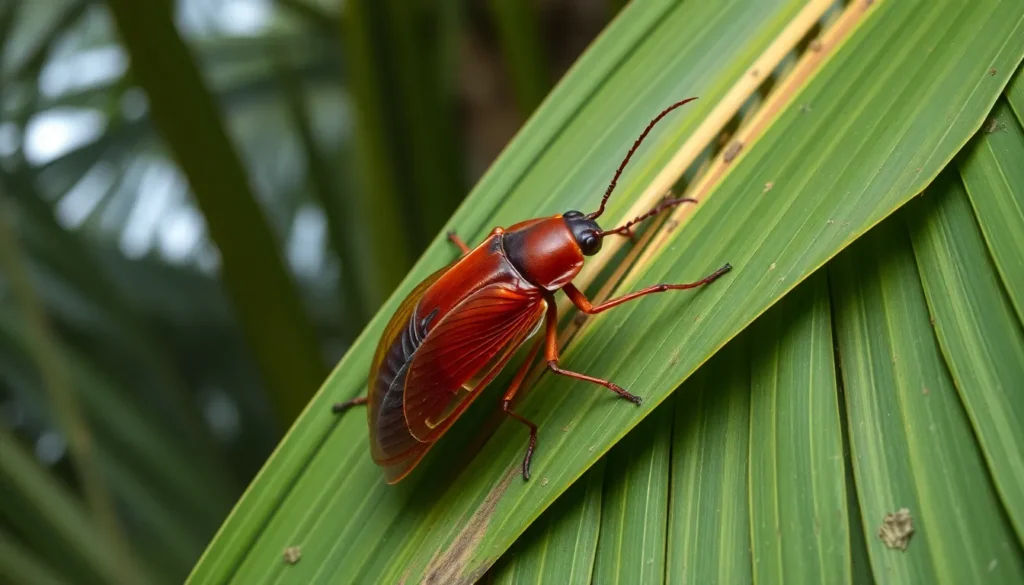
The term “palmetto bug” is colloquially used in the southern United States to refer to certain types of large cockroaches, most notably the American cockroach (Periplaneta americana). These insects are typically recognized by their considerable size and reddish-brown coloration. Despite the informal name, palmetto bugs are not a distinct species but rather a regional nickname for cockroaches commonly found in warm, humid environments.
Detailed Explanation
Palmetto bugs are often found in areas with abundant moisture and warmth, such as around palmetto trees, which contributes to their name. The American cockroach, one of the species frequently called palmetto bugs, can reach lengths of up to 1.5 inches (3.8 cm) or more. These insects have wings and are capable of flight, although they typically prefer to run quickly when disturbed. Their diet consists of a wide range of organic matter, making them highly adaptable scavengers.
How It Works
Palmetto bugs, like other cockroaches, are nocturnal insects that seek shelter in dark, moist environments during the day. They reproduce rapidly, with females laying oothecae (egg cases) containing multiple eggs. The nymphs hatch and undergo several molts before reaching adulthood. Their ability to exploit diverse food sources and habitats makes them resilient pests in both natural and urban settings.
Examples
- American Cockroach (Periplaneta americana): Often called a palmetto bug, it is the largest common cockroach species in the U.S., prevalent in southern states.
- Smokybrown Cockroach (Periplaneta fuliginosa): Another species sometimes referred to as a palmetto bug, this cockroach is uniformly dark brown and also thrives in warm climates.
- Palmetto Tree Habitat: Palmetto bugs frequently inhabit areas around palmetto palms and other vegetation, where moisture and shelter are plentiful.
Why It Matters
Understanding what a palmetto bug is helps in identifying and managing pest populations, especially in regions where they are common. While they can be a nuisance due to their size and potential to contaminate food, they also play a role in ecosystems by consuming decaying organic material. Proper knowledge aids in distinguishing these insects from other pests and informs appropriate control measures.
Common Misconceptions
Misconception: Palmetto bugs are a separate species from cockroaches.
Correction: The term “palmetto bug” is a regional nickname for certain large cockroach species, not a distinct species itself.
Misconception: Palmetto bugs are harmless and do not pose any health risks.
Correction: While they are not aggressive, palmetto bugs can carry bacteria and allergens that may affect human health, especially in areas with poor sanitation.
Pros and Cons
Pros:
- Contribute to decomposition by consuming organic waste.
- Serve as food for various predators in the ecosystem.
Cons:
- Can contaminate food and surfaces, posing health risks.
- Considered pests in homes and commercial buildings due to their size and presence.
Comparison Table
| Aspect | Palmetto Bug | Common Cockroach |
|---|---|---|
| Meaning | Regional term for large cockroaches, especially American cockroach | General term for various cockroach species |
| Size | Typically larger, up to 1.5 inches or more | Varies by species, often smaller |
| Habitat | Warm, humid areas, often near palmetto trees | Various habitats including homes, sewers, and outdoors |
| Flight Capability | Can fly but usually prefers running | Varies; some species fly, others do not |
Decision Checklist
What is the easiest way to understand Palmetto Bug?
The easiest way to understand a palmetto bug is to recognize it as a regional nickname for large cockroaches, particularly the American cockroach, commonly found in the southern United States. They are large, reddish-brown insects often seen in warm, moist environments, sometimes near palmetto trees, which inspired the name.
FAQ
Are palmetto bugs dangerous to humans?
Palmetto bugs are not aggressive and do not bite humans, but they can carry bacteria and allergens that may contribute to health issues, especially allergies and asthma.
Why are they called palmetto bugs?
The name "palmetto bug" comes from their frequent presence near palmetto trees in the southeastern United States, although it is a regional term rather than a scientific classification.
How can I control or remove palmetto bugs from my home?
Control methods include reducing moisture, sealing entry points, maintaining cleanliness, and using insecticides or professional pest control services if infestations occur.



Leave a Reply