
Short Answer
Overview
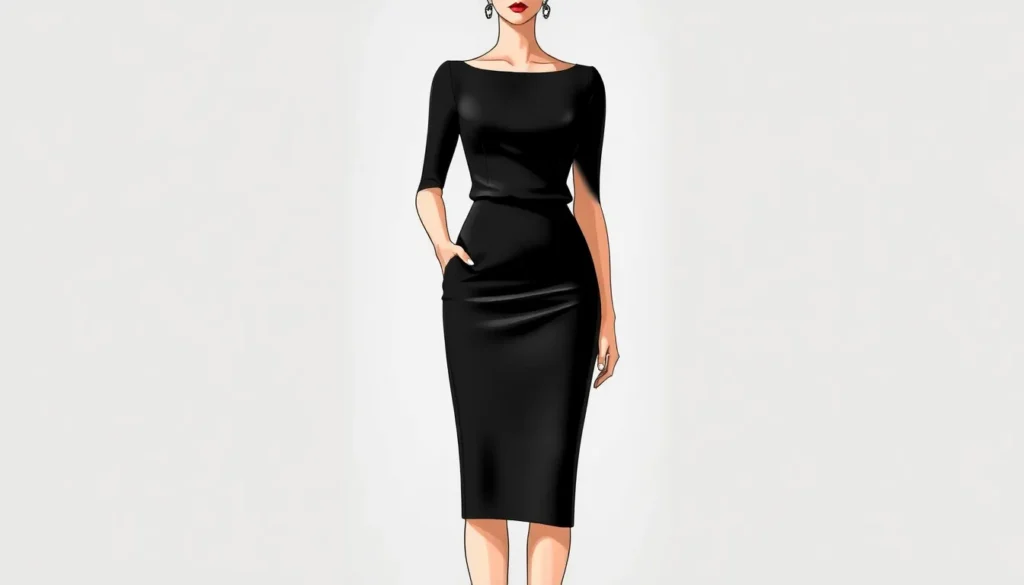
A sheath dress is a type of women’s garment characterized by its close-fitting, straight-cut design that typically extends to the knee or just above. Unlike fuller or flared dress styles, the sheath dress is tailored to hug the body’s natural shape, creating a streamlined silhouette without excessive fabric or volume. This style is commonly made from materials that offer some degree of stretch, allowing for movement despite the fitted appearance.
Detailed Explanation
The sheath dress is distinguished by its minimalist construction and sleek form. It usually features a simple neckline, such as a boat neck, scoop neck, or V-neck, and may have varying sleeve lengths, from sleeveless to long sleeves. The dress is often designed without a waist seam, emphasizing a continuous fit that extends from the shoulders to the hem. This design is intended to accentuate the wearer’s figure, particularly the waist and hips, while maintaining a professional or elegant look.
Historically, sheath dresses gained popularity in the mid-20th century, especially during the 1950s and 1960s, when designers sought to create garments that combined sophistication with practicality. The style remains prevalent in contemporary fashion, favored for occasions that require a polished and refined appearance.
How It Works
The sheath dress works by utilizing a fitted pattern that contours closely to the body, often incorporating darts or princess seams to enhance shape. The fabrics used commonly include cotton blends, wool, silk, jersey, and synthetic knit materials, many of which provide stretch to ensure comfort and ease of movement despite the dress’s narrow cut.
The length of the sheath dress is generally at or just above the knee, which contributes to its versatility across both formal and casual settings. The simplicity of the design allows for easy accessorizing and layering, making it adaptable to different occasions and seasons.
Examples
- Classic Black Sheath Dress: Often considered a wardrobe staple, this version is typically sleeveless with a boat neckline, made from a stretchy fabric. It is versatile for work, evening events, or formal occasions.
- Cap Sleeve Sheath Dress: Featuring short sleeves that cover the shoulder cap, this style provides slightly more coverage while maintaining the dress’s fitted silhouette.
- Patterned Sheath Dress: Incorporating prints such as floral, geometric, or abstract patterns, these dresses add visual interest while retaining the sheath shape.
- Structured Sheath Dress: Made from stiffer materials like woven wool or heavier cotton, this type holds its shape firmly and is often used in business or professional environments.
Why It Matters
The sheath dress holds significance in fashion due to its enduring popularity, adaptability, and ability to flatter a wide range of body types. Its design emphasizes simplicity and elegance without sacrificing functionality, making it a preferred choice for professional attire and formal occasions. The sheath dress also serves as a foundation for fashion innovation, with designers experimenting with fabrics, cuts, and detailing while maintaining the core silhouette.
Common Misconceptions
Misconception: A sheath dress is the same as a pencil dress.
Correction: While both dresses are fitted, a sheath dress tends to have a straighter cut and may be slightly less restrictive than a pencil dress, which is typically narrower and may include a slit for movement.
Misconception: Sheath dresses are only suitable for slim body types.
Correction: Sheath dresses can be flattering on various body shapes when properly tailored, especially when made from stretch fabrics or designed with strategic seams to enhance comfort and fit.
Pros and Cons
Comparison Table
| Aspect | Sheath Dress | Alternative/Related Topic (Pencil Dress) |
|---|---|---|
| Meaning | A fitted, straight-cut dress that follows the body’s contour, usually knee-length. | A tight-fitting dress with a narrow skirt, often with a slit, emphasizing the hips and legs. |
| Silhouette | Streamlined, straight, moderately fitted. | Tighter, more constricted, often tapering sharply at the knees. |
| Movement | Moderate ease, often enhanced by fabric stretch. | Limited due to narrow skirt; slits are common for mobility. |
| Usage | Professional, formal, casual settings. | Primarily professional and formal occasions. |
Decision Checklist
- Use this if: You want a classic, elegant dress that flatters your figure with a clean silhouette.
- Avoid this if: You require maximum freedom of movement or prefer looser, more flowing garments.
- Check this first: Your body shape and the fabric choice to ensure comfort and fit.
What is the easiest way to understand a Sheath Dress?
The easiest way to understand a sheath dress is to think of it as a form-fitting dress that is cut straight and close to the body without much flare or volume, typically ending at or just above the knee. It emphasizes simplicity and elegance, making it a staple in both professional and formal wardrobes.
FAQ
What distinguishes a sheath dress from other dress styles?
A sheath dress is distinguished by its fitted, straight-cut silhouette that closely follows the body's contours, typically knee-length, unlike looser or more flared styles.
Can sheath dresses be worn by all body types?
Yes, sheath dresses can suit various body types, especially when made with stretch fabrics or tailored properly, although some may prefer styles that offer more ease of movement.
Are sheath dresses appropriate for professional settings?
Yes, sheath dresses are commonly worn in professional environments due to their polished and elegant appearance, making them a popular choice for business attire.



Leave a Reply