
Short Answer
Overview
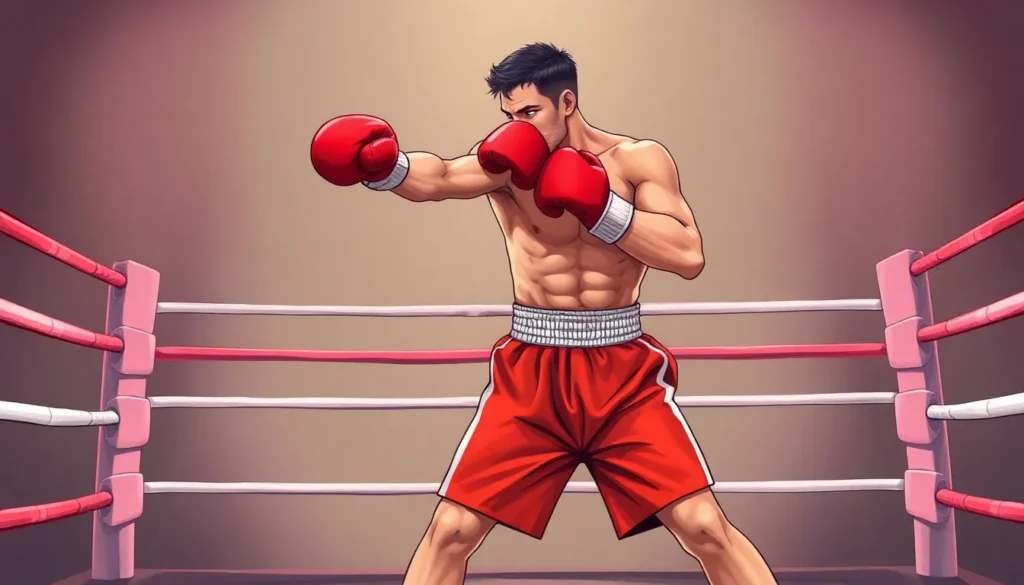
The southpaw stance is a fighting position in which a combatant leads with their right hand and right foot forward, positioning their stronger left hand and foot at the rear. This stance is primarily associated with left-handed fighters but can be adopted by right-handed individuals for strategic reasons. It is commonly used in boxing, mixed martial arts (MMA), kickboxing, and other combat sports. The term “southpaw” is believed to have originated in baseball and later adopted by boxing to describe left-handed fighters.
Detailed Explanation
In contrast to the orthodox stance, where the left foot and hand lead, the southpaw stance reverses this arrangement. The fighter stands with their right foot forward and left foot back, which allows their dominant left hand to deliver more powerful rear-hand punches such as crosses and uppercuts. This positioning affects both offensive and defensive strategies, influencing angles of attack, foot placement, and the types of punches and kicks thrown.
Southpaw fighters often present challenges to orthodox opponents because most fighters are trained to face right-handed adversaries. The reversed stance changes the typical trajectories of punches and footwork, requiring adjustments in defense and counterattacks.
How It Works
The southpaw stance works by capitalizing on the fighter’s dominant side positioned at the rear, allowing for stronger and more precise strikes. Leading with the right hand and foot enables quicker jabs and lead hooks, while the left hand delivers powerful crosses and hooks from the rear. The stance also affects the fighter’s footwork, as the lead foot aims to stay outside the opponent’s lead foot to gain advantageous angles.
Defensively, southpaw fighters can exploit unfamiliar angles and movements to avoid attacks. The stance can create openings for counters and confuse opponents who are less accustomed to facing left-handed adversaries. Additionally, southpaw fighters often use their stance to control the pace and rhythm of the fight by dictating foot placement and punch timing.
Examples
- Boxing: Famous southpaw boxers include Manny Pacquiao, a Filipino professional boxer known for his speed and power from the southpaw stance, and Marvin Hagler, an American middleweight champion renowned for his technical skill.
- Mixed Martial Arts (MMA): Fighters such as Jon Jones and Conor McGregor frequently use the southpaw stance to create strategic advantages over opponents, utilizing diverse striking techniques.
- Kickboxing and Muay Thai: Southpaw fighters use the stance to leverage their dominant leg for powerful rear kicks and sweeps, complicating the opponent’s defense.
Why It Matters
The southpaw stance matters because it introduces a strategic element to combat sports that can affect fight outcomes. Since most fighters train against orthodox opponents, facing a southpaw can disrupt their usual tactics and require adaptations. This stance can confer both offensive and defensive advantages, contributing to a fighter’s unpredictability and effectiveness. The southpaw stance also highlights the importance of ambidexterity and versatility in combat sports techniques.
Common Misconceptions
Misconception: Southpaw stance is only for left-handed fighters.
Correction: While traditionally used by left-handed individuals, some right-handed fighters adopt the southpaw stance strategically to exploit its advantages.
Misconception: Fighting as a southpaw guarantees an advantage.
Correction: Although it can provide tactical benefits, success depends on a fighter’s skill, training, and ability to capitalize on the stance.
Pros and Cons
Pros: Provides strategic advantage due to rarity; allows dominant hand and foot to deliver powerful strikes; can confuse and disrupt orthodox opponents; offers unique angles for attack and defense.
Cons: May be less intuitive for right-handed fighters; can become predictable if overused; requires specific training to master footwork and positioning; orthodox opponents may develop specialized tactics against southpaws.
Comparison Table
| Aspect | Southpaw Stance | Orthodox Stance |
|---|---|---|
| Meaning | Left-handed fighting stance with right foot and hand forward | Right-handed fighting stance with left foot and hand forward |
| Lead Hand | Right hand leads | Left hand leads |
| Dominant Hand Position | Left hand at rear | Right hand at rear |
| Common Users | Left-handed fighters, some right-handed fighters | Majority of fighters, predominantly right-handed |
| Strategic Advantage | Unfamiliar angles for orthodox opponents | Standard stance with more common training |
Decision Checklist
What is the easiest way to understand Southpaw Stance?
The easiest way to understand the southpaw stance is to visualize the fighter standing with their right foot and right hand forward, opposite to the typical right-handed (orthodox) stance. This positioning allows the fighter’s stronger left hand and foot to deliver powerful strikes from the rear, creating different angles and timing that can challenge opponents used to conventional stances.
FAQ
Why is it called a southpaw stance?
The term "southpaw" originated in baseball to describe left-handed pitchers and was later adopted by boxing to refer to left-handed fighters who lead with their right side.
Can a right-handed person use the southpaw stance?
Yes, some right-handed fighters adopt the southpaw stance strategically to gain advantages such as unusual angles and to confuse opponents.
What are the main differences between southpaw and orthodox stances?
The main difference is the positioning of the lead foot and hand; southpaw fighters lead with their right side, while orthodox fighters lead with their left, affecting footwork, punch angles, and defensive tactics.






Leave a Reply