
Short Answer
Overview
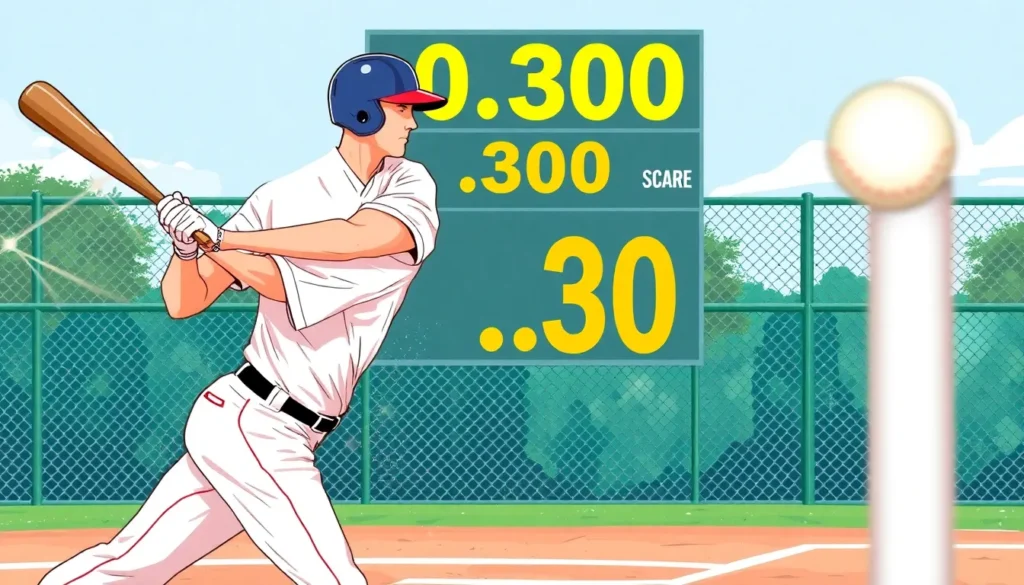
In baseball, a batting average is a statistical measure that represents a player’s hitting performance. It is calculated as the ratio of a batter’s hits to their official at-bats. The batting average is expressed as a decimal figure, typically rounded to three digits, such as .300. Determining what constitutes a ‘good’ batting average can vary depending on the level of competition, historical context, and positional expectations. Generally, a higher batting average indicates better success at the plate.
Detailed Explanation
The batting average is one of the oldest and most traditional metrics used to evaluate hitters. It is calculated by dividing the number of hits by the number of official at-bats (AB), excluding walks, hit-by-pitches, sacrifices, and other plate appearances that do not count as at-bats. For example, if a player has 150 hits in 500 at-bats, their batting average is .300.
Historically, a batting average of .300 or above has been considered excellent in Major League Baseball (MLB), while averages around .250 to .270 are viewed as average or slightly below average. A batting average below .200 is often described as poor and is colloquially known as “below the Mendoza Line”—a threshold named after Mario Mendoza, a player known for low batting averages.
However, the interpretation of what is ‘good’ can differ across leagues, eras, and player roles. For example, in the modern era, where pitching has become more dominant and strikeouts more common, batting averages have generally declined, slightly adjusting expectations. Additionally, players who are power hitters or strong in other offensive categories (like on-base percentage and slugging percentage) may have lower batting averages but still be highly valuable.
How It Works
The batting average works as a straightforward indicator of a batter’s ability to achieve hits during their at-bats. It does not account for the quality of hits (singles, doubles, home runs) or other ways a player contributes offensively. It is calculated using the formula:
Batting Average = Hits / At-Bats
Where “hits” include any time the batter safely reaches base via a hit, and “at-bats” exclude walks, hit-by-pitches, sacrifices, and times awarded first base due to interference or obstruction.
Because it focuses solely on hits per official at-bat, batting average is easy to calculate and understand, but it is limited in scope. Modern sabermetrics often supplement or replace batting average with more comprehensive statistics to evaluate offensive performance.
Examples
- Ted Williams: One of the greatest hitters in MLB history, Williams finished his career with a batting average of .344, well above the .300 benchmark.
- League Average: In recent MLB seasons, the league batting average typically ranges from approximately .245 to .260, reflecting changes in pitching and hitting trends.
- Below Mendoza Line: A batting average below .200 is considered poor, with players often struggling to maintain a position on a team.
- Positional Differences: Catchers and some defensive specialists often have lower batting averages compared to outfielders or first basemen due to the physical demands of their positions.
- Minor Leagues vs. Major Leagues: Batting averages tend to be higher in minor leagues due to differences in competition level.
Why It Matters
Batting average remains a widely recognized and cited statistic for evaluating a hitter’s performance. It provides a quick snapshot of a player’s ability to consistently reach base via hits, which is fundamental to offensive success. Coaches, fans, and analysts often use batting average as part of a broader assessment of a player’s offensive contributions. While it does not capture all aspects of hitting, such as power or plate discipline, it helps contextualize a player’s role and effectiveness.
Common Misconceptions
Misconception: A high batting average always means a player is the best hitter.
Correction: While a high batting average indicates frequent hits, it does not measure power, on-base skills, or overall offensive impact. Players with lower averages may contribute significantly through walks, extra-base hits, or power hitting.
Misconception: Batting average includes all plate appearances.
Correction: Batting average is calculated only using official at-bats and excludes walks, hit-by-pitches, and sacrifices, which can sometimes misrepresent a player’s overall offensive value.
Pros and Cons
Comparison Table
| Aspect | Batting Average | On-Base Percentage (OBP) |
|---|---|---|
| Meaning | Ratio of hits to official at-bats. | Measures how often a player reaches base via hits, walks, or hit-by-pitches. |
| Includes | Hits only. | Hits, walks, and hit-by-pitches. |
| Excludes | Walks, hit-by-pitches, sacrifices. | Sacrifices. |
| Reflects | Hitting success frequency. | Overall ability to get on base. |
Decision Checklist
- Use this if: You want a quick measure of a player’s hitting frequency and traditional performance metric.
- Avoid this if: You need a comprehensive evaluation of offensive ability including walks and power.
- Check this first: Confirm the player’s number of at-bats to ensure sample size is sufficient for meaningful evaluation.
What is the easiest way to understand a good batting average?
The simplest way to understand a good batting average is to remember that it represents how often a player gets a hit when they have a chance to bat. A batting average of .300 means the player gets a hit 3 times out of every 10 at-bats, which is widely regarded as very good. Lower averages indicate less frequent hitting success, while higher averages are rare and indicate exceptional ability.
FAQ
What is considered a good batting average?
A batting average around .300 or higher is traditionally considered good in professional baseball, indicating the player gets a hit about 30% of the time during official at-bats.
How is batting average calculated?
Batting average is calculated by dividing the number of hits by the number of official at-bats, excluding walks, sacrifices, and hit-by-pitches.
Does batting average show a player's overall offensive value?
No, batting average only measures hitting frequency and does not account for walks, power, or other offensive contributions; complementary statistics are needed for a full evaluation.




Leave a Reply