
Short Answer
Overview
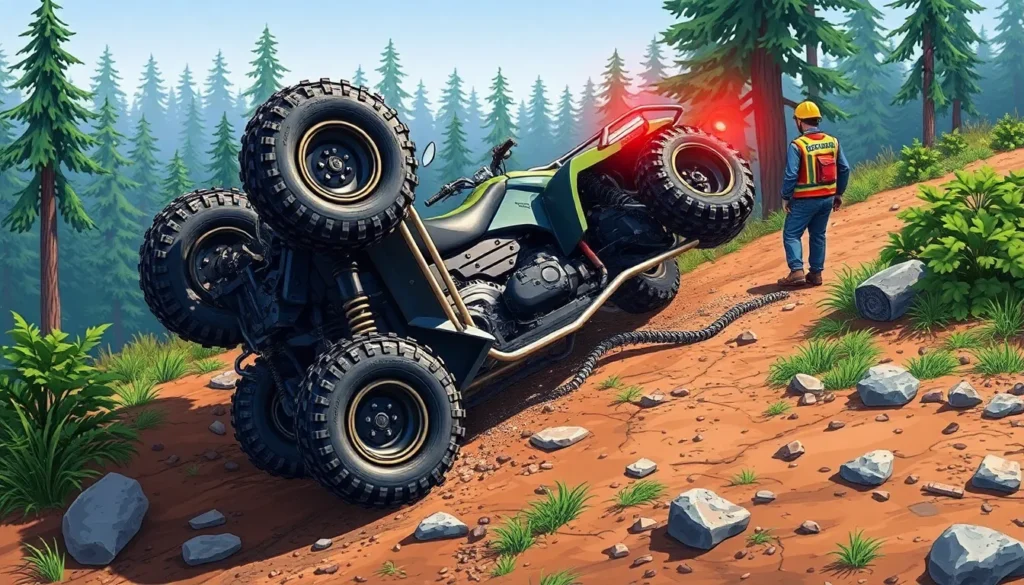
A quad accident involves an incident where an all-terrain vehicle (ATV), often referred to as a quad bike, is involved in a crash or mishap. These vehicles are designed for off-road use and typically have four wheels, making them popular for recreation, work, and sport. Quad accidents can range from minor collisions and falls to severe crashes resulting in serious injury or death.
Detailed Explanation
Quad accidents generally occur when the rider loses control of the vehicle, encounters obstacles, or experiences mechanical failure. Due to the ATV’s high center of gravity and the variable terrain it is often used on, quads can be prone to rollovers, collisions, and ejections of riders. Factors contributing to quad accidents include speeding, lack of protective gear, inexperience, and riding under the influence of alcohol or drugs.
How It Works
All-terrain vehicles are designed to traverse rough and uneven surfaces that conventional vehicles cannot easily navigate. The rider controls the quad through handlebars, throttle, brakes, and sometimes a clutch. The vehicle’s stability depends on factors such as speed, terrain, and rider skill. When any of these factors are compromised, the risk of an accident increases. For example, sharp turns at high speed or steep inclines can cause the quad to tip or roll over.
Examples
- A rider loses control on a rocky trail, causing the quad to overturn and eject the rider, resulting in broken bones.
- Two quads collide at a recreational park due to misjudgment of distance and speed.
- A quad strikes a hidden tree root, causing the rider to be thrown off and sustain head injuries without a helmet.
Why It Matters
Understanding quad accidents is important due to the potential severity of injuries associated with them. ATVs are involved in thousands of accidents annually worldwide, many requiring emergency medical attention. Awareness of the causes and prevention strategies can reduce the risk of accidents and promote safer riding practices.
Common Misconceptions
Misconception: Quad accidents only happen to inexperienced riders.
Correction: While inexperience increases risk, even skilled riders can have accidents due to factors like terrain or mechanical failure.
Misconception: Wearing a helmet is optional and does not significantly reduce injury risk.
Correction: Helmets greatly reduce the severity of head injuries in quad accidents and are strongly recommended.
Pros and Cons
Comparison Table
| Aspect | Quad Accident | Motorcycle Accident |
|---|---|---|
| Meaning | Incident involving an all-terrain vehicle crash or mishap. | Incident involving a two-wheeled motorized vehicle crash. |
| Common Causes | Terrain hazards, rollovers, collisions. | Road conditions, collisions, loss of control. |
| Typical Injuries | Rollovers often cause fractures, head injuries. | Road rash, fractures, head trauma. |
| Protective Gear | Helmet, protective clothing, boots. | Helmet, armored jackets, gloves. |
Decision Checklist
- Use this if you need to understand risks and safety around quad vehicles.
- Avoid this if you are not interested in ATV-related safety or accident information.
- Check this first before engaging in quad riding or purchasing an ATV to understand safety requirements.
What is the easiest way to understand a Quad Accident?
The easiest way to understand a quad accident is to recognize it as any crash or loss-of-control event involving a four-wheeled off-road vehicle, where factors such as terrain, rider skill, and equipment condition interact to produce the incident. Awareness of how quads operate and the risks involved helps clarify why accidents occur and how to prevent them.
FAQ
What causes most quad accidents?
Most quad accidents are caused by loss of control, often due to challenging terrain, excessive speed, or rider error.
Are helmets necessary when riding a quad?
Yes, helmets significantly reduce the risk of head injuries during quad accidents and are strongly recommended.
Can inexperienced riders safely operate a quad?
Inexperienced riders face higher risks; proper training, supervision, and safety gear are essential to reduce accident likelihood.
Leave a Reply