
Short Answer
Overview
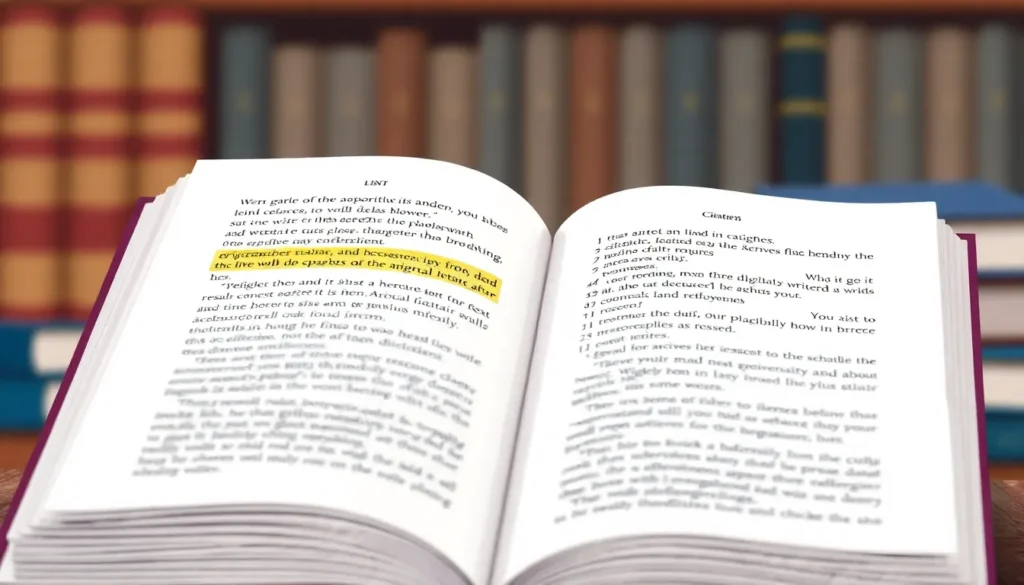
A cited page refers to a section within a document or a separate document that lists all the sources referenced or quoted in the main text. It serves as a compilation of bibliographic information for materials such as books, articles, websites, or other media that an author has used to support statements, provide evidence, or give credit to original creators. Cited pages are fundamental in academic, professional, and research writing to ensure transparency, avoid plagiarism, and enable readers to locate the original sources.
Detailed Explanation
In formal writing, citing sources is a method to acknowledge the ideas, data, or direct quotations derived from other works. The cited page is where all these sources are fully detailed, commonly appearing at the end of the document. It typically includes author names, titles, publication dates, publisher information, and other relevant details depending on the citation style used (e.g., APA, MLA, Chicago). The cited page is sometimes interchangeably called a bibliography, works cited, or reference list, though these terms can have nuanced differences based on the citation style.
By organizing all referenced materials in a cited page, writers uphold academic integrity and provide readers with the necessary information to verify claims or explore further reading.
How It Works
When an author incorporates information from external sources into their work, they include an in-text citation—either parenthetical, numerical, or footnote-based—within the main body. Each in-text citation corresponds to a full entry on the cited page. The cited page entries follow specific formatting rules dictated by the chosen citation style to maintain uniformity and clarity.
At the conclusion of the document, the cited page lists all sources alphabetically (in most styles) or numerically, allowing readers to cross-reference the in-text citations with complete source details. Accurate citation ensures sources are traceable and properly credited.
Examples
- APA Style Cited Page Entry: Smith, J. A. (2020). Understanding citation practices. Academic Press.
- MLA Style Works Cited Entry: Smith, John A. Understanding Citation Practices. Academic Press, 2020.
- Chicago Style Bibliography Entry: Smith, John A. 2020. Understanding Citation Practices. New York: Academic Press.
Each example shows the same source formatted according to different citation guidelines, illustrating how a cited page adapts to style requirements.
Why It Matters
The cited page plays a critical role in scholarly and professional communication by providing the foundation for intellectual honesty and accountability. It allows readers to assess the reliability of the information and trace the origin of ideas or data. Proper citation reduces the risk of plagiarism, which is a serious ethical violation in academia and other fields. Additionally, cited pages contribute to the ongoing scholarly conversation by linking works and facilitating further research.
Common Misconceptions
Misconception: A cited page is the same as a bibliography.
Correction: While often used interchangeably, a bibliography may include all sources consulted, whether cited directly or not, whereas a cited page (works cited or reference list) includes only sources directly referenced in the text.
Misconception: Cited pages are only necessary for academic papers.
Correction: Cited pages are important in various contexts, including professional reports, research articles, books, and any formal writing that relies on external sources.
Pros and Cons
Comparison Table
| Aspect | Cited Page | Bibliography |
|---|---|---|
| Meaning | List of sources directly cited in a work. | List of all sources consulted, including those not directly cited. |
| Purpose | Provide detailed information to locate sources referenced. | Show breadth of research undertaken. |
| Usage | Common in academic papers and professional reports. | Often used in historical or comprehensive research contexts. |
Decision Checklist
- Use this if you need to document sources directly referenced in your writing.
- Avoid this if you want to list all materials consulted regardless of citation.
- Check this first to ensure all in-text citations correspond to an entry on the cited page.
What is the easiest way to understand a Cited Page?
The simplest way to understand a cited page is to think of it as a detailed map or directory that guides readers from a statement in a text to the exact source where that information originated, ensuring clarity, credibility, and respect for original authorship.
FAQ
What is the difference between a cited page and a bibliography?
A cited page includes only sources directly referenced in a text, while a bibliography can include all sources consulted, whether cited or not.
Where is the cited page located in a document?
It is typically placed at the end of a document, after the main content and before any appendices.
Why is a cited page important?
It acknowledges original sources, helps avoid plagiarism, and allows readers to verify and explore referenced materials.



Leave a Reply