
Short Answer
Overview
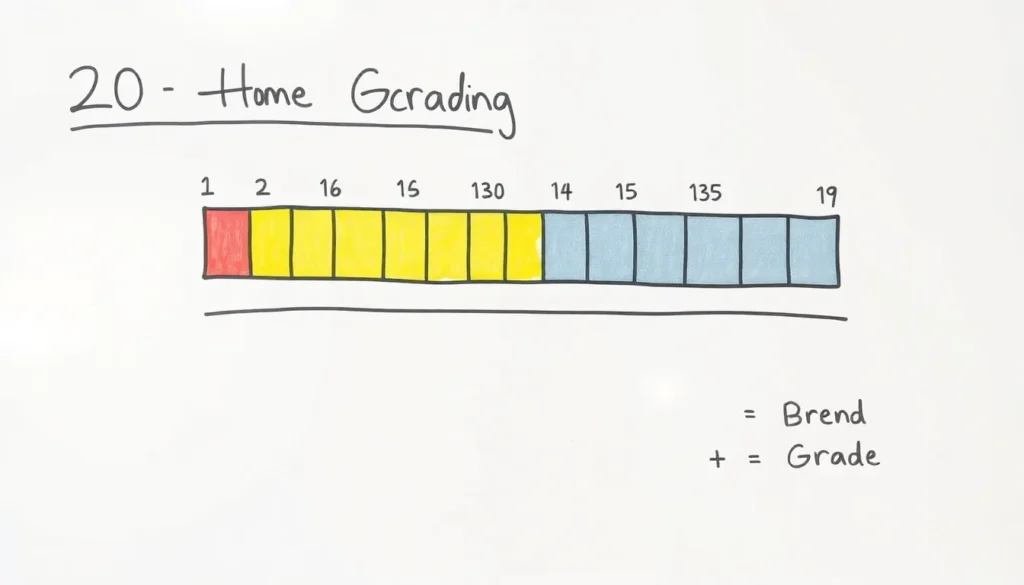
A 16/20 grade is a numerical score that indicates a student has earned 16 points out of a maximum of 20. This grading format is widely used in various educational systems around the world, particularly in countries that employ a 20-point grading scale. The grade is commonly used to assess student performance on exams, assignments, or overall course achievement.
Detailed Explanation
The 16/20 grading scale functions as a fractional representation of the student’s performance, with 20 points representing full marks. Achieving 16 out of 20 equates to 80% when converted into a percentage, which is generally considered a strong score. The exact interpretation of this grade can vary depending on the institution’s grading policies and cultural context. In many systems, a grade of 16/20 may be classified as “Very Good” or “Good,” reflecting above-average mastery of the subject matter.
How It Works
Grades expressed in a 20-point scale allow for detailed differentiation between levels of student performance. The score is typically calculated based on the number of correct answers, the quality of responses, or the fulfillment of assignment criteria. A 16/20 grade means the student met 80% of the requirements or earned 80% of the available points.
In some educational systems, this numerical grade may be converted to other formats such as letter grades (e.g., B or B+), GPA scales, or percentage equivalents for reporting or comparison purposes. The grading process usually involves clear rubrics or marking schemes that define how each point is awarded or deducted.
Examples
- Example 1: In a mathematics exam graded out of 20, a student who answers most questions correctly but makes minor errors might receive 16/20, indicating solid understanding with some room for improvement.
- Example 2: In a French university, where grading is typically on a 20-point scale, a 16/20 may be regarded as “Bien” (Good), qualifying the student for honors or passing with distinction.
- Example 3: In contexts where 10/20 is considered a passing grade, a 16/20 is significantly above the pass threshold, often denoting strong academic performance.
Pros and Cons
Pros:
- Provides a precise measure of student performance with clear point differentiation.
- Facilitates detailed feedback on strengths and weaknesses.
- Widely recognized in educational systems that use the 20-point scale.
Cons:
- May be confusing for students or stakeholders unfamiliar with the 20-point system.
- Conversion to other grading systems can lead to inconsistencies.
- Does not inherently provide qualitative feedback without accompanying descriptors.
Comparison Table
| Aspect | 16/20 Grade | Alternative/Related Topic |
|---|---|---|
| Meaning | Represents 80% achievement, typically considered above average. | Letter grade B or B+ |
| Scale Basis | Out of 20 points. | Percentage scale (0-100%) |
| Interpretation | Often categorized as “Good” or “Very Good”. | Pass/Fail or GPA systems |
| Usage Region | Common in France, parts of Africa, and other countries using 20-point scale. | Widely used percentage or letter grade systems globally |
Decision Checklist
- Use this if: Your educational institution employs a 20-point grading scale.
- Avoid this if: You are communicating grades in a system that primarily uses percentages or letter grades, unless conversion is provided.
- Check this first: Confirm the grading scale and standards of your institution or country before interpreting the grade.
What is the easiest way to understand a 16/20 grade?
The simplest way to understand a 16/20 grade is to convert it to a percentage by dividing 16 by 20 and multiplying by 100, resulting in 80%. This percentage indicates a strong performance, typically corresponding to a “B” grade or equivalent in many grading systems. Understanding the context of the grading scale used by the institution helps clarify its exact significance.
FAQ
Is 16/20 a good grade?
Yes, 16 out of 20 is generally considered a good grade, representing 80% achievement, which is above average in most grading systems.
How do I convert a 16/20 grade to a percentage?
To convert a 16/20 grade to a percentage, divide 16 by 20 and multiply by 100, resulting in 80%.
Can a 16/20 grade be converted to a letter grade?
Yes, depending on the grading scale used, a 16/20 grade typically corresponds to a letter grade around B or B+, but exact conversions depend on institutional policies.




Leave a Reply