
Short Answer
Overview
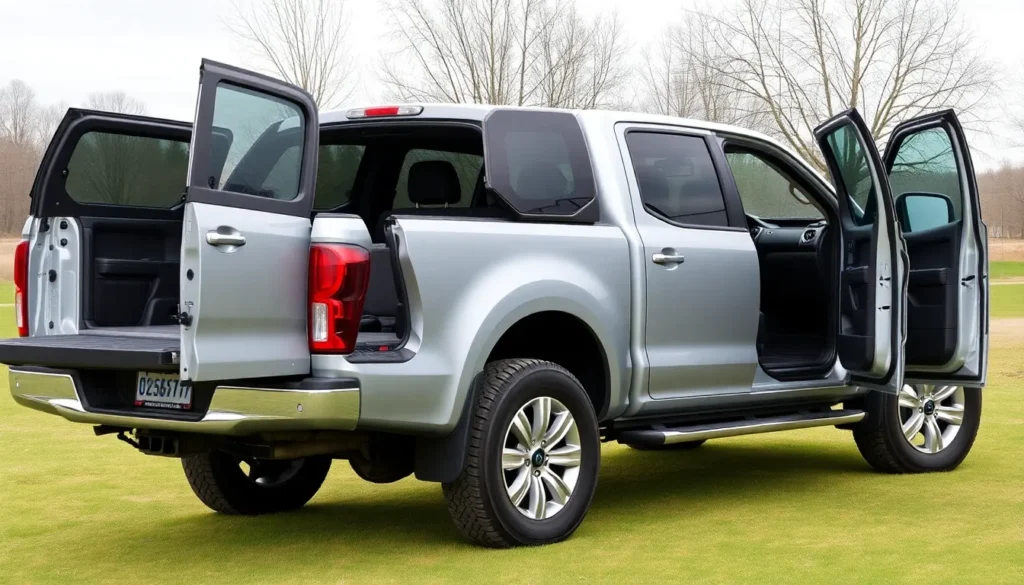
A crew cab is a specific type of pickup truck cab configuration characterized by four full-sized doors and a spacious rear seating area. It is designed to accommodate passengers comfortably with ample legroom, making it suitable for both work and personal use where transporting multiple passengers is necessary. Crew cabs have become increasingly popular due to their blend of passenger comfort and utility, often preferred by families, work crews, and individuals who require both cargo space and seating capacity.
Detailed Explanation
Pickup trucks come with several cab configurations, each varying in size, door count, and seating capacity. Among these, the crew cab is notable for its large interior space and four full-sized doors, which allow easy access to both front and rear seats. Typically, crew cabs offer seating for five to six passengers, depending on the bench or bucket seat configuration.
The term “crew cab” originated to describe trucks intended for crew transportation in work environments, such as construction or utility crews, where multiple team members need to be transported along with equipment. Over time, the design has evolved to meet consumer demands for comfort as well as functionality, often including amenities found in passenger vehicles.
How It Works
The crew cab configuration is integrated into the truck’s chassis and body design to maximize interior space. Unlike regular cabs (which often have two doors and limited rear seating), crew cabs offer a full second row of seating with easy ingress and egress through rear doors that are typically the same size as the front doors.
The increased cabin size means that the truck bed is often shorter than those found on extended cab or regular cab models to maintain overall length and balance. The design carefully balances passenger space with cargo capacity, ensuring that the vehicle remains practical for hauling while providing comfortable seating.
Examples
- Ford F-150 Crew Cab: One of the most popular full-size pickup trucks, offering a crew cab with four full doors and ample rear passenger space.
- Chevrolet Silverado Crew Cab: Another widely used pickup featuring a crew cab variant known for its spacious rear seat and comfort features.
- Ram 1500 Crew Cab: Known for its combination of luxury and utility, the Ram 1500 crew cab offers a large passenger compartment with modern amenities.
Why It Matters
The crew cab configuration matters because it addresses the need for a versatile vehicle that can transport multiple passengers comfortably while retaining the utility of a pickup truck. This configuration has broadened the use cases for pickups, making them suitable for family transportation, work crews, and recreational activities. It has also influenced the truck market by driving manufacturers to focus on interior comfort and passenger amenities alongside traditional capabilities like towing and hauling.
Common Misconceptions
Misconception: Crew cabs always have longer truck beds.
Correction: Crew cabs typically have shorter beds compared to regular or extended cabs to accommodate the larger passenger area.
Misconception: Crew cabs are only for commercial or work use.
Correction: Crew cabs are popular among private consumers for personal and family use due to their spacious interiors and comfort features.
Pros and Cons
Pros:
- Ample passenger space with four full-sized doors.
- Comfortable rear seating suitable for adults.
- Versatile use for both work and family transportation.
- Increased resale value due to popularity.
Cons:
- Shorter truck bed reduces cargo length.
- Heavier and potentially less fuel-efficient than smaller cab configurations.
- Higher purchase price compared to regular or extended cabs.
Comparison Table
| Aspect | Crew Cab | Extended Cab |
|---|---|---|
| Meaning | Pickup truck cab with four full-sized doors and spacious rear seating. | Pickup truck cab with smaller rear doors and less rear passenger space. |
| Passenger Capacity | Typically 5-6 passengers. | Usually 4-5 passengers. |
| Truck Bed Length | Usually shorter to accommodate larger cab. | Longer bed compared to crew cab. |
| Door Configuration | Four full-sized doors. | Two full-sized front doors, two smaller rear doors (often rear-hinged). |
Decision Checklist
What is the easiest way to understand a Crew Cab?
The easiest way to understand a crew cab is to think of it as a pickup truck designed like a small SUV for passengers: it provides a full rear seating area accessible via four full-sized doors, combining the utility of a truck with the passenger comfort of a family vehicle.
FAQ
What differentiates a crew cab from other pickup truck cabs?
A crew cab has four full-sized doors and a spacious rear seating area, allowing comfortable accommodation of multiple passengers, unlike regular or extended cabs which have smaller or no rear doors and less rear seating space.
Do crew cabs have shorter truck beds?
Yes, because the larger passenger cabin takes up more space, crew cabs typically have shorter truck beds compared to other cab styles.
Are crew cab trucks more expensive?
Generally, crew cab trucks cost more than regular or extended cab variants due to their larger size, increased materials, and added passenger comfort features.





Leave a Reply