
Short Answer
Overview
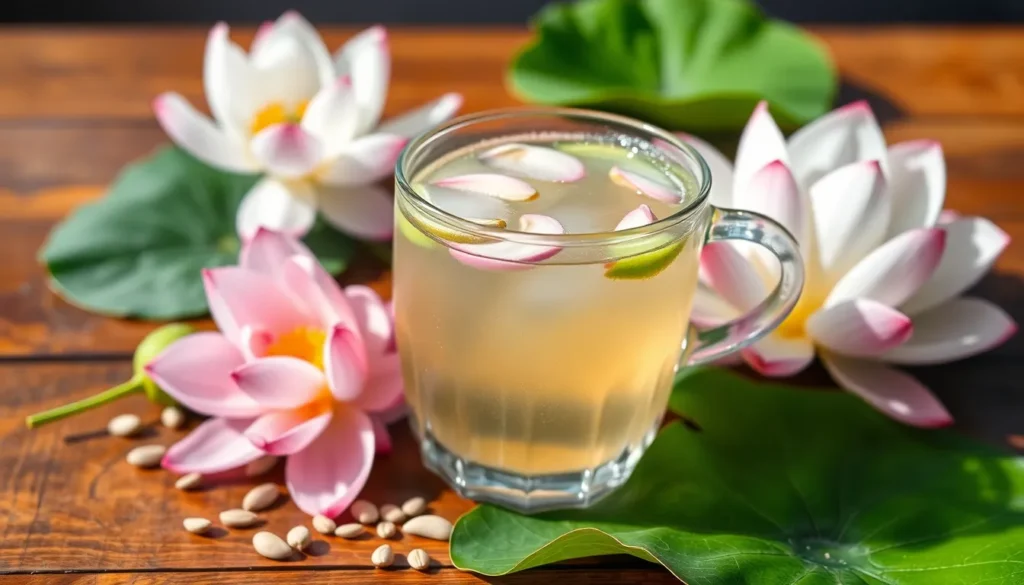
A lotus drink refers to any beverage that contains components derived from the lotus plant, typically Nelumbo nucifera, also known as the sacred lotus. These drinks are prevalent in several Asian cultures and may incorporate lotus seeds, leaves, roots, or flowers. Lotus drinks are valued for their unique taste, potential health benefits, and cultural symbolism.
Detailed Explanation
The lotus plant has been used for centuries in traditional medicine and cuisine. Various parts of the plant, such as seeds, roots (rhizomes), and flowers, can be processed into drinks. Lotus seed drinks are often sweet and may be served hot or cold, while lotus leaf teas are usually herbal infusions. The preparation methods and ingredients vary by region and cultural context.
How It Works
Lotus drinks are typically made by extracting flavors and nutrients from the plant parts through boiling, steeping, or blending. For example, lotus seeds may be boiled and sweetened to create a dessert-like drink, while lotus leaves are dried and steeped to make tea. The resulting beverage can contain bioactive compounds like antioxidants, flavonoids, and polysaccharides, which contribute to their reputed health effects.
Examples
- Lotus Seed Drink: A sweet beverage made by boiling lotus seeds with sugar and sometimes other ingredients like lily bulbs or jujubes. Common in Chinese cuisine.
- Lotus Leaf Tea: An herbal tea made from dried lotus leaves, consumed for its refreshing taste and possible digestive benefits.
- Lotus Root Drink: A beverage prepared by boiling sliced lotus roots, sometimes combined with other herbs or sweeteners.
Why It Matters
Lotus drinks hold cultural significance in many Asian societies where the lotus symbolizes purity and spiritual enlightenment. Beyond cultural aspects, these drinks are appreciated for their potential nutritional value and use in traditional medicine. They offer alternatives to conventional teas and beverages, contributing to dietary diversity.
Common Misconceptions
Misconception: Lotus drinks are always sweetened and sugary.
Correction: While some lotus drinks are sweetened, many are unsweetened herbal infusions made purely from lotus leaves or roots.
Misconception: All lotus drinks come from the same part of the plant.
Correction: Different lotus drinks use various parts of the plant, such as seeds, leaves, roots, or flowers, each offering distinct flavors and properties.
Pros and Cons
Pros: Potential health benefits from antioxidants and nutrients; culturally significant; variety of flavors; often caffeine-free.
Cons: Availability may be limited outside regions where lotus is common; preparation can be time-consuming; scientific evidence on health benefits is limited.
Comparison Table
| Aspect | Lotus Drink | Alternative/Related Topic |
|---|---|---|
| Meaning | Beverage made from parts of the lotus plant | Herbal Tea (made from various herbs and plants) |
| Common Ingredients | Lotus seeds, leaves, roots, flowers | Herbs, flowers, fruits |
| Typical Use | Cultural, medicinal, refreshment | Medicinal, refreshment, relaxation |
| Flavor Profile | Mild, earthy, sometimes sweet | Varies widely depending on herb |
Decision Checklist
What is the easiest way to understand Lotus Drink?
The easiest way to understand a lotus drink is to consider it as a traditional beverage made by extracting flavors and nutrients from the lotus plant, commonly enjoyed in Asian cultures for its unique taste and potential health properties.
FAQ
What parts of the lotus plant are used to make lotus drinks?
Lotus drinks can be made from various parts of the lotus plant including seeds, leaves, roots (rhizomes), and flowers, each contributing different flavors and properties.
Are lotus drinks caffeinated?
Most lotus drinks are naturally caffeine-free as they are herbal infusions or sweetened beverages made from lotus plant parts without tea leaves.
Do lotus drinks have health benefits?
Lotus drinks contain bioactive compounds such as antioxidants and flavonoids that may offer health benefits, though scientific evidence is limited and should be interpreted cautiously.





Leave a Reply