
Short Answer
Overview
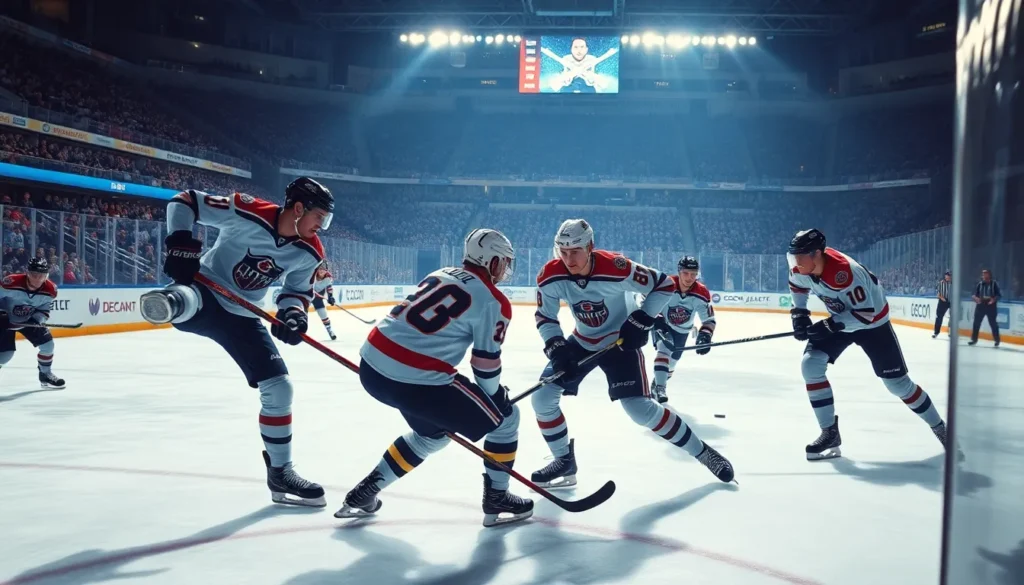
The forecheck in hockey is a tactical approach used by the team that does not have puck possession, aiming to regain control by applying pressure on the opposing players in their defensive zone. Typically occurring immediately after the opposing team gains possession, the forecheck is designed to disrupt their breakout plays, force turnovers, and create offensive opportunities. It is a fundamental component of both professional and amateur hockey strategies and can vary in aggressiveness and formation depending on the team’s style and coaching philosophy.
Detailed Explanation
Forechecking involves forwards and sometimes defensemen actively pursuing the puck carrier and other opposing players in their defensive end. The primary objective is to hinder the opposition’s ability to exit their zone cleanly and to regain puck control as close to the opponent’s net as possible. Different forechecking systems, such as the 2-1-2, 1-2-2, or 1-3-1 formations, determine how players position themselves and how aggressively they pressure the puck carrier.
The forecheck is not merely about physical pressure; it also requires strategic positioning to cut off passing lanes, anticipate the opponent’s moves, and force errors. It is a balance between aggression and calculated risk, as overcommitting can lead to defensive vulnerabilities if the opposing team successfully breaks out of the pressure.
How It Works
When the opposing team gains possession, the forechecking players immediately move to challenge the puck carrier or intercept passes. One or two forwards typically engage directly, attempting to body check or poke check the puck away. Other forwards and defensemen support by covering potential passing options or retrieving loose pucks.
Effective forechecking requires strong skating, quick decision-making, and communication among teammates to maintain coverage and avoid leaving gaps. Teams may adjust their forecheck intensity based on game situations, such as maintaining a lead or needing to score quickly.
Examples
- 2-1-2 Forecheck: Two forwards aggressively pressure the puck carrier deep in the offensive zone, with one forward and two defensemen positioned to support and cover rebounds or passes.
- 1-2-2 Forecheck: One forward pressures the puck carrier, two forwards cover passing lanes, and two defensemen stay back to guard against breakouts.
- Trap Forecheck: A more defensive approach where players focus on positioning to intercept passes and force turnovers further from the net.
Why It Matters
The forecheck is crucial because it dictates the tempo and flow of the game once possession changes. An effective forecheck can quickly regain puck control, leading to scoring opportunities and putting the opposing team under constant pressure. It also helps limit the opponent’s ability to organize offensive plays and reduces their time and space to make decisions. Conversely, poor forechecking can expose a team to counterattacks and defensive breakdowns.
Common Misconceptions
Misconception: Forechecking is only about aggressive physical play.
Correction: While physicality is a component, forechecking also involves strategic positioning, anticipation, and teamwork to effectively regain possession.
Misconception: Forechecking is exclusively the responsibility of forwards.
Correction: Although forwards primarily forecheck, defensemen also play a role in supporting pressure and maintaining coverage to prevent counterattacks.
Pros and Cons
Comparison Table
| Aspect | Forecheck | Backcheck |
|---|---|---|
| Meaning | Offensive team applying pressure in opponent’s zone to regain puck possession. | Defensive team retreating to prevent opponent’s scoring chances after losing puck. |
| Primary Objective | Force turnovers and create scoring opportunities. | Limit opponent’s offensive chances and protect own zone. |
| Player Roles | Forwards and defensemen aggressively pressuring puck carrier. | Players skating back to defend and cover attacking opponents. |
| Risk Level | Higher risk due to aggressive positioning. | Lower risk focused on defense. |
Decision Checklist
- Use this if: Your team wants to apply pressure and regain puck possession quickly in the offensive zone.
- Avoid this if: Your team is fatigued, outnumbered, or vulnerable to counterattacks due to poor defensive coverage.
- Check this first: The opponent’s breakout tendencies and your team’s stamina and coordination levels.
What is the easiest way to understand Forechecking?
The easiest way to understand forechecking is to think of it as a strategic chase immediately after losing the puck, where your team aggressively pursues the opponent to quickly take back control before they can organize their play. It combines physical pressure with smart positioning to disrupt the opponent’s flow and create chances to score.
FAQ
What is the main goal of forechecking in hockey?
The main goal of forechecking is to apply pressure on the opposing team in their defensive zone to force turnovers and regain puck possession, ideally creating scoring opportunities for the attacking team.
Who is primarily responsible for forechecking?
Forwards are primarily responsible for forechecking, as they are positioned to pressure the puck carrier and intercept passes, though defensemen also support by maintaining coverage and readiness for rebounds or breakouts.
What are common forechecking formations?
Common forechecking formations include the 2-1-2, where two forwards aggressively pressure the puck; the 1-2-2, which balances pressure and coverage; and the 1-3-1, which focuses on controlling passing lanes and forcing turnovers.



Leave a Reply