
Short Answer
Overview
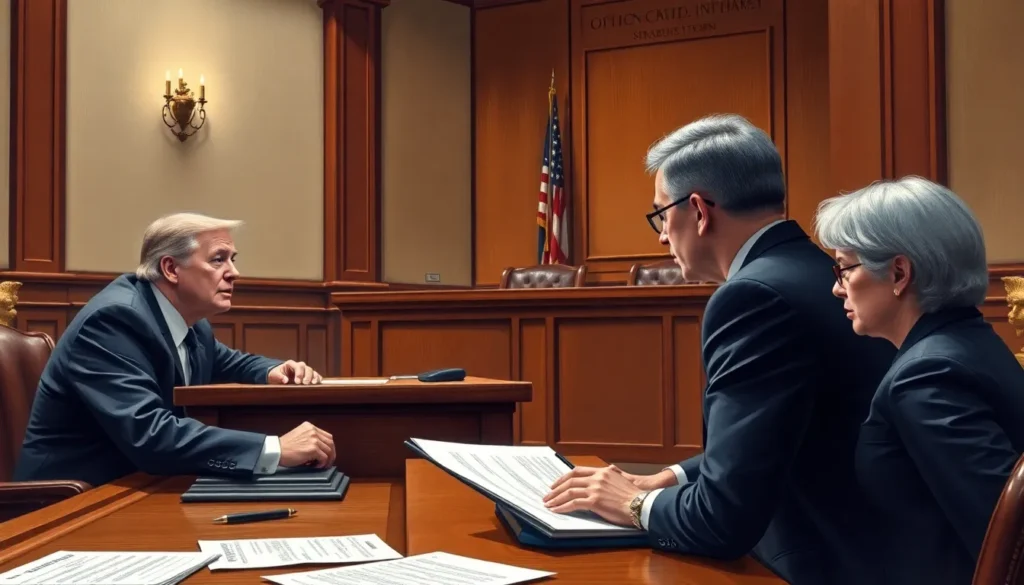
A motion hearing is a formal court session during which a judge considers and decides on motions—requests made by parties involved in a legal case. These hearings address specific issues or procedural matters that arise before or during a trial and can influence the progress and outcome of the case. Motions can pertain to various legal questions, such as requests for dismissal, changes in venue, or evidentiary rulings.
Detailed Explanation
In the context of civil or criminal law, a motion is a written or oral application submitted to the court asking for a ruling or order. A motion hearing provides an opportunity for the parties to present arguments, submit evidence, and clarify their positions related to the motion. The judge listens to both sides and may ask questions before making a decision.
Motion hearings are an essential part of judicial proceedings because they help resolve disputes over legal and procedural issues that do not require a full trial. They improve efficiency by addressing questions that could affect the admissibility of evidence, the scope of the trial, or even whether the case should proceed.
How It Works
The process typically begins when one party files a motion with the court, outlining the relief sought and the legal basis for the request. The opposing party is then given an opportunity to respond, either in writing or during the hearing.
At the motion hearing, both parties may present oral arguments, call witnesses, or submit documentary evidence relevant to the motion. The judge evaluates the arguments and evidence in light of applicable laws and precedents and issues a ruling. This ruling can grant, deny, or modify the motion, sometimes with conditions.
Motion hearings can be scheduled at various stages of a case, including before trial (pre-trial motions), during trial (in-trial motions), or after trial (post-trial motions). The nature and timing depend on the specific legal issues involved.
Examples
- Motion to Dismiss: A party requests the court to dismiss the case for reasons such as lack of jurisdiction or failure to state a claim.
- Motion for Summary Judgment: A request to decide the case or certain issues without going to trial, based on undisputed facts.
- Motion to Suppress Evidence: Common in criminal cases, this motion seeks to exclude evidence obtained unlawfully.
Why It Matters
Motion hearings play a crucial role in the administration of justice by allowing courts to manage cases efficiently, limit unnecessary trials, and resolve key issues early. They can shape the course of litigation, influence settlement negotiations, and protect parties’ rights.
Common Misconceptions
Misconception: Motion hearings are the same as trials.
Correction: Motion hearings focus on specific legal or procedural questions and do not involve a full examination of all facts like a trial.
Misconception: Only attorneys can attend motion hearings.
Correction: While attorneys typically represent parties, the hearings are public unless sealed, and parties may attend and participate.
Pros and Cons
Comparison Table
| Aspect | Motion Hearing | Trial |
|---|---|---|
| Meaning | A court session to decide specific legal or procedural requests. | A full court proceeding to determine facts and reach a verdict. |
| Purpose | Resolve discrete issues that affect case management or evidence. | Resolve the overall dispute between parties. |
| Duration | Usually shorter; focused on specific motions. | Longer; involves complete fact-finding and arguments. |
| Participants | Judge and parties (often attorneys). | Judge, parties, jury (if applicable), witnesses, attorneys. |
Decision Checklist
- Use this if: You need a ruling on a specific legal or procedural issue before trial.
- Avoid this if: The matter requires a full factual determination or is not appropriate for a motion.
- Check this first: Whether the issue can be resolved by a motion or requires trial intervention.
What is the easiest way to understand Motion Hearing?
Think of a motion hearing as a focused mini-trial on a particular question within a larger case. Instead of addressing all facts and claims, it zooms in on one legal point, allowing the judge to decide that issue separately before proceeding further.
FAQ
What is the difference between a motion hearing and a trial?
A motion hearing focuses on specific legal or procedural issues within a case, whereas a trial addresses all factual and legal disputes to reach a final verdict.
Can parties present evidence during a motion hearing?
Yes, parties may present evidence and arguments relevant to the motion, although the scope is limited compared to a full trial.
Are motion hearings open to the public?
Generally, yes. Motion hearings are public court proceedings unless the judge orders otherwise for confidentiality or privacy reasons.




Leave a Reply