
Short Answer
Overview
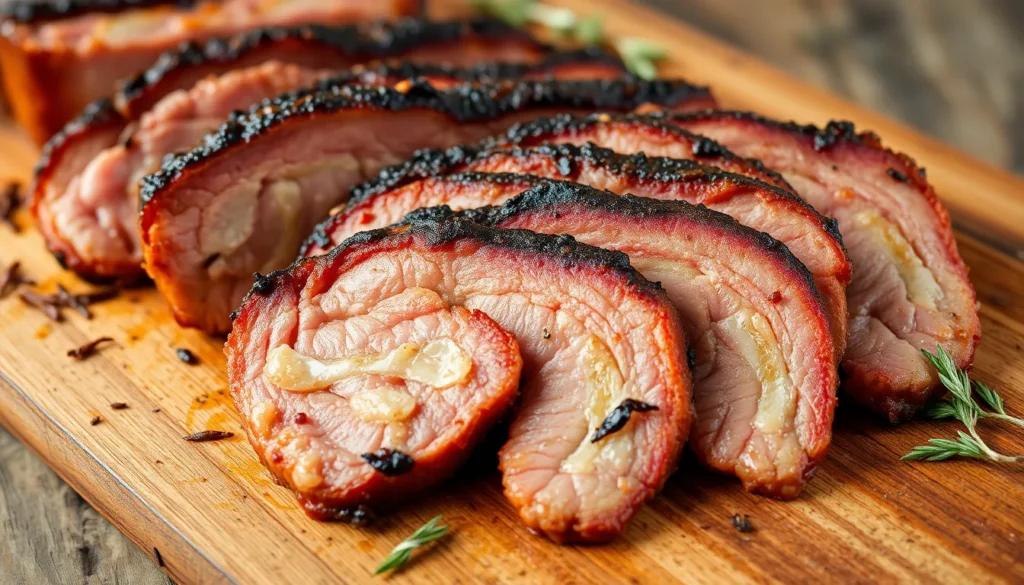
Pork jowl refers to the cut of meat sourced from the cheek of a pig. It is characterized by its high fat content and distinctive texture, making it a valued ingredient in a variety of culinary traditions. Pork jowl can be used fresh or cured and is often prepared by frying, smoking, or slow cooking. This cut is appreciated for its rich flavor, which is enhanced by its marbling of fat and connective tissue.
Detailed Explanation
The pork jowl is an anatomically specific cut, taken from the lower cheek area of the pig’s head. It contains a combination of muscle, fat, and connective tissue, which contributes to its unique taste and texture. Due to its fattiness, pork jowl is often used to add moisture and flavor to dishes. In some regions, it is cured similarly to bacon, resulting in a product sometimes referred to as jowl bacon or guanciale (particularly in Italian cuisine).
Curing involves salting and sometimes smoking the pork jowl, which preserves it and intensifies its flavor. When fresh, it can be cooked by frying until crispy or incorporated into stews and braises. The cut is also commonly used in traditional Southern United States cooking, where it may be smoked and used to season beans, greens, and other dishes.
How It Works
The cooking process of pork jowl leverages its fat content to impart flavor and moisture. When heated, the fat renders, creating a rich, savory profile that enhances the overall dish. In cured form, the salt and smoke penetrate the meat, altering its texture and preserving it for longer shelf life. The connective tissues break down during slow cooking, contributing to tenderness.
Due to its composition, pork jowl can be prepared in various ways depending on culinary preference. Frying results in a crispy texture, while slow cooking softens the meat and melds it with other ingredients. Curing transforms the cut into a product that can be thinly sliced and eaten similarly to bacon.
Examples
- Guanciale: An Italian cured meat made from pork jowl, used prominently in pasta dishes such as carbonara and amatriciana.
- Southern smoked pork jowl: Common in Southern U.S. cuisine, often smoked and used to flavor vegetables and beans.
- Fresh pork jowl fried: Sliced and pan-fried until crisp, served as a breakfast meat or snack.
- Pork jowl stew: Slow-cooked in stews to add richness and depth of flavor.
Why It Matters
Pork jowl is significant in culinary contexts due to its versatility and flavor profile. It offers an economical cut that can enhance dishes with fat and umami. Its use in traditional recipes around the world highlights its cultural importance. Furthermore, for those interested in nose-to-tail eating and sustainable meat consumption, pork jowl represents a valuable part of the animal that might otherwise be discarded or underutilized.
Common Misconceptions
Misconception: Pork jowl is the same as regular bacon.
Correction: While pork jowl can be cured and smoked similarly to bacon, it comes from the pig’s cheek, whereas traditional bacon is usually cut from the belly.
Misconception: Pork jowl is tough and undesirable.
Correction: When properly prepared, pork jowl is tender and flavorful due to its fat and connective tissue, which break down during cooking.
Pros and Cons
Pros: Rich flavor, versatile in cooking methods, economical cut, culturally significant in many cuisines, contributes moisture and fat to dishes.
Cons: High in fat, may not be suitable for all diets, requires proper preparation to avoid toughness, less commonly available in some regions.
Comparison Table
| Aspect | Pork Jowl | Alternative: Pork Belly |
|---|---|---|
| Meaning | Cut from the pig’s cheek with high fat content | Cut from the pig’s belly, also fatty and used for bacon |
| Texture | Combination of muscle, fat, and connective tissue, can be crispy or tender | Primarily fat and muscle layers, generally tender when cooked |
| Common Uses | Cured as guanciale, fried, smoked, or slow-cooked | Cured as bacon, roasted, grilled, or fried |
| Flavor | Rich, fatty, slightly more intense due to cheek location | Mildly fatty, slightly sweet flavor |
Decision Checklist
What is the easiest way to understand Pork Jowl?
The easiest way to understand pork jowl is to think of it as a flavorful, fatty cut from the pig’s cheek that can be used fresh or cured, offering a distinctive taste and texture different from more common cuts like pork belly or bacon.
FAQ
What part of the pig does pork jowl come from?
Pork jowl is taken from the cheek area of the pig, specifically the lower face region.
How is pork jowl typically prepared?
Pork jowl can be cured, smoked, fried, or slow-cooked depending on the culinary tradition and recipe.
Is pork jowl the same as bacon?
No, pork jowl is from the pig's cheek, while traditional bacon is usually from the belly; however, pork jowl can be cured similarly to bacon.






Leave a Reply