
Short Answer
Overview
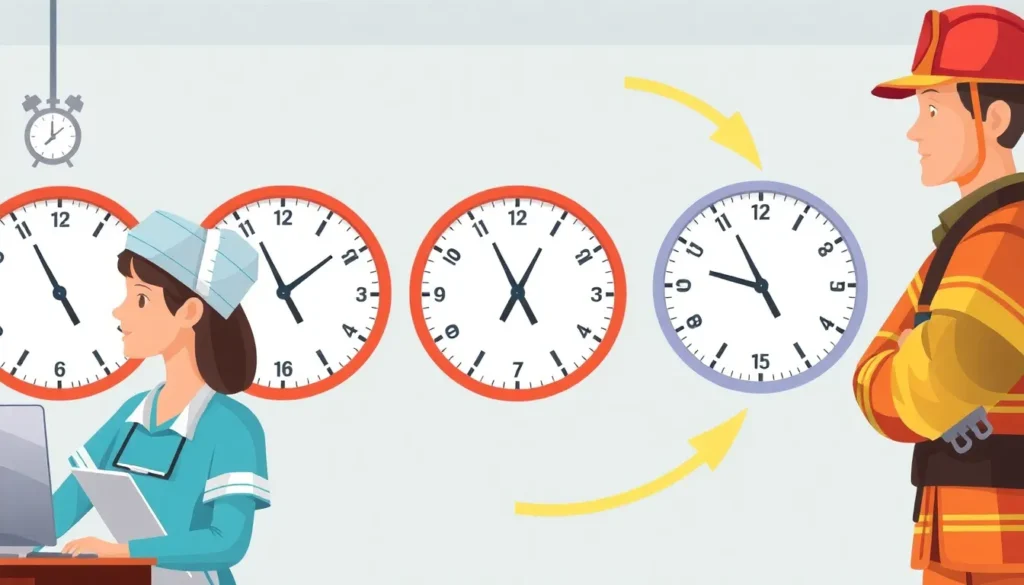
A rotating shift is a work scheduling system in which employees alternate between different shifts over a set period. Typically, these shifts include day, evening, and night shifts, and the rotation allows organizations to maintain continuous operations or coverage. Rotating shifts are especially common in industries such as manufacturing, healthcare, emergency services, and transportation, where 24-hour or extended service is necessary.
Detailed Explanation
Rotating shift work involves systematically changing an employee’s work hours so they do not consistently work the same shift. The rotation can occur on various cycles, such as weekly, biweekly, or monthly, depending on the employer’s operational needs and labor regulations. The primary purpose of rotating shifts is to distribute work hours fairly among employees and to reduce fatigue associated with consistently working unpopular or demanding shifts, like night shifts.
There are different types of rotating shifts. Some rotate forward (morning to evening to night), while others rotate backward (night to evening to morning). The direction of rotation can affect workers’ adaptation and overall health. Additionally, some schedules rotate every few days, whereas others may maintain a shift for a week or longer before rotating.
How It Works
In a rotating shift system, an employee’s work schedule changes periodically according to a predetermined pattern. For example, a worker might be assigned the day shift for one week, followed by the evening shift the next week, and then the night shift the following week. This cycle then repeats. The schedule can be structured so that the rotations align with the organization’s operational demands while attempting to minimize disruption to workers’ circadian rhythms.
Employers typically create shift rotation schedules considering factors such as labor laws, employee health, productivity, and coverage requirements. Some organizations use software tools to optimize rotating shift schedules to balance worker preferences and operational efficiency.
Examples
- Healthcare: Nurses in hospitals often work rotating shifts to provide continuous patient care. They may cycle through 8-hour day, evening, and night shifts over several weeks.
- Manufacturing: Factory workers may be assigned to a 12-hour rotating shift schedule, alternating between days and nights every few days or weeks to operate machinery continuously.
- Emergency Services: Firefighters and police officers may rotate shifts to ensure 24/7 readiness, often using a pattern such as 24 hours on followed by 48 hours off, alternating day and night duties.
Why It Matters
Rotating shifts are essential for organizations that require non-stop operations or services, allowing them to function smoothly without interruptions. They help distribute workload evenly, which can improve fairness and potentially reduce fatigue for employees compared to fixed night shifts. However, rotating shifts can also pose challenges to workers’ health, social life, and sleep patterns, making the design of such schedules significant for both employers and employees.
Common Misconceptions
Misconception: Rotating shifts always reduce worker fatigue.
Correction: While rotating shifts can distribute workload, frequent changes to shift times can disrupt circadian rhythms and may increase fatigue if not carefully managed.
Misconception: Rotating shifts are the same as fixed shifts.
Correction: Fixed shifts assign workers to the same hours consistently, whereas rotating shifts require periodic changes in work hours.
Pros and Cons
Comparison Table
| Aspect | Rotating Shift | Fixed Shift |
|---|---|---|
| Meaning | Work schedule where employees cycle through different shifts (day, evening, night) periodically. | Work schedule where employees consistently work the same shift hours without rotation. |
| Work Hours | Variable; changes over time according to rotation pattern. | Constant; same hours every workday. |
| Impact on Circadian Rhythm | Can cause disruption due to changing sleep-wake times. | More stable, allowing consistent sleep patterns. |
| Adaptation | Requires frequent adjustment to different shifts. | Easier adaptation due to consistency. |
| Use Cases | Industries needing continuous coverage with equitable shift distribution. | Industries or roles where stable hours are possible and preferred. |
Decision Checklist
- Use this if: Your organization requires continuous operations and fairness in shift distribution among workers.
- Avoid this if: Employees have difficulty adapting to changing schedules or if health impacts are a major concern.
- Check this first: Labor laws, employee preferences, and health implications before implementing a rotating shift system.
What is the easiest way to understand Rotating Shift?
Think of a rotating shift as a schedule where employees take turns working morning, afternoon, and night hours, much like rotating duties in a relay race, ensuring the operation is covered at all times while sharing the workload fairly among the team.
FAQ
What is a rotating shift?
A rotating shift is a work schedule system in which employees cycle through different shifts, such as day, evening, and night, over a set period to provide continuous coverage.
How does rotating shift work affect health?
Rotating shifts can disrupt the body's circadian rhythm, leading to sleep disturbances, fatigue, and increased risk of certain health problems if not managed properly.
What industries commonly use rotating shifts?
Industries requiring 24-hour operations, like healthcare, manufacturing, emergency services, and transportation, often use rotating shifts to maintain continuous coverage.






Leave a Reply