
Short Answer
Overview
A crick in the neck refers to a sudden, sharp pain or stiffness in the neck region that restricts normal movement. It is a common phenomenon experienced by individuals of all ages and is often attributed to muscle strain, poor posture, or sleeping in an awkward position. While the term is colloquial rather than medical, it generally describes mild musculoskeletal discomfort localized in the cervical area.
Detailed Explanation
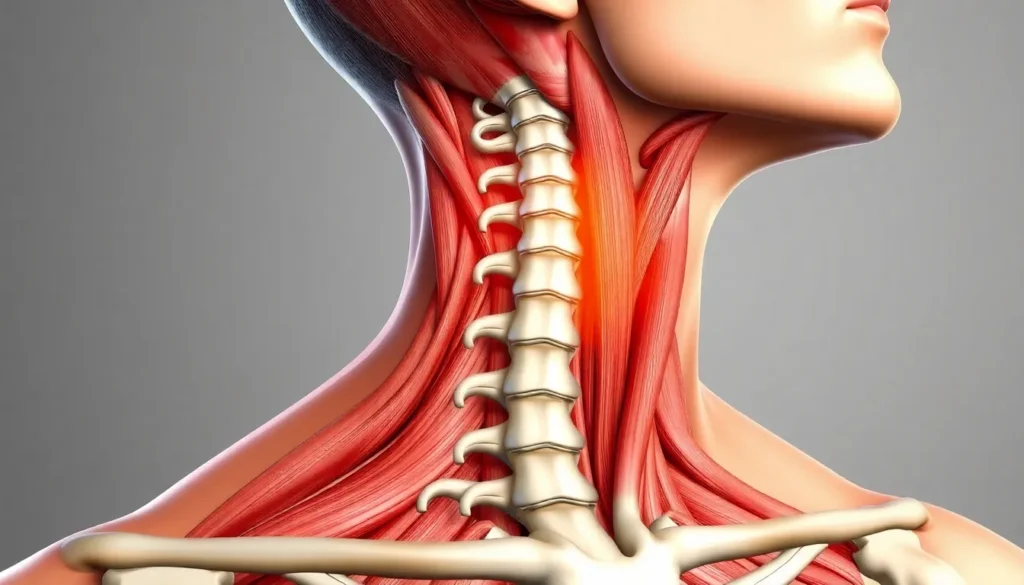
A crick in the neck usually arises when the muscles, ligaments, or joints in the neck are strained or irritated. This can occur after prolonged periods of inactivity, such as sleeping in an unusual position, or due to sudden movements that overextend or twist the neck. The condition is characterized by muscle tightness, pain, and limited range of motion. In some cases, minor inflammation may develop around affected tissues. More rarely, underlying medical conditions like cervical spondylosis or nerve impingement could present similarly but require different management.
How It Works
The neck comprises vertebrae, muscles, ligaments, and nerves that work together to support the head and allow its movement. When a muscle or ligament is strained, small tears or irritation trigger a protective muscle spasm to prevent further injury. This spasm results in stiffness and pain, which limits movement and causes the sensation known as a crick. Additionally, the inflammation from tissue damage can further exacerbate discomfort. The body’s natural healing process usually resolves these symptoms within a few days to a week.
Examples
- Waking up with neck stiffness after sleeping in an awkward position.
- Experiencing neck pain after sitting at a desk with poor posture for extended hours.
- Feeling sharp neck pain after sudden twisting or turning of the head.
Pros and Cons
- Pros: Typically self-limiting and resolves without medical intervention; alerts the individual to avoid further strain; encourages better posture and ergonomics.
- Cons: Can cause temporary discomfort and limit daily activities; may recur if underlying causes are not addressed; in rare cases, may mask more serious conditions.
Comparison Table
| Aspect | Crick in the Neck | Whiplash |
|---|---|---|
| Meaning | Sudden neck stiffness or pain due to muscle strain or minor injuries | Neck injury from rapid back-and-forth movement, often due to accidents |
| Causes | Poor posture, sleeping awkwardly, muscle strain | Trauma, such as car accidents or falls |
| Symptoms | Neck pain, stiffness, limited movement | Severe pain, swelling, headache, dizziness |
| Treatment | Rest, gentle stretching, heat or cold therapy | Medical evaluation, physical therapy, pain management |
Decision Checklist
- Use this if you experience sudden neck stiffness without trauma and mild pain.
- Avoid this if you have severe pain, numbness, weakness, or recent injury.
- Check this first to rule out serious causes such as nerve injury or infection.
What is the easiest way to understand a Crick in the Neck?
A crick in the neck is simply a brief episode of neck muscle tightness and pain caused by minor strain or awkward positioning. It is the body’s natural response to protect the neck from further injury by limiting movement temporarily.
FAQ
What causes a crick in the neck?
A crick in the neck is typically caused by muscle strain, poor posture, or sleeping in an awkward position that leads to muscle tightness and discomfort.
How long does a crick in the neck last?
Most cases resolve within a few days to a week with rest and simple treatments like gentle stretching or applying heat or cold.
When should I see a doctor for neck pain?
Medical attention is recommended if neck pain is severe, accompanied by numbness, weakness, fever, or follows an injury or trauma.





Leave a Reply