
Short Answer
Overview
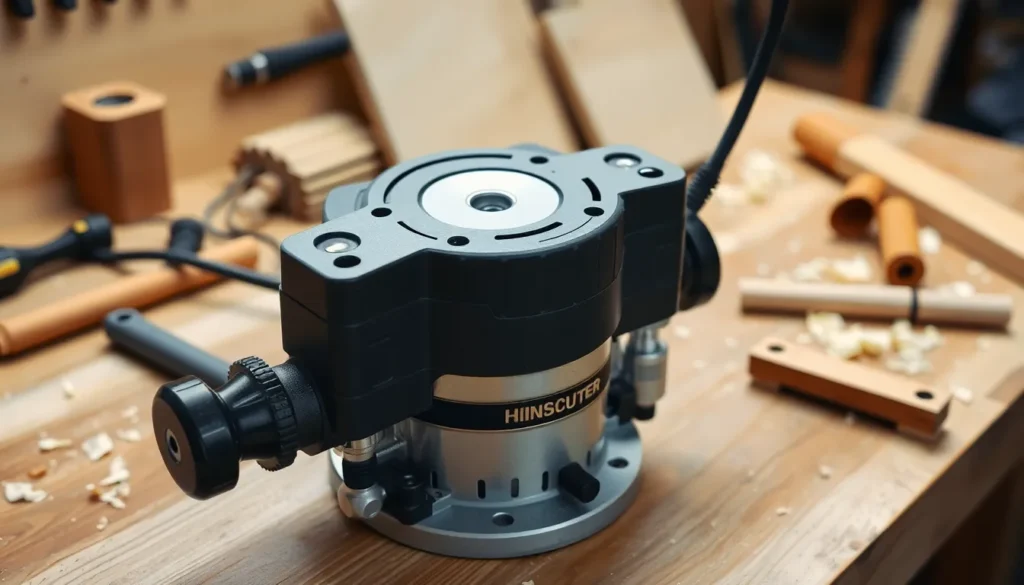
A compact fixed base router is a type of woodworking power tool used primarily for routing, trimming, shaping, and cutting wood or similar materials. It consists of a motor mounted on a fixed base that holds the router in a stationary position during operation. The term “compact” refers to the smaller size and lighter weight of the tool compared to larger router models, making it suitable for detailed and fine woodworking tasks. The fixed base design contrasts with plunge routers, which allow vertical adjustment of the motor during operation.
Detailed Explanation
Compact fixed base routers are designed to provide stability and precision by securing the motor firmly in a fixed position. The router bit extends below the base plate, and the depth of cut is set before operation. This design is ideal for edge work, trimming laminates, and other tasks where consistent depth and control are important. Because of their smaller size and lighter weight, compact fixed base routers are often favored for handheld use and for working on smaller projects or intricate details.
These routers typically have variable speed controls to accommodate different materials and bit sizes, and they may include features such as soft start, ergonomic handles, and dust collection ports. The fixed base is usually made of durable materials like metal or high-impact plastic to withstand the rigors of woodworking.
How It Works
The operation of a compact fixed base router involves securing the router on a workpiece or guiding it along templates or edges. The router motor spins the cutting bit at high speeds, and the fixed base ensures the bit remains at a consistent depth. The user manually moves the router along the desired path, controlling the speed and direction to shape or hollow out the material.
Depth adjustment is done prior to starting the router, often using a depth stop or adjustable ring on the base. This fixed setting prevents the bit from plunging deeper during operation, which is critical for tasks requiring uniform depth, such as trimming edges or creating grooves.
Examples
- Edge Trimming: Using a compact fixed base router with a flush trim bit to cleanly trim laminate edges on countertops.
- Grooving: Cutting shallow grooves or dadoes in wooden panels for cabinet making or shelving.
- Decorative Shaping: Creating decorative edges on furniture components like tabletops or chair legs.
Why It Matters
Compact fixed base routers are important tools in woodworking due to their precision and ease of use for specific tasks. Their design allows woodworkers to perform detailed work with consistency, which is essential in crafts, cabinetry, and furniture making. Their portability and lighter weight compared to larger routers make them accessible for hobbyists and professionals alike, facilitating intricate work without the need for large, stationary machinery.
Common Misconceptions
Misconception: Compact fixed base routers are only for beginners.
Correction: While they are user-friendly, compact fixed base routers are also widely used by professionals for precision work and detailed routing.
Misconception: Fixed base routers cannot perform plunge cuts.
Correction: Fixed base routers are not designed for plunge cuts, but they excel at tasks requiring fixed-depth routing; plunge routers are used when variable depth during operation is needed.
Pros and Cons
Pros:
- Provides stable and precise depth control.
- Lighter and more compact than larger routers, enhancing maneuverability.
- Ideal for edge work and detailed shaping.
- Often less expensive than plunge routers.
Cons:
- Lacks the ability to plunge into the material during operation.
- Less versatile than plunge routers for certain applications.
- Fixed depth limits flexibility in some complex routing tasks.
Comparison Table
| Aspect | Compact Fixed Base Router | Plunge Router (Alternative) |
|---|---|---|
| Meaning | A router with a motor fixed in a stationary base, designed for fixed-depth routing tasks. | A router with an adjustable base that allows vertical movement of the motor during operation for plunge cuts. |
| Depth Adjustment | Set before operation, remains fixed. | Adjustable during operation by plunging the motor. |
| Size and Weight | Typically smaller and lighter. | Generally larger and heavier. |
| Common Uses | Edge trimming, grooving, decorative shaping. | Mortising, inlay work, deep cuts starting from the surface. |
| Versatility | Limited to fixed-depth tasks. | More versatile for complex routing. |
Decision Checklist
What is the easiest way to understand a Compact Fixed Base Router?
The easiest way to understand a compact fixed base router is to think of it as a power tool designed to hold a spinning cutting bit at a set depth while you guide it along the material’s surface. Unlike routers that can move the bit up and down during operation, the fixed base router requires you to set the depth beforehand, making it ideal for consistent, shallow cuts and edge work.
FAQ
What is the main difference between a fixed base router and a plunge router?
A fixed base router has a stationary base where the cutting depth is set before operation and remains fixed during use, while a plunge router allows the cutting bit to be lowered into the material during operation for plunge cuts.
Can a compact fixed base router be used for heavy-duty routing?
Compact fixed base routers are generally designed for lighter, detailed tasks and may not be suitable for heavy-duty routing, which typically requires larger, more powerful routers.
Is a compact fixed base router suitable for beginners?
Yes, due to its fixed depth control and ease of use, a compact fixed base router is often recommended for beginners starting in woodworking.




Leave a Reply