
Short Answer
Overview
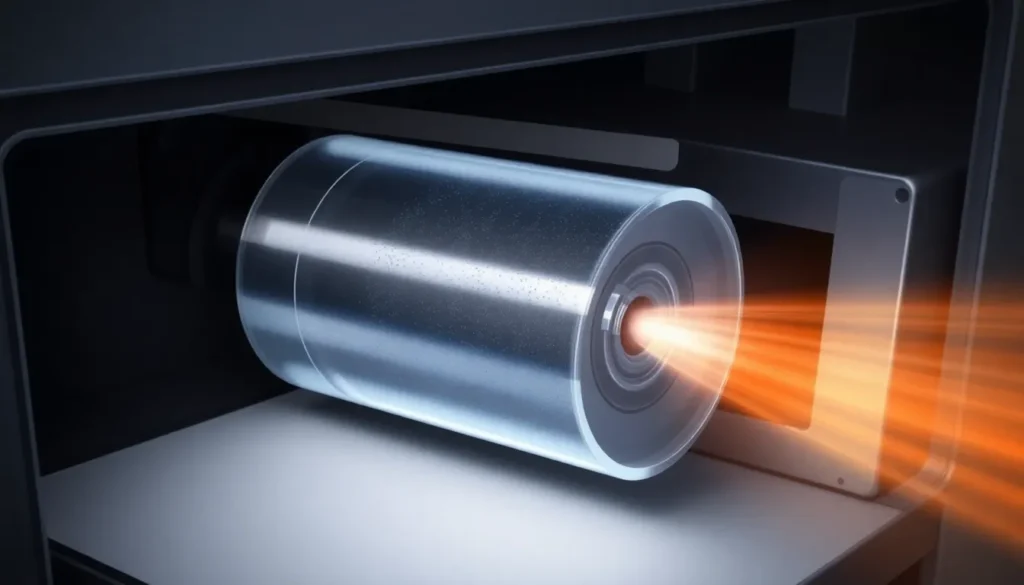
A printer drum, also known as a photoconductor drum or imaging drum, is an essential part of laser printers, photocopiers, and some multifunction devices. It plays a pivotal role in the printing process by transferring toner powder onto paper to form text and images. Typically cylindrical in shape and coated with a photoconductive material, the drum functions through electrostatic principles to attract toner particles selectively, enabling the precise reproduction of digital data onto physical media.
Detailed Explanation
The printer drum is coated with a photosensitive material that changes its electrical charge when exposed to light. During printing, a laser or LED array projects an image of the desired page onto the rotating drum. The light alters the drum surface’s electrical charge in the pattern of the image, creating an electrostatic latent image. Toner, which is a fine powder made of pigment and plastic, is then attracted to the charged areas of the drum. Subsequently, this toner is transferred from the drum onto paper and fused through heat and pressure to produce a permanent print.
Depending on the printer model, the drum may be integrated with the toner cartridge or exist as a separate replaceable component. Its lifespan varies according to usage and maintenance, and drum wear can affect print quality by causing streaks, smudges, or faded prints.
How It Works
The process involving the printer drum can be divided into several stages:
- Charging: The drum surface is uniformly charged by a corona wire or charge roller.
- Exposure: A laser or LED light selectively discharges specific areas of the drum to create an electrostatic image corresponding to the page’s content.
- Development: Toner particles adhere to the charged regions on the drum, forming a visible image.
- Transfer: The toner image is transferred from the drum to the paper using an electrostatic charge.
- Fusing: Heat and pressure fuse the toner onto the paper permanently.
- Cleaning: Residual toner is cleaned off the drum, and any remaining charge is neutralized to prepare it for the next print cycle.
Examples
Printer drums are found in various laser printers and copiers, including:
- Monochrome Laser Printers: These use a single drum to produce black and white prints.
- Color Laser Printers: These typically contain multiple drums, one for each toner color—cyan, magenta, yellow, and black (CMYK).
- Photocopiers: The drum facilitates the transfer of the scanned image onto paper.
Some manufacturers design the drum and toner cartridge as a combined unit, while others provide separate drums and toner cartridges, allowing independent replacement.
Pros and Cons
- Pros: The printer drum enables high-quality, sharp images and text with precise toner placement. It supports fast printing speeds and can produce durable prints resistant to smudging.
- Cons: Drum units can wear out over time and may require replacement, which can be costly. Improper handling can damage the drum’s surface, leading to poor print quality. Some drums contain materials sensitive to light and require careful storage.
Comparison Table
| Aspect | Printer Drum | Toner Cartridge |
|---|---|---|
| Meaning | A photoconductive cylinder that transfers toner to paper using electrostatic charges. | A container holding toner powder used for printing. |
| Function | Creates an electrostatic image and transfers toner onto paper. | Supplies toner powder to the drum for image formation. |
| Replacement Frequency | Less frequent; depends on print volume and model. | More frequent; replaced when toner is depleted. |
| Cost | Generally higher cost per unit. | Lower cost; varies by toner amount. |
Decision Checklist
- Use this if you need to maintain or replace critical printer components to ensure print quality.
- Avoid this if you only need to replenish toner and your drum is still in good condition.
- Check this first if print defects like streaks, smudges, or faded prints occur, as the drum may be worn or damaged.
What is the easiest way to understand Printer Drum?
The printer drum can be understood as the ‘canvas’ inside a laser printer that receives the toner ‘paint’ in a precise electrostatic pattern, which is then transferred and fixed onto paper to produce printed images and text. It is the key component that translates digital data into physical printouts through an electrostatic process.
FAQ
What is the lifespan of a printer drum?
The lifespan of a printer drum varies by manufacturer and model but typically ranges from 10,000 to 50,000 pages. Regular maintenance and proper handling can extend its service life.
Can I clean a printer drum to improve print quality?
Some printer drums can be gently cleaned using recommended methods, but improper cleaning may damage the drum. It is generally advisable to follow manufacturer guidelines or replace the drum if print quality deteriorates.
Is the printer drum the same as the toner cartridge?
No, the printer drum and toner cartridge are distinct components. The drum transfers toner to paper, while the toner cartridge supplies the toner powder. In some printers, these parts are combined, but they serve different functions.



Leave a Reply