
Short Answer
Overview
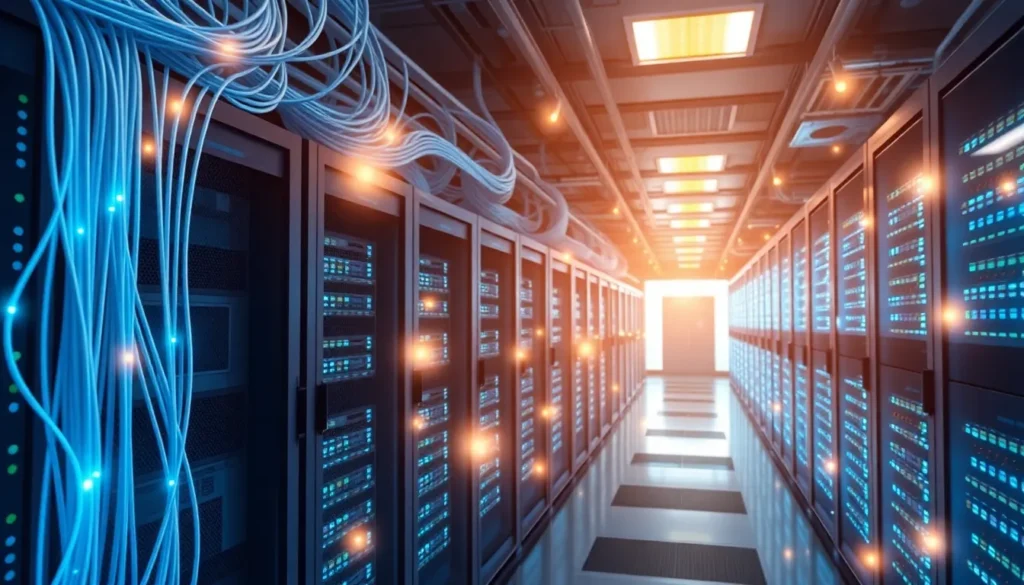
A carrier facility refers to a designated location or infrastructure where telecommunications carriers establish interconnections to exchange traffic, such as voice, data, and internet services. These facilities are essential components in the telecommunications ecosystem, facilitating interoperability between different network operators and enabling seamless communication across diverse network architectures.
Detailed Explanation
In telecommunications, carriers are companies that provide transmission services for data, voice, and video communications. A carrier facility can be a physical site such as a data center, interconnection point, or a central office where multiple carriers’ networks physically meet and connect. It may also refer to virtual interconnection points within cloud-based or software-defined networking environments.
Carrier facilities are equipped with specialized equipment including switches, routers, and multiplexers that manage traffic from various carriers. These facilities support protocols and standards that ensure efficient routing, quality of service, and security for exchanged traffic.
How It Works
Carrier facilities function as hubs where different telecommunications providers interconnect their networks. When a call or data packet originates on one carrier’s network but needs to reach a user on another carrier’s network, the traffic is routed through a carrier facility. This process involves:
- Physical interconnection: Network cables and fiber optic lines from different carriers terminate at the facility.
- Traffic exchange: Equipment at the facility forwards traffic between carriers according to established routing protocols.
- Network management: Facilities often monitor traffic flow, maintain quality of service, and ensure compliance with regulatory standards.
Examples
- Meet-Me Rooms (MMRs): Designated spaces within data centers where multiple carriers collocate to interconnect their equipment.
- Internet Exchange Points (IXPs): Carrier facilities specifically designed for exchanging internet traffic between service providers.
- Central Offices: Traditional telephone exchange facilities where local and long-distance carriers interconnect.
Why It Matters
Carrier facilities are crucial for maintaining the global telecommunications infrastructure. They enable interoperability among diverse carriers, reduce latency by providing direct interconnections, and improve redundancy and reliability of telecommunications services. Without these facilities, the seamless exchange of data and voice communication between different providers would be significantly hampered, affecting everything from international phone calls to internet connectivity.
Common Misconceptions
Misconception: A carrier facility is just a data center.
Correction: While a carrier facility can be located within a data center, it specifically refers to the interconnection point for carriers, not just any data storage or processing site.
Misconception: Carrier facilities are only for large telecom companies.
Correction: Carrier facilities can be used by various types of service providers, including smaller ISPs and cloud services, to interconnect and exchange traffic.
Pros and Cons
Comparison Table
| Aspect | Carrier Facility | Alternative/Related Topic |
|---|---|---|
| Meaning | A physical or virtual location where multiple telecommunications carriers interconnect their networks to exchange traffic. | Data Center: A facility used primarily for housing computer systems and associated components, not specifically for carrier interconnection. |
| Primary Function | Enable network interoperability and traffic exchange among carriers. | Internet Exchange Point (IXP): Specialized carrier facility focused on internet traffic exchange. |
| Users | Telecommunications carriers, internet service providers, cloud services. | Central Office: Traditionally used by telephone companies for local exchange. |
Decision Checklist
- Use this if you need to interconnect multiple networks efficiently and ensure reliable traffic exchange.
- Avoid this if your operation does not require multi-carrier interoperability or if cost constraints prohibit establishing such a facility.
- Check this first whether existing carrier facilities or internet exchange points in your region can meet your interconnection needs.
What is the easiest way to understand Carrier Facility?
Think of a carrier facility as a central meeting place or hub where different telecommunications companies connect their networks, allowing communication to flow seamlessly between them, much like a transportation hub where different transit lines meet and passengers transfer.
FAQ
What is the main function of a carrier facility?
The main function is to provide a physical or virtual point where different telecommunications carriers can interconnect their networks to exchange traffic efficiently and reliably.
Are carrier facilities only physical locations?
While traditionally carrier facilities are physical sites, advances in technology have introduced virtual interconnection points within cloud or software-defined networks.
How do carrier facilities differ from data centers?
Data centers primarily host computing equipment and data storage, whereas carrier facilities specifically serve as interconnection points for multiple carriers' networks to exchange traffic.




Leave a Reply