
Short Answer
Overview
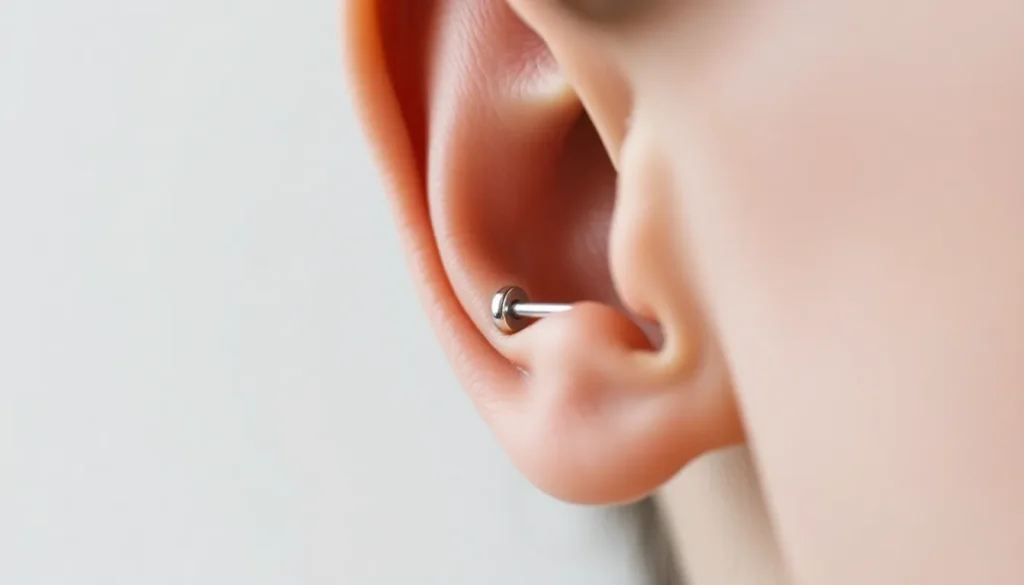
A snug piercing is a type of cartilage piercing located on the inner ridge of the ear, specifically within the anti-helix. Unlike more common ear piercings such as the lobe or helix, the snug piercing is positioned deeper within the ear’s cartilage fold, creating a distinctive and subtle appearance. This piercing is often chosen for its unique aesthetic, but it is also known for requiring careful aftercare due to the nature of cartilage tissue.
Detailed Explanation
The snug piercing is placed through the anti-helix, an inner ridge running parallel to the outer ear rim (helix). This location involves piercing a thicker fold of cartilage, which can make the procedure more complex and sometimes more painful compared to other ear piercings. Due to the cartilage’s density and reduced blood flow relative to the earlobe, healing times tend to be longer, typically ranging from 3 to 6 months or more.
The snug piercing is typically performed using a small gauge needle, and the jewelry used is often a curved barbell or a captive bead ring designed to minimize irritation and accommodate the ear’s natural shape. Proper placement is crucial to avoid complications and ensure the piercing sits comfortably within the ear’s contours.
How It Works
The piercing process involves sterilizing the ear, marking the exact spot on the anti-helix for optimal placement, and then using a hollow needle to create the hole through the cartilage. Once pierced, jewelry is inserted immediately to maintain the hole and prevent closure. The snug piercing’s location means it is somewhat protected from external contacts, but it can still be irritated by headphones, hats, or sleeping positions.
Due to the cartilage’s limited blood supply, the body takes longer to repair the tissue. This requires diligent aftercare, including regular cleaning with saline solution, avoiding unnecessary touching, and monitoring for signs of infection. Swelling, tenderness, and mild discomfort are common during the initial healing phase.
Examples
- A person may choose a snug piercing to complement other ear piercings like the helix or conch, creating a layered look.
- Jewelry options include curved barbells, which follow the ear’s natural curve, or small captive bead rings that provide a minimalist appearance.
- Some individuals opt for a snug piercing as a statement piece due to its less common placement and visibility.
Pros and Cons
Pros:
- Unique and aesthetically distinctive piercing location.
- Protected placement reduces accidental snagging compared to outer ear piercings.
- Complements multiple ear piercing styles for a layered look.
Cons:
- Longer healing time due to cartilage tissue.
- Potentially painful piercing process because of thick cartilage.
- Higher risk of complications like infection or hypertrophic scarring if not properly cared for.
- Challenges in sleeping comfortably on the pierced side during healing.
Comparison Table
| Aspect | Snug Piercing | Helix Piercing |
|---|---|---|
| Meaning | Piercing through the inner anti-helix ridge of the ear | Piercing through the outer rim (helix) of the ear |
| Location | Inner cartilage ridge (anti-helix) | Outer cartilage rim (helix) |
| Healing Time | 3–6 months or longer | 2–4 months |
| Pain Level | Moderate to high, due to thick cartilage | Moderate |
| Jewelry Types | Curved barbell, captive bead ring | Hoops, studs, barbells |
Decision Checklist
- Use this if you want a unique ear cartilage piercing that complements other ear piercings and are prepared for a longer healing process.
- Avoid this if you have low pain tolerance or cannot commit to the aftercare required for cartilage piercings.
- Check this first with a professional piercer to ensure your ear anatomy is suitable for a snug piercing and to understand the healing expectations.
What is the easiest way to understand a snug piercing?
The easiest way to understand a snug piercing is to think of it as a piercing through the inner fold of your ear’s cartilage, distinct from the more common outer ear piercings. Its unique position gives it a subtle yet stylish look, but it requires patience and care due to its location in thicker cartilage.
FAQ
How painful is a snug piercing compared to other ear piercings?
A snug piercing is generally considered more painful than lobe or helix piercings due to the thicker cartilage it passes through. Pain tolerance varies among individuals, but the procedure and initial healing phase can cause moderate to high discomfort.
How long does it take for a snug piercing to heal completely?
Healing time for a snug piercing typically ranges from three to six months, but it can sometimes take longer. The cartilage's limited blood supply means the tissue repairs more slowly, requiring consistent aftercare.
What type of jewelry is best for a snug piercing?
Curved barbells and small captive bead rings are commonly recommended for snug piercings because they conform to the ear's natural curve and reduce irritation during healing.






Leave a Reply