
Short Answer
Overview
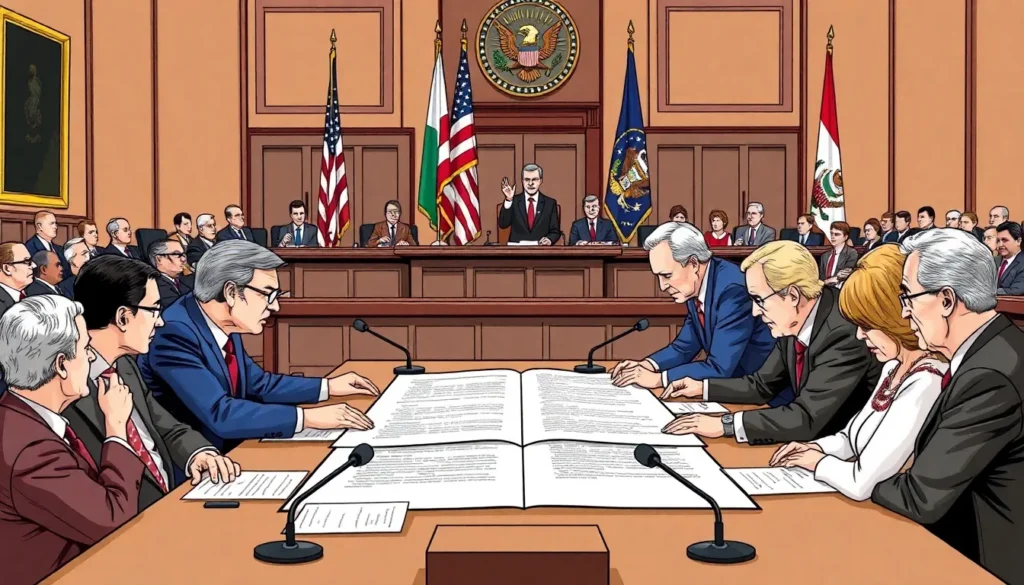
A conference committee is a temporary, joint committee composed of members from both chambers of a bicameral legislature, typically the House of Representatives and the Senate in the United States Congress. Its primary function is to resolve differences between two versions of a legislative bill that have been passed separately by each chamber. By negotiating and reconciling these differences, the committee produces a unified bill that both chambers can approve. Conference committees are an essential mechanism to ensure legislative coordination and efficiency in passing laws.
Detailed Explanation
When a bill is introduced in a bicameral legislature, it must be approved in identical form by both chambers before it can become law. Often, the House and Senate pass differing versions of the same bill, reflecting their distinct priorities or amendments. To address these discrepancies, a conference committee is convened, typically consisting of senior members or appointed conferees from the committees that originally handled the bill.
The committee reviews the conflicting provisions, negotiates compromises, and drafts a conference report containing the final agreed-upon version of the bill. This report is then submitted to both chambers for an up-or-down vote without further amendment. The conference committee thus serves as a bridge to harmonize legislative differences and facilitate the enactment of laws.
How It Works
1. Formation: After the House and Senate each pass a version of a bill, leaders or committee chairs appoint members to the conference committee. Typically, the membership reflects the committees of jurisdiction.
2. Deliberation: The conferees meet to discuss, negotiate, and reconcile differences in the bill’s text. This process may involve hearings, negotiations, and drafting sessions.
3. Conference Report: Once an agreement is reached, the committee produces a conference report containing the final text and a joint explanatory statement.
4. Approval: Both the House and the Senate vote on the conference report. It must be approved by both chambers without amendment.
5. Presidential Action: If both chambers approve the report, the bill is sent to the president for signature or veto.
Examples
- U.S. Affordable Care Act (2010): The House and Senate passed different versions, and a conference committee was involved in reconciling the differences before final approval.
- Budget and Appropriations Bills: These often require conference committees to resolve disputes between chambers to finalize federal spending legislation.
- Trade Agreements: Conference committees frequently address discrepancies in trade legislation passed by the House and Senate to ensure consistency before enactment.
Pros and Cons
Pros:
- Facilitates resolution of legislative differences between chambers.
- Enables compromise and negotiation to produce workable laws.
- Streamlines the legislative process by avoiding repeated amendments.
Cons:
- Can reduce transparency due to closed-door negotiations.
- May concentrate significant influence in the hands of a few committee members.
- Sometimes criticized for limiting broader legislative input on final text.
Comparison Table
| Aspect | Conference Committee | Other Legislative Committees |
|---|---|---|
| Meaning | Temporary joint committee to resolve bill differences between chambers. | Permanent or temporary committees that draft, review, or investigate legislation within one chamber. |
| Composition | Members from both chambers, usually senior or relevant committee members. | Members from a single chamber, often aligned by subject matter. |
| Function | Reconcile and finalize differing bill versions. | Consider, amend, and develop legislation or conduct oversight. |
| Transparency | Often less transparent due to closed negotiations. | Generally more open with hearings and public records. |
Decision Checklist
- Use this if: The House and Senate have passed different versions of a bill requiring reconciliation.
- Avoid this if: The chambers agree on bill versions or use alternative methods like amendments or joint sessions.
- Check this first: Whether informal negotiations or other procedures can resolve differences before convening a conference committee.
What is the easiest way to understand a Conference Committee?
The easiest way to understand a conference committee is to think of it as a special team of representatives from both legislative chambers who come together temporarily to iron out the differences in their versions of a bill, ensuring that the final law is consistent and acceptable to both.
FAQ
What is the purpose of a conference committee?
The purpose of a conference committee is to reconcile differences between two versions of a legislative bill passed by different chambers of a bicameral legislature, producing a final version acceptable to both.
Who serves on a conference committee?
Members of a conference committee are typically appointed from the standing committees that originally considered the bill, including representatives from both legislative chambers.
Can amendments be made to the bill after the conference committee report?
No, once the conference committee submits its report, both chambers must vote to accept or reject it without further amendments.






Leave a Reply