
Short Answer
Overview
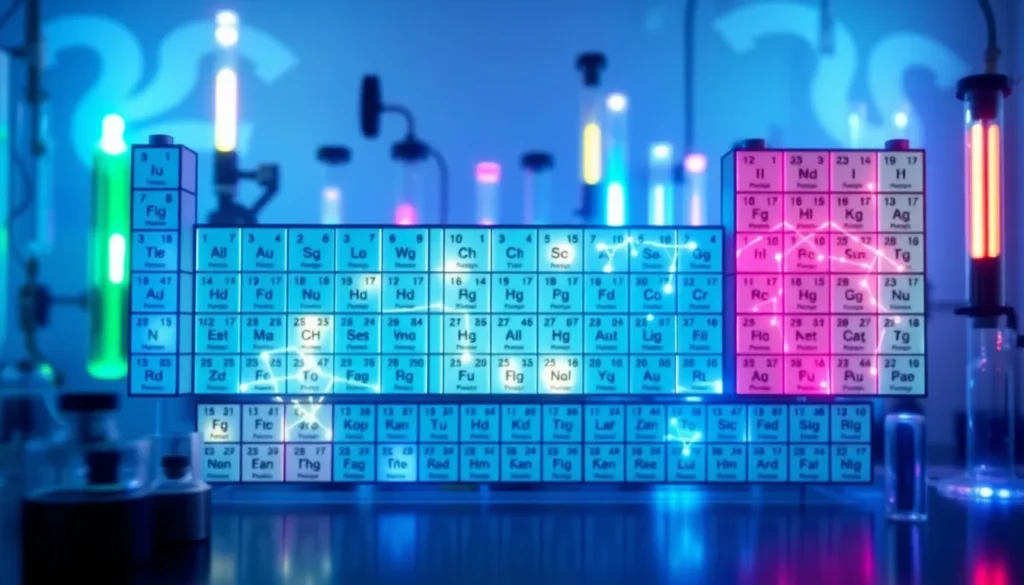
Rare gases, commonly referred to as noble gases, constitute a group of chemical elements that are notable for their very low chemical reactivity under standard conditions. These elements occupy Group 18 (formerly Group 0) of the periodic table and include helium (He), neon (Ne), argon (Ar), krypton (Kr), xenon (Xe), and radon (Rn). They are called “rare” or “noble” gases because they were historically considered scarce in Earth’s atmosphere and because they exhibit a lack of chemical bonding with other elements, appearing “noble” or isolated.
Detailed Explanation
Rare gases are monoatomic gases at room temperature and have complete valence electron shells, which confer exceptional stability and minimal tendency to form chemical compounds. Their electron configurations end in ns2 np6, except for helium, which has ns2. This full valence shell structure results in a high ionization energy and very low electron affinity, making these gases largely inert.
While previously thought to be entirely non-reactive, some heavier rare gases like xenon and krypton are now known to form compounds under specific conditions, such as xenon hexafluoroplatinate (XePtF6), demonstrating that their inertness is relative rather than absolute.
How It Works
The chemical inertness of rare gases arises from their electronic structure. Having a complete outer shell means these atoms do not need to gain, lose, or share electrons to achieve stability, which is the fundamental driving force behind chemical reactions. Because of this, rare gases do not readily form chemical bonds and remain as individual atoms in gaseous form under standard temperature and pressure.
Physically, rare gases exhibit low boiling and melting points compared to other elements due to weak van der Waals forces between their atoms. They are colorless, odorless, tasteless, and non-flammable under normal conditions.
Examples
- Helium (He): The second lightest element and the most abundant rare gas in the universe; widely used in cryogenics and as a lifting gas in balloons.
- Neon (Ne): Known for its distinctive reddish-orange glow in neon signs and lighting.
- Argon (Ar): The most abundant rare gas in Earth’s atmosphere, commonly used as an inert shielding gas in welding and in incandescent light bulbs.
- Krypton (Kr): Used in some types of photographic flashes and lighting applications.
- Xenon (Xe): Utilized in high-intensity lamps, ion propulsion systems, and some anesthetic applications.
- Radon (Rn): A radioactive rare gas that arises naturally from the decay of uranium and thorium in the Earth’s crust.
Pros and Cons
- Pros: Chemical inertness makes rare gases ideal for use in environments requiring non-reactive atmospheres; their unique physical properties enable specialized applications in lighting, cryogenics, and medical uses.
- Cons: Their scarcity and extraction cost can limit availability; some, like radon, pose health risks due to radioactivity; limited chemical reactivity restricts their versatility in chemical synthesis.
Comparison Table
| Aspect | Rare Gas | Alternative/Related Topic |
|---|---|---|
| Meaning | Group 18 elements with full valence shells known for chemical inertness | Halogens: Highly reactive nonmetals in Group 17 |
| Reactivity | Extremely low to negligible | High reactivity |
| Occurrence | Trace amounts in Earth’s atmosphere | More abundant and reactive in compounds |
| Physical State | Monoatomic gases at room temperature | Varies: diatomic gases, solids, liquids |
| Applications | Lighting, inert environments, cryogenics | Disinfectants, pharmaceuticals, industrial chemicals |
Decision Checklist
- Use this if: You need a chemically inert gas for industrial, scientific, or medical applications.
- Avoid this if: Your application requires reactive chemical behavior or compound formation.
- Check this first: Availability, cost, and safety considerations such as radioactivity (in the case of radon).
What is the easiest way to understand Rare Gas?
The simplest way to understand rare gases is to think of them as nature’s “chemical loners”—atoms that are complete and content with their electron arrangement, thus rarely interacting with other elements. This makes them unique among the elements and useful whenever a stable, non-reactive environment is required.
FAQ
Why are rare gases considered inert?
Rare gases are considered inert because they have full valence electron shells, making them energetically stable and unlikely to form chemical bonds under normal conditions.
Can rare gases form compounds?
While historically considered completely non-reactive, some heavier rare gases like xenon and krypton can form compounds under specific, often extreme, conditions.
What are common uses of rare gases?
Rare gases are used in lighting (neon signs, argon bulbs), as inert atmospheres in welding and manufacturing, in cryogenics (helium), and in medical applications such as anesthesia (xenon).





Leave a Reply